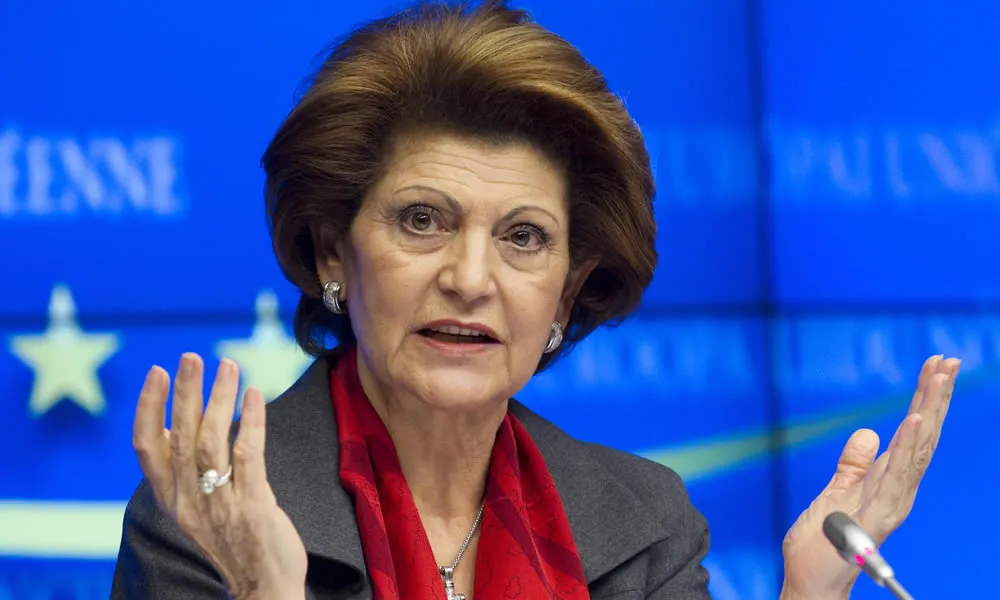
As Cyprus heads towards parliamentary elections in just seven months, and while the island ranks last in the EU in terms of women’s representation, Politis to the point, through a series of interviews and reports, gives the floor to women, calling on political parties to move beyond “commitments” and symbolic gestures and take real structural steps towards equality.
We met at her home in Nicosia, with the afternoon light falling across the books, photographs, and paintings on the walls. Everything was immaculate and in perfect order. Our previous interview had taken place about twenty-seven years ago, when Politis newspaper had just begun circulation and there seemed to be real momentum in the women’s movement with nine female MPs. Unfortunately, three decades later, the presence of women in the House of Representatives remains stuck at the lowest level in Europe.
To the public and in the minds of people, she is simply “Androulla,” and among various journalistic and political circles, “Androulla and I,” echoing the famous phrase of her husband, former President of Cyprus George Vassiliou. She was never “Mrs. Vassiliou.” She was never just the First Lady, nor someone who succeeded simply because she had an education, a family, and a husband. She went beyond borders, pursued positions that are rarely offered to women in Cyprus, and her highly successful career is without question her own achievement, due to her innate sense of equality, determination for modernisation, and integrity of character.
From Law to Politics and Europe
She studied Law and International Relations in London, worked as a lawyer for two decades advising banks such as Standard Chartered and the Bank of Cyprus, and later devoted herself to politics and the defence of human rights. She served as a Member of Parliament from 1996 to 2006, was an active member of European committees and organisations, and the highlight of her career was her appointment as European Commissioner for Health for two years (2008–2010) and in the next Commission, as Commissioner for Education, Culture, Youth, and Sport (2010–2014).
In the Era of Disregard
“It was difficult,” Androulla recalls, with an honest smile that hides no bitterness but instead adds to the long list of meaningful experiences that shaped her as a public-minded professional. “When I was elected in 1996, there were three women in Parliament: myself, Kaiti Kliridou, and Katerina Pantelidou.”
In 1999, due to a ministerial appointment, the first runner-up of DISY, Lia Georgiadou, entered Parliament for two years. “And in 2001, we had a big increase with the election of nine women. Apart from myself, Kaiti Kliridou, Eleni Theocharous, and Maria Kyriakou were elected from DISY, Stella Dimitriou, Eleni Mavrou, and Sotiroula Charalambous from AKEL, and Antigoni Papadopoulou and Athina Kyriakidou from DIKO. In the beginning, they treated us with contempt and a bit of scorn. When we spoke in the Plenary, there wasn’t a soul in the room. They would leave. The hall would empty. They all went for coffee.”
She also remembers one characteristic incident: “I suggested to the Chairman of the Human Rights Committee, Yiannakis Agapiou, to organise an event for International Women’s Day. No one came. Not even journalists or MPs. Agapiou called two journalists and told them, ‘It’s just Androulla and I’” She laughs again, noting that “when you remember these things, you realise how much has changed.”
Of course, despite the difficulties, Androulla Vasiliou did not limit herself to symbolic gestures. She fought for real measures and had the support of her female colleagues in Parliament. “During my second term, we women strongly supported the introduction of free mammograms for women aged 50–69. It was a good start. Today it has been extended to ages 45–74. Men would never have thought to take such an initiative,” she says.
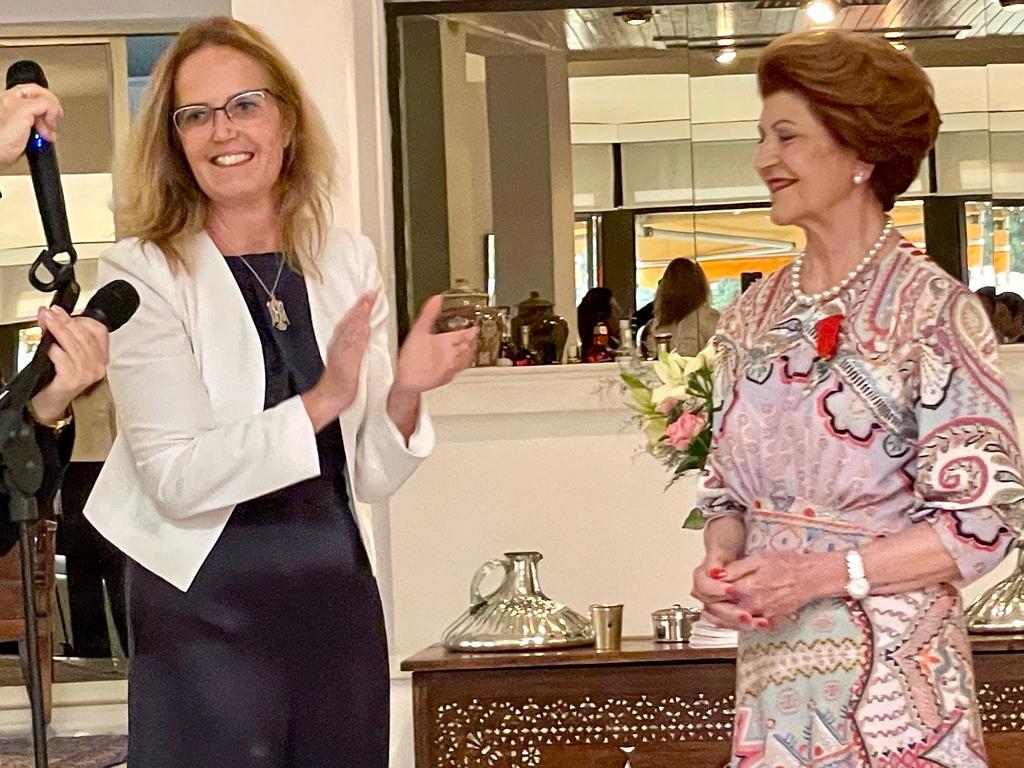
through its Ambassador, with the title
“Chevalier de la Légion d’Honneur,”
the first rank of France’s highest order of merit.ption
Second class citizens
The former MP also recalls the unequal treatment regarding citizenship. At the time, the law allowed the children of Cypriot men married to foreign women to automatically obtain Cypriot citizenship. By contrast, Cypriot women married to foreigners faced discrimination and had to go through the same bureaucratic process as foreign nationals in order to secure Cypriot citizenship for their children. They were second-class citizens. “We managed to change that outdated law, although certain safeguards were added because of the Cyprus issue. Even today, people stop me in the street and say ‘thank you.’”
She notes that on social issues like these, there was solidarity among women. However, female MPs often lacked the freedom to propose issues beyond “women’s matters.” “Among ourselves, we women had mutual understanding, but women in other parties did not have the freedom to raise issues beyond ‘women’s issues.’ In the United Democrats, I did not face that problem.”
She does not forget the more extreme forms of inequality either: “When there were efforts to make major amendments to the Constitution of the Church of Cyprus, a group of women went to the Archbishop to present our views on the outdated provisions concerning marriage and divorce. For example, a man could divorce his wife if she was not a virgin, or if she spent even one night outside the house, even at the home of a relative beyond the first degree, while men could do whatever they wanted. The Archbishop called his assistant and said, ‘Bring some wedding sweets to give to the girls, because they are leaving.’” She smiles again, explaining how strange that reality now seems compared to today’s standards.
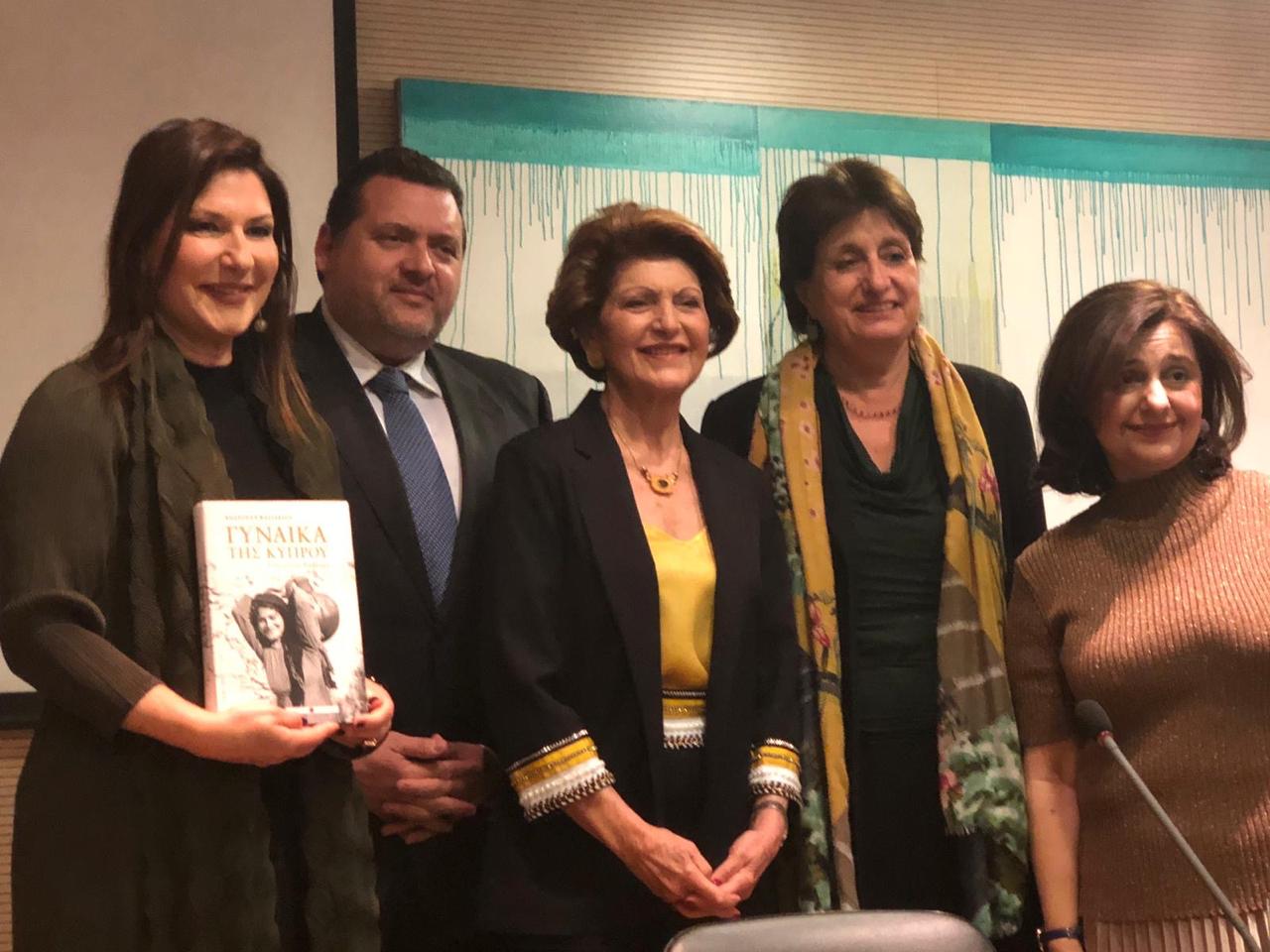
a century-long journey, at the House of Cyprus in Athens.
At the Meeting of Party Leaders
As a representative of her party, she participated in meetings of parliamentary party leaders under then–Speaker of the House, Spyros Kyprianou, and she faced challenges with dignity. “I would sit in the back, discreetly. And then the Speaker would say to me, ‘Androulla, why are you sitting in the back? You’re the one I love. It’s your husband I hate!’”
Another major difficulty, she says, was the way the media treated female MPs. “You could count on one hand the number of times they gave us the opportunity to appear on radio and especially television programmes and political discussions. I remember that during election periods we were never invited to panels to debate with male candidates. Each TV station organised a women’s panel so they could pretend to give us a voice.”
“Seeing women today participate daily in television programmes alongside men shows just how much progress has been made in recent decades. And that makes me very happy!”
She adds that the lack of media exposure made personal contact essential: “That was the only way for people to get to know you and believe in your abilities, since the media back then did not give us the access they should have.”
The European Perspective
During her second term, Androulla recalls a decisive change: “Our accession process to the EU was then among our top priorities. A special ‘Department of European Affairs’ was created in Parliament, most of whose members were women, and the Parliamentary Committee on European Affairs was fully occupied with harmonising laws and regulations and examining thousands of new ones. My participation in that Committee left unforgettable experiences in my memory. We must be grateful for Cyprus’s European path, which gave us the opportunity to pass many laws and regulations concerning equality.”
She emphasises that politics is not about personal gain. It is and must be regarded as a service to society. It requires consistency, integrity, and hard work. She never rested on being the wife of the President of the Republic. She earned respect on her own and, as First Lady, managed to make her own mark.
At some point, she decided that two terms were enough. “As a member of a small party, there was no chance I could chair a parliamentary committee, and that meant that after ten years of parliamentary experience, I would have to take a back seat to new MPs without knowledge or experience but who had the ‘privilege’ of belonging to one of the big parties. However, my decision not to seek a third term deeply disappointed my party, because it resulted in the party being left out of Parliament,” she says.
“My Third University”
“For me, the seven years I worked at the European Commission were the third university I attended, during which I felt complete freedom and equality among 27 other Commissioners. My visits and collaboration with so many different nationalities made me feel even more European and believe in the power of unity, which unfortunately some Member States are trying to destroy.”
Why Are Women Essential in Parliament?
“Because women think differently,” she says. “They have different priorities, sensitivities, they raise different issues. And all of them are equally important. One example is what I mentioned earlier about the introduction of free mammograms by the state. Ultimately, it is a matter of equality and fairness.”
Androulla supports the zipper system, where men and women alternate on electoral lists to ensure equal representation. This requires more women candidates so that voters have a broader choice.
From her experience, she knows that presence is the most powerful factor in opening the way for others: “You cannot encourage others with only one or two women. There must be role models.”
She also refers to the current Speaker of the House, Annita Demetriou: “Annita has made a difference. She works hard, promotes equality, and has a good public profile. I believe that now she must, and it is her duty in this role, to give women a push ahead of the upcoming elections.”