


After weeks of drought anxiety, Cyprus has finally seen rivers begin to run again. The recent uptick in rainfall has shifted the public mood, but according to Eric Kitas of Kitasweather, relief should not be confused with resolution.
“This is exactly the problem,” Kitas says. “People rush to criticise forecasts, then a few weeks later we are suddenly talking about a better year. It is still early.”
Statistically, 2026 is already shaping up very differently from 2025, which ranked as the eighth worst rainfall year of the past 120 years. Since October 1, Cyprus has now received close to 90 percent of its average seasonal rainfall, a sharp turnaround from late November, when totals were still below 50 percent. With February and March still ahead, the range could yet climb to between 91 and 110 percent of normal.
The real story
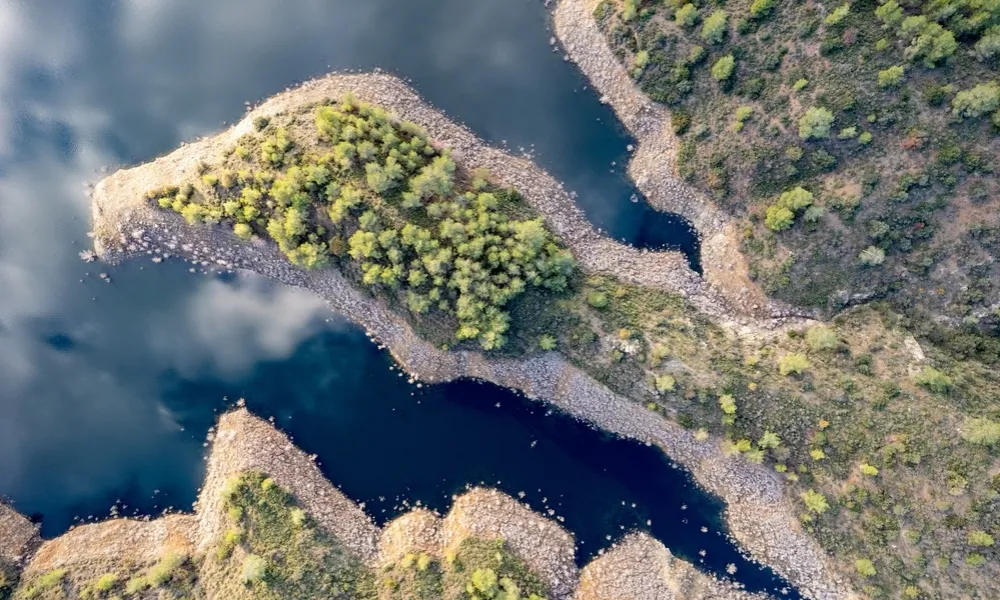
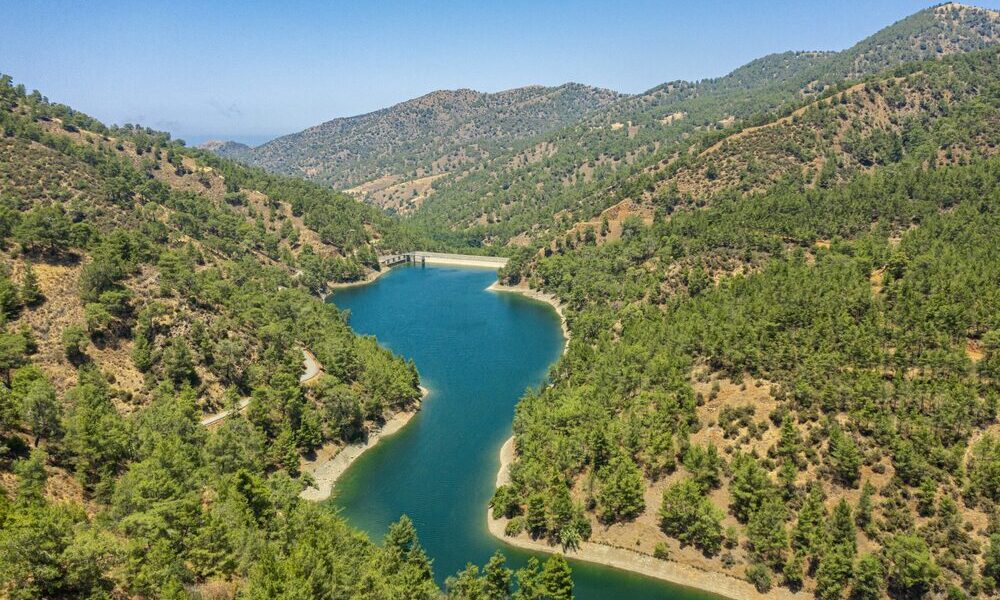
The country’s dams remain at critically low levels, hovering around 11 percent, compared with roughly 25 percent at the same point last year. Kitas stresses that what matters now is not just how much rain falls, but when and how it falls. After months of dryness, the soil has only recently become saturated, allowing rivers and streams to finally begin feeding reservoirs.
“This is when rainfall becomes valuable,” he explains. “When the ground is saturated, the systems start working in our favour.”
February, he says, is the decisive month. If it merely meets average rainfall, Cyprus stays in the danger zone. If it exceeds it, and March performs above normal, the outlook improves significantly. But spring also brings a declining probability of the kind of strong weather systems that can deliver meaningful volumes in a short time.
Cyprus has lived through such moments before. In 2018–2019, extreme systems delivered up to 27 million cubic metres of water in a single day. In 2019 alone, some storms brought 10 to 15 million cubic metres within 24 hours. These events are rare, but they remain the only way to rapidly close the gap.
“We will not get 80 straight days of rain,” Kitas says. “What we need is that one extra system.”
Statistically, major overflows such as those seen at Kouris tend to occur roughly every eight years, putting the next likely event closer to 2028. For dams to fully recover, Cyprus would likely need two strong consecutive wet years, across 2026–27 and 2027–28.
That is why Kitas resists the idea that drought alone is Cyprus’ core problem.
“Climatologically, Cyprus can support water needs for under one million people,” he says. “The issue is population growth and development without long-term water planning.”
He argues that desalination should have been expanded earlier, and that major development projects should have been financially linked to water security. Instead, asphalt, glass, cars and dense construction have increased temperatures and reduced the land’s ability to retain moisture. Where vegetation and soil once absorbed rain, runoff now accelerates.
Climate change, he adds, complicates the picture but should not become a convenient scapegoat. Rising temperatures mean greater contrasts in the atmosphere, more intense phenomena and more water vapour, but not necessarily steady rainfall. A warmer planet does not mean uniform warming everywhere, and Europe’s climate remains heavily influenced by Atlantic currents that moderate extremes.
The challenge is adaptation
That same logic applies to flood protection. Anti-flood projects have improved markedly in recent years, particularly through cooperation with local authorities, reducing damage from frequent events. But no infrastructure can fully protect against a once-in-30-years storm without prohibitive cost. The aim is funding projects that increase resilience.
The coming weeks, however, remain pivotal.
“February can save us or burn us,” Kitas says. “The signals are positive. But we still need that extra system of intense rainfall.”
Beyond rainfall, he also points to overlooked losses, such as sediment filling reservoirs after wildfires. At Germasogeia alone, mud inflows following fires have cost the dam several million cubic metres of capacity. That sediment, rich in trace elements and ideal for organic farming or landscaping, is currently treated as waste rather than a resource, because policy frameworks do not allow its reuse.
“These are political decisions,” he says. “The water department cannot make such choices alone, these are govenrment policies that need urgent impementing on a political level to reinforce our capacity in water management.”
Increased rainfall may ease immediate pressure on soils, rivers and ecosystems, but dam reserves remain at critically low levels after years of drought, and even a wetter-than-normal winter cannot undo that deficit on its own. February now stands as the decisive month where strong and sustained systems could stabilise the situation, while average rainfall would leave Cyprus entering spring with little margin. In that context, conservation, preparedness and long-term planning remain essential, regardless of how promising the short-term outlook may appear.