
For more than twenty years, Vasia Markides has returned to Famagusta with a camera in hand, tracing both a personal inheritance and a city suspended in time. What began as an artistic inquiry grew into a long-term documentary practice and the launch of the Famagusta Ecocity Project, an effort to imagine Varosha not only as a symbol of division but as a blueprint for environmental restoration and community-based reconciliation. In this interview, she reflects on the evolution of her work, the emotional weight of telling this story, and the possibilities that Cyprus might still hold for a different future.
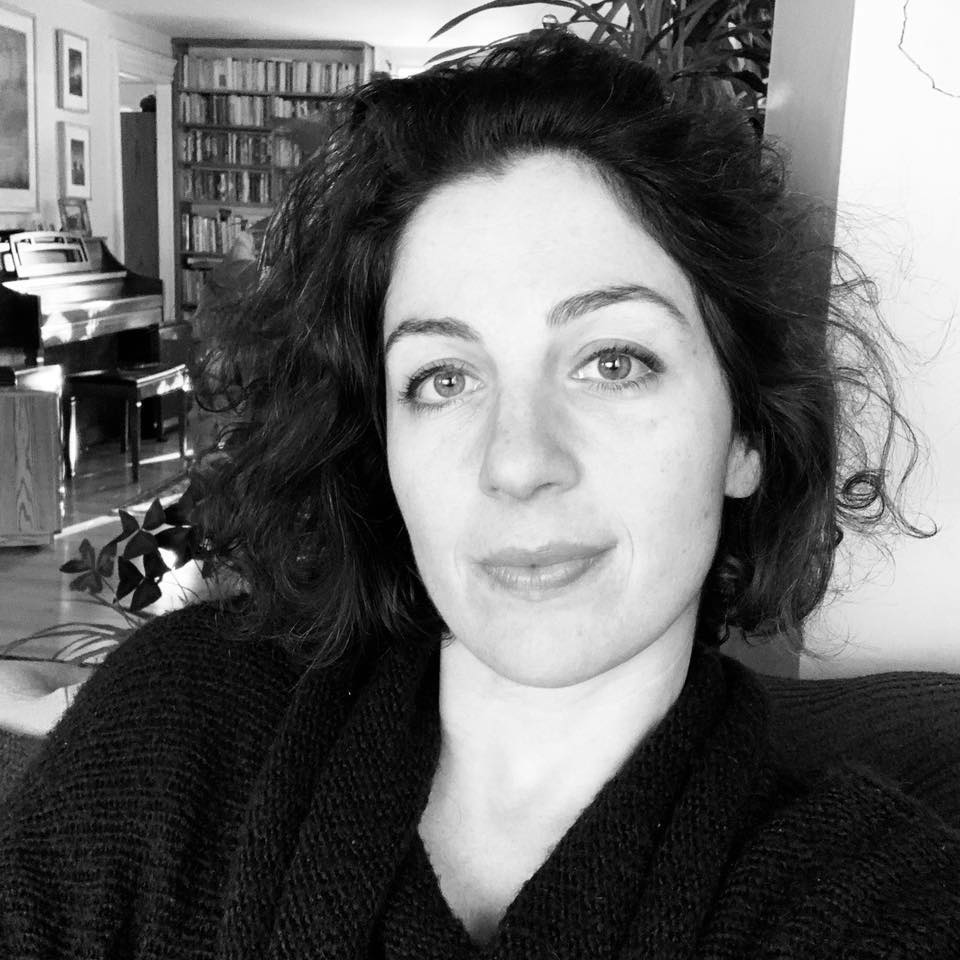
How did your early path as a painter lead you into documentary film, and what made you realise that this was the medium through which you wanted to tell the story of Famagusta?
In 2003, I was living in San Francisco, working on my painting and preparing to apply to graduate school. The Iraq war had just begun, and as anti-war protests intensified in the city, I became involved as a legal observer, which was my first experience with a video camera as a form of witness. At the same time, the Turkish government simultaneously loosened restrictions at some checkpoints in Cyprus. This prompted me to buy a video camera and travel to Cyprus, marking my first visit to the north and to Famagusta.
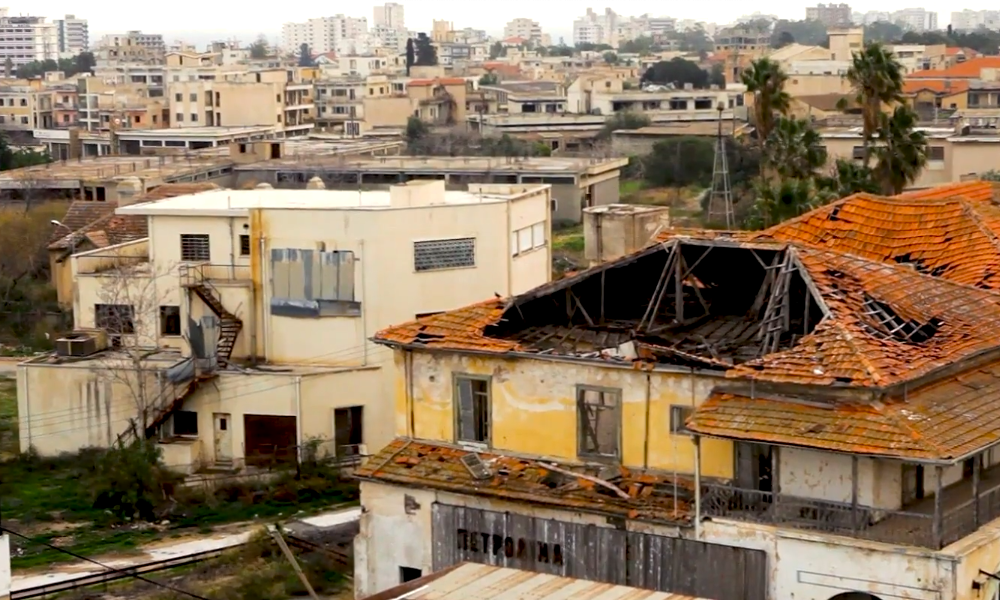
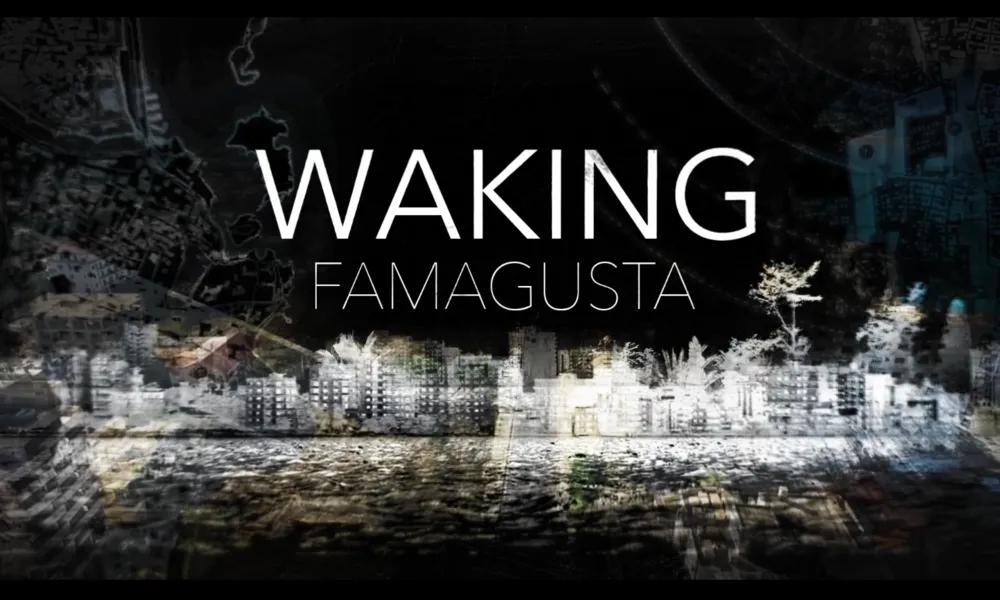
Image: Still from Waking Famagusta, courtesy of director Vasia Markides.
Soon after, I was accepted into graduate school in Boston to study painting and moved there to pursue my MFA. By then, I had become deeply drawn to Famagusta and especially Varosha, walking its perimeter repeatedly and forming close friendships with Turkish Cypriots. As I continued my painting practice, I also became increasingly immersed in the politics of Cyprus. Each visit to the north shifted my understanding, revealing how fragmented the histories of both Greek and Turkish Cypriots were, and how those narratives continued to sustain division.
I kept filming during these trips without yet knowing what the material would become. Over time, painting no longer felt sufficient for the kind of storytelling this unique place demanded. Documentary film allowed me to hold complexity, contradiction, and lived experience in a way that felt more appropriate for the story of Famagusta. That realization led me to shift my focus, and for my MFA thesis I produced a 33-minute documentary, Hidden in the Sand, which became my first study of Famagusta and the foundation for the work that followed.
What does Famagusta, and especially Varosha, mean to you personally and to your family’s history?
My mother spent her childhood in Varosha, and like many children of refugees, I grew up hearing stories of life in Famagusta. She spoke of it as a kind of paradise – an international, vibrant, and forward-thinking city. Varosha was built along one of the most beautiful sandy beaches in the eastern Mediterranean and was surrounded by fertile agricultural land and citrus orchards. People were closely connected to the natural world, and there was a strong sense of community and belonging. It also had a cultural and intellectual life that exceeded what existed elsewhere in Cyprus. Women, in particular, were encouraged to pursue education and participate actively in society rather than being confined to domestic roles. That was the Varosha my mother described.
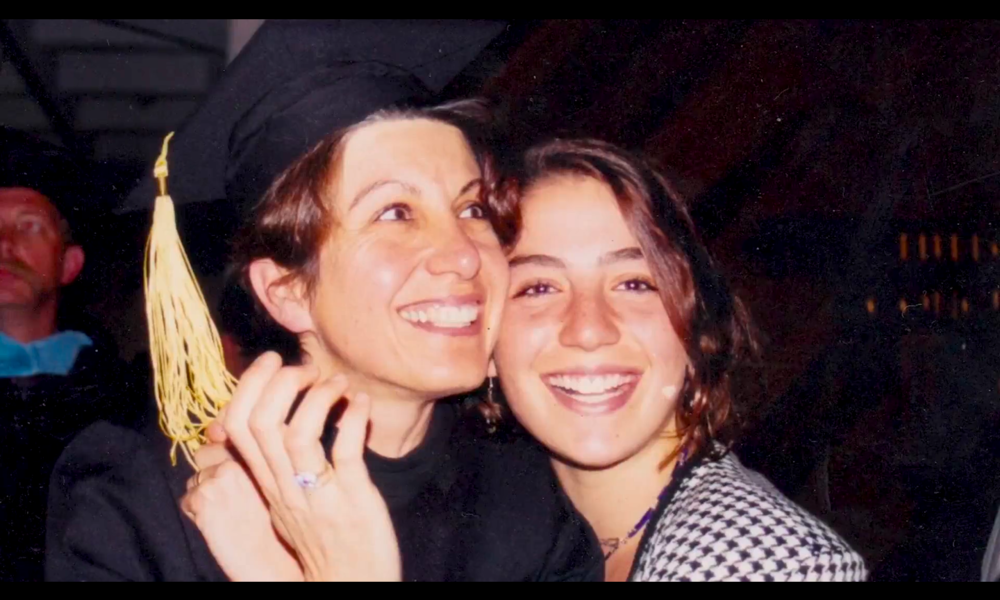
Image: Still from Waking Famagusta, courtesy of director Vasia Markides.
For me, the impact was very different, since I never experienced that city. Instead, I encountered Varosha as a “ghost city”, and it immediately pulled me in. Watching the buildings slowly decay while nature pushed through the cracks felt like a glimpse into a post-human world. I kept returning with my camera, year after year, not only to bear witness to a place most of the world knew little to nothing about, but also to understand my own fixation. I didn’t fully know why I kept going back; I just did, again and again, camera in hand.
How did your vision evolve from your first film on Famagusta (Hidden in the Sand) to Waking Famagusta?
Hidden in the Sand was an exploration of the Cyprus problem itself and, in many ways, of my own awakening. It marked a moment of coming out of the dark. I began to understand what it means to be Cypriot, rather than strictly Greek-Cypriot or Turkish-Cypriot. My initial aim was to expose Famagusta’s plight to a wider audience, but in the process of making the film, I began to question everything I had been taught about the conflict while growing up and attending several years of public school in the south. The film became as much an unlearning as it was an act of documentation.
With Waking Famagusta, my focus shifted toward the future. The film looks at what the city represents in a broader global context and how it might offer a sustainability-focused approach to rebuilding and reconciliation. As the climate crisis increasingly shaped my thinking, Famagusta became an emblem – a place that reflects the consequences of division and greed, but also holds the potential for imagining different ways forward. Ultimately, the film asks whether, by looking beyond the past and setting aside entrenched divisions, Cypriots might transform a prolonged crisis into an opportunity for collective renewal and empowerment. This new approach could offer a different inheritance to the next generation, including my own daughter.
The Ecocity concept blends environmental restoration with reconciliation. How did this idea emerge, and how do you balance artistic storytelling with advocacy in the film?
The idea began with my mother. When I first encountered Famagusta and Varosha in 2003, she was immersed in permaculture, ecovillages, and sustainable communities, teaching these subjects at the University of Maine and developing hands-on projects in both Maine and Cyprus. One of those projects involved bringing experts from Australia to help design a permaculture “demonstration site” at the Agia Skepi detoxification center in Filani, where men in recovery now work directly with the land, growing food and caring for the land and animals that help sustain the center. Anytime my mother and I spoke about Famagusta, she would share her dream of seeing Varosha rebuilt to meet 21st-century standards for sustainability, as a model ecocity that could serve as an example for the world. We discussed the idea for years, but it was when I connected with Ceren Bogaç, a Turkish-Cypriot architecture professor from Famagusta, when it all came together. She immediately saw the value of the idea, so we joined forces and our team began to take shape.
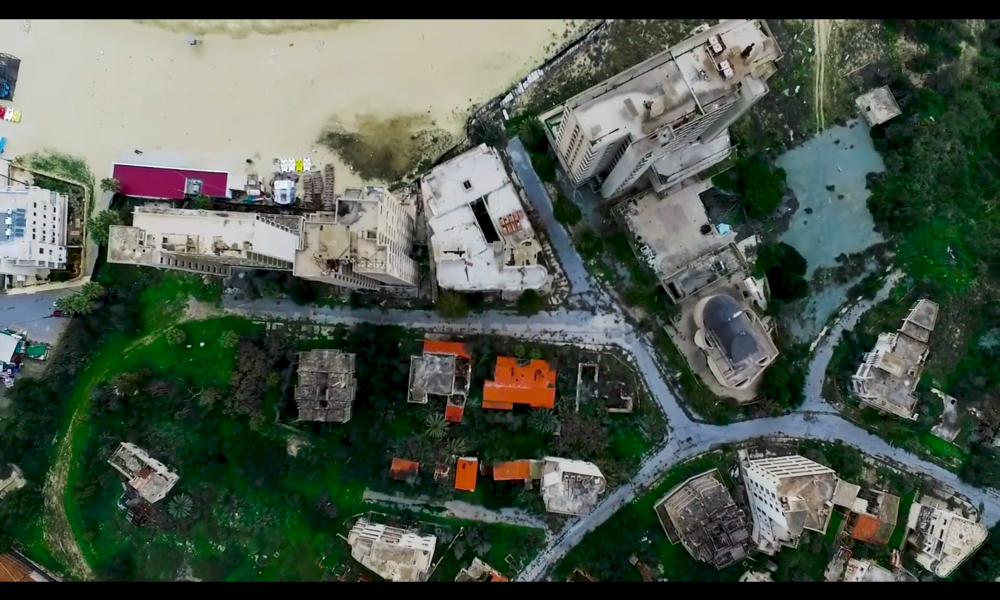
Image: Still from Waking Famagusta, courtesy of director Vasia Markides.
Growing up, I was inspired by how my mother didn’t just talk about ideas; she put them into practice. Around the same time, I was becoming increasingly aware of the climate crisis, and this was my greatest source of anxiety. I had been living in large cities after finishing college, and having grown up in the forests of Maine, I missed having daily contact with nature. The idea of a city designed around natural systems, with green space, public commons, sustainable food and energy production and room for wildlife to flourish, immediately resonated with me. What ultimately hooked me was that this vision wasn’t just ecological; it was also social and political. The possibility that rebuilding Varosha in this way, could encourage collaboration and peaceful coexistence between Cypriots from north and south made it feel uniquely powerful.
Balancing advocacy with storytelling was one of the greatest challenges in all this. While filming in Cyprus, I was also launching the Famagusta Ecocity Project, moving between roles as organizer, activist, filmmaker and fundraiser. I grew conscious of how the camera functioned, not as a tool for persuasion, but as a space for listening. Over time, especially as the project unfolded across many years and life changes, I became more interested in letting uncertainty, process, and human relationships drive the narrative. In the edit, the challenge was weaving together personal history, future vision, and lived experience on the ground, allowing the personal and the political to speak to each other rather than compete.
What have been some of the most challenging or unexpectedly moving moments during the years you have spent filming this story?
With very little funding, I was carrying much of the work on the film alone while balancing motherhood and full-time teaching. Maintaining energy and focus over such a long arc required patience and trust in the process, but the incredible friendships formed with members of the Famagusta Ecocity Project team helped sustain me over the years.
One moment I will never forget happened far from Cyprus. I was sharing the Kickstarter fundraising video with a friend in Maine, and her five-year-old daughter was watching with us. When the video ended, she quietly went to her room and came back holding a dollar bill. She handed it to me and said she wanted to contribute to the campaign. I was completely taken aback. What had moved her was the idea that people had been prevented from returning to their homes for decades and were still living in a divided country. That a child could grasp the seriousness of that reality, and want to be part of the solution, was incredibly moving.
I’ve also been continually surprised by the outpouring of support from Cypriots in both communities. People young and old reached out, eager to help and be involved. In a world so shaped by capitalist thinking, the ecocity concept can seem abstract or unrealistic, yet the enthusiasm we experienced in Cyprus and beyond made it clear that many people are hungry for alternatives. As islanders, Cypriots carry a lived understanding of their relationship to land, and watching what little pristine space remains disappear at the hands of irresponsible development has raised real concern.
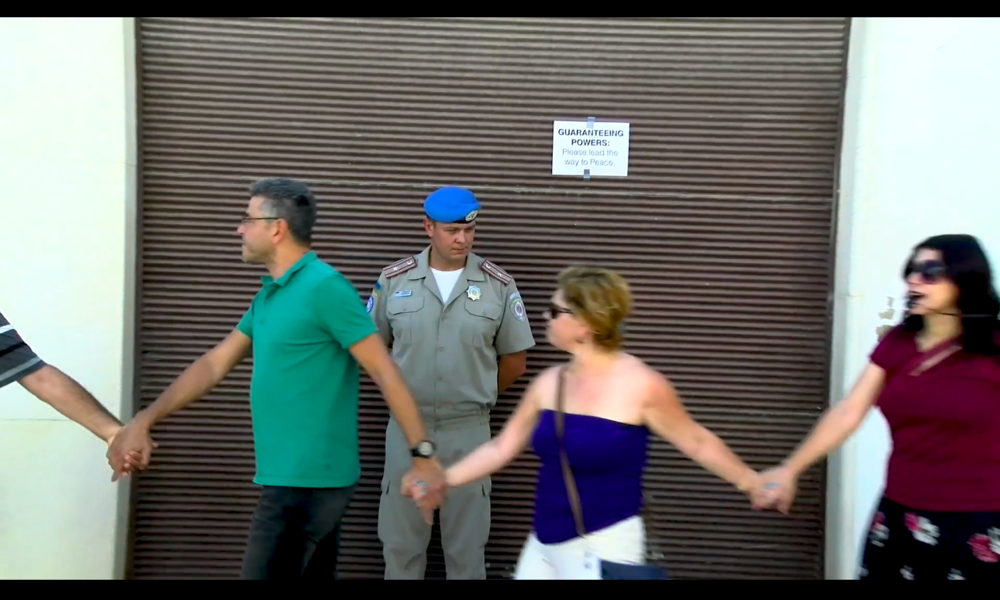
Image: Still from Waking Famagusta, courtesy of director Vasia Markides.
Another powerful experience was watching Greek and Turkish Cypriot graduate students in engineering collaborate during our week-long design workshop for the Famagusta Ecocity. They bonded, formed friendships, and worked side by side with a shared purpose, as did the bicommunal expert panelists who worked together on consolidating their research to present to MIT Professor of Architecture Jan Wampler’s design team and to the public. It became clear in that moment that when people are brought together around a goal that benefits everyone, hostilities begin to melt away. Restoring degraded land and protecting the environment can become a shared language, not just in Cyprus, but anywhere reconciliation is needed.
How do audiences in Cyprus react to your work compared with audiences in the United States or elsewhere?
Reactions in Cyprus have been largely positive, but they are also more complex and emotionally charged. Some Greek Cypriots we spoke with expressed discomfort or fear around the idea of collaboration with Turkish Cypriots, which reflects the depth of unresolved trauma. There were also Famagustian refugees who initially felt uneasy about the ecocity concept, worrying that it might be imposed on them rather than shaped through a participatory process. Many of them simply want to return to the city they were forced to leave, so any future-oriented vision can understandably feel threatening at first.
In the United States, responses have been quite different. Audiences are often surprised that a place like Varosha exists at all, and that a city can remain frozen and inaccessible for decades. Conversations tend to focus on the reality of Varosha’s status itself and on learning about the Cyprus conflict for the first time. The film often becomes an entry point into a history that many people outside the region are unfamiliar with.
What I’m most interested in, moving forward, is how these reactions evolve once the completed film is screened more widely. My hope is that the film can create space for dialogue in very different contexts, allowing audiences to engage not only with the past, but with the possibilities that lie ahead.
As a Cypriot-American, how do you experience the distance from Cyprus? Has living in Maine and working in the US changed the way you see the island and its future?
I always miss Cyprus when I’m not there. Even though I grew up mostly in the U.S., I’ve always felt Cypriot at my core. I’ve had distance from the day-to-day politics and media narratives on the island, which can be really heavy if you’re living with it all the time.
Living in Maine has shaped that distance in a good way. Being surrounded by forests, the ocean, and strong seasonal rhythms keeps me connected to nature in my everyday life. That has given me the space to think about Cyprus with more clarity and less burnout. The Cyprus problem is something people there carry constantly, and that is exhausting. Being away has helped me stay engaged without shutting down, and to keep returning with energy.
Moving back to Maine after many years living in cities like New York, Boston and San Francisco, has helped me see Cyprus more clearly. Living in a place where land still matters so much to daily life has reinforced my belief that ecology and community are deeply connected. Thus, working from the U.S. hasn’t made me feel less connected to Cyprus, it has actually helped me imagine its future with more clarity.
What kind of impact would you like Waking Famagusta to have, both on public conversation and on people who may know very little about Cyprus?
When I first started this film, I had very big hopes for it. I wanted Waking Famagusta to help bring international attention to the city, to contribute in some small way to a resolution, and to imagine a future where refugees could return home. I was drawn to the idea that storytelling might help create momentum toward change, not only in Cyprus, but in how we think about environmental responsibility and coexistence more broadly.
More than a decade later, I’m less focused on outcomes I can’t control, and more interested in what the film can open up. For audiences who may know very little about Cyprus, I hope it offers an entry point into the island’s history and its present, and helps humanize a conflict that’s often reduced to headlines.
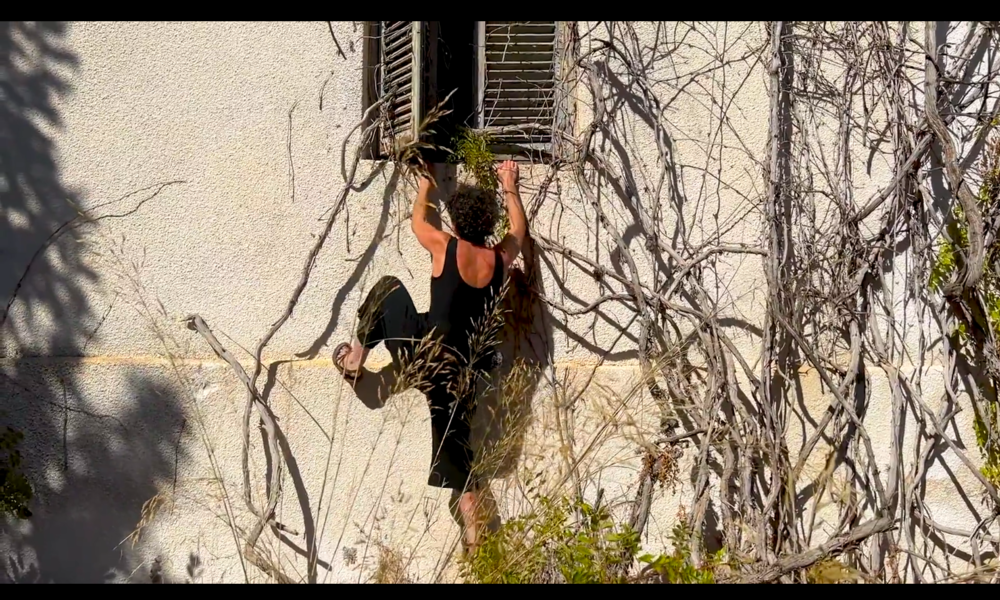
Image: Still from Waking Famagusta, courtesy of director Vasia Markides.
Ultimately, I hope the film sparks conversation, curiosity, and reflection. If it encourages people to imagine forward-looking, place-based approaches to conflict and environmental care, or inspires other artists and organizers to take on similarly complex grassroots projects, then it has done its job.
You also teach and work with young people through film and photography. What do you tell students who want to make documentaries that genuinely change something in the world?
I encourage students to really explore their creativity and push their ideas as far as they can. I focus a lot on craft, but also on helping them slow down before diving in and consider why they’re drawn to a particular story in the first place. I ask them to listen to that inner voice, their intuition, and to choose stories they care about deeply enough to stay with them through the hard labor. You really have to love the story you’re telling. Filmmaking can look glamorous from the outside, but the day-to-day reality is extremely demanding, and there isn’t much support for independent storytellers. That’s why I emphasize the importance of finding your people. Building a community around your work, people who share your values and are willing to contribute their time, creativity, and skills, is what makes a project possible and also much more fun!
One of the most important lessons I try to pass on is the value of collaboration. Many of the projects my students work on are group-based, because filmmaking is rarely a solo endeavor. Two minds are better than one, and four are better than two. I’ve seen this play out far beyond the classroom. In Cyprus, for example, the environmental and social challenges we face are only solvable when people come together across divides, each bringing their own knowledge and perspective. The solutions often already exist. What’s needed is the commitment, trust, and stamina to work toward them together.
Looking ahead, do you see yourself continuing to work on Cyprus-related stories, or are there other themes and places you are already drawn to explore?
I’ve never been very good at planning too far ahead. I usually follow whatever feels urgent and resonant at the time, but I don’t imagine ever being finished with stories from Cyprus. At the same time, I’ve always been drawn to unfamiliar places, so I will just follow the breadcrumbs and see where they lead.
Thematically, I feel myself moving toward something a bit more interior and less overtly political. I’ve always been interested in consciousness, perception, and the inner landscapes that shape how we move through the world. I’d like to make work that’s less about pointing fingers and more about exploring our capacity for growth and change.
That interest still connects back to sustainability and peace for me. I believe that how we relate to the world around us is deeply tied to how we understand ourselves. Expanding our sense of what’s possible, individually and collectively, feels like an essential part of learning to care for each other and for the planet we depend on.
To learn more about the film and its vision, you can watch the official trailer here.
Those who wish to support the final stages of production may contribute through the project’s fiscal sponsor page, which helps cover archival costs and post-production work.