

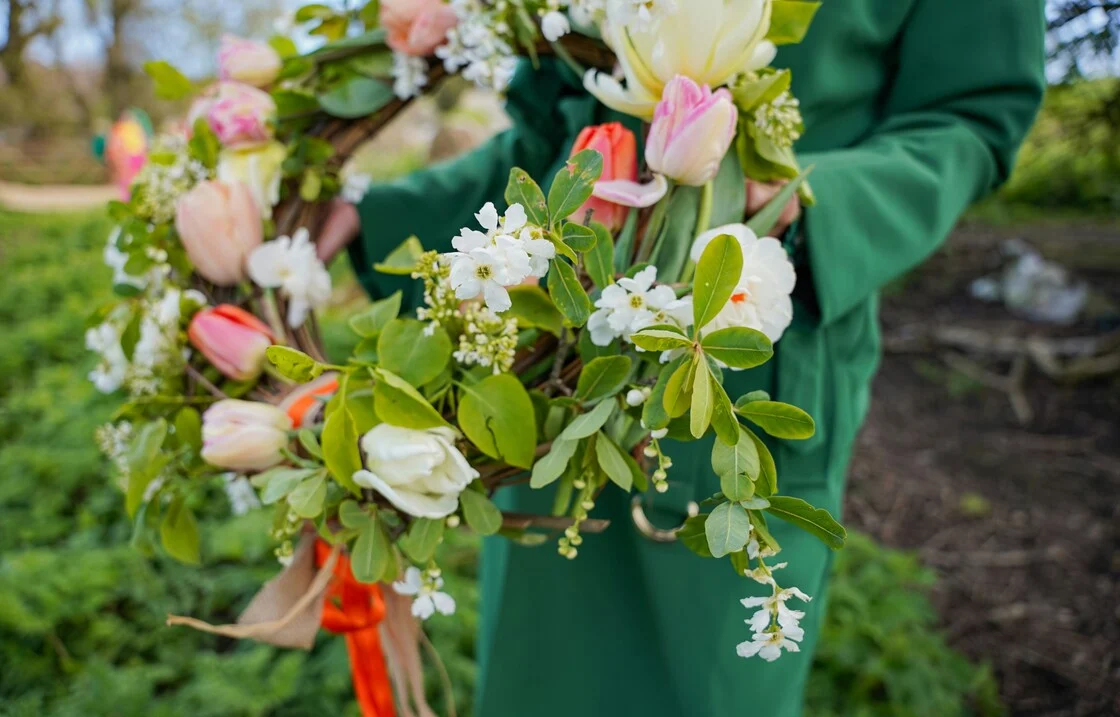
The May Day wreath is a seasonal custom marking the arrival of spring. Made from fresh flowers and traditionally hung on the front door of the house, it reflects a long-standing cultural practice connected with nature, renewal and protection for the household.
Families gather flowers from fields on 1 May to create a wreath that symbolises the new season and the rebirth of nature.
The tradition of the May Day wreath
The wreath is usually made from wildflowers collected from fields and countryside areas. Common choices include daisies and other seasonal flowers, while poppies are used more rarely.
According to folkloric research, the structure of the wreath is traditionally formed using a flexible branch of vine or another resilient material. In some cases, wire is used to create the circular base around which the flowers are arranged.
Once completed, the wreath is hung outside the house, most commonly on the front door, where it remains throughout the spring.
What the May Day wreath symbolises
The customs associated with May Day are rooted deep in historical traditions that have been passed down through generations.
May, the fifth month of the year, was linked in ancient Greece, Rome and later in Byzantine culture with celebrations honouring Demeter, the goddess of fertility and agriculture.
According to mythological tradition, the return of her daughter Persephone from the underworld each spring symbolised the rebirth of nature. The seasonal celebrations included processions and offerings of flowers, reflecting the renewal of life after winter.
Within popular tradition, the May wreath also carries symbolic meanings connected to protection, health and good fortune for the household.
The belief surrounding the wreath
In traditional folklore, nearly every household prepares a May wreath, except homes that are in mourning. It is also said that a neighbour might take a particularly beautiful wreath from another door and hang it on their own, reflecting the belief that a well-made wreath brings good fortune.
The wreath usually remains in place until mid-summer.
The wreath and the fires of Saint John
The May wreath is traditionally removed during the celebrations of Saint John the Klidonas, held in late June. On that day, fires are lit in streets and public squares, and the old wreaths are thrown into the flames. Participants often jump over the fires three times while running, following another long-standing summer custom.
Overall, the May Day wreath symbolises the renewal of nature with the arrival of spring, bringing the spirit of the season into the home.