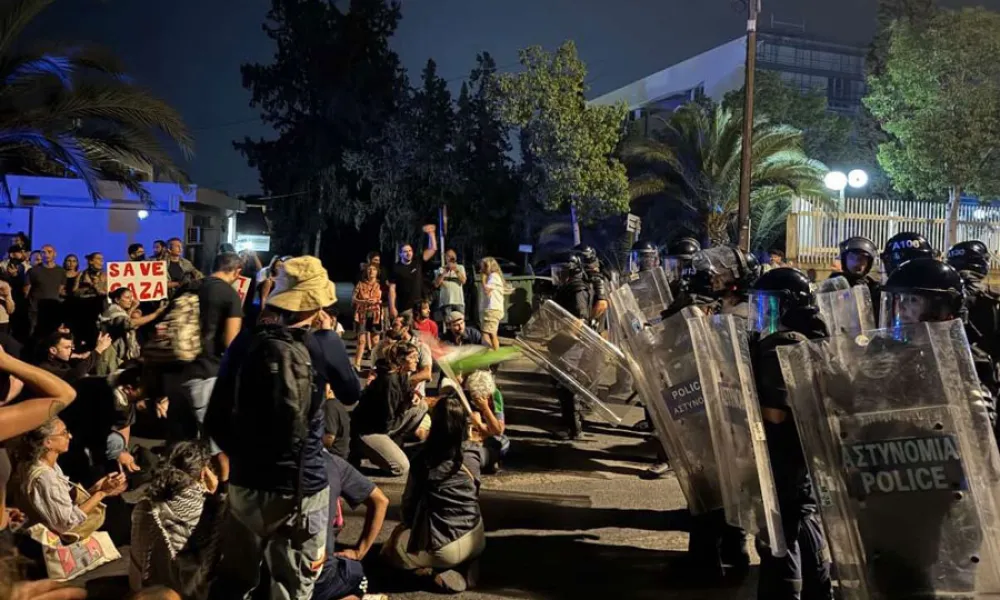

Cyprus’ House Human Rights Committee is set to examine the right to peaceful assembly today, in the wake of controversial scenes outside the Foreign Ministry last week, where police were filmed using excessive force against pro-Palestinian protesters.
Crackdown on civil liberties
The discussion, initiated by AKEL MP Giorgos Koukoumas and independent MP Alexandra Attalidou of Volt Cyprus, will take place amid mounting public concern over restrictions on civil liberties and the policing of dissent in the Republic.
The flashpoint came during a demonstration last Thursday, when protesters gathered outside the Foreign Ministry to denounce what has been slammed as Cyprus’ complicity in Israel’s war on Gaza. As Politis reported, video footage showed riot police pushing and tackling demonstrators, amid a series of complaints of excessive violence. Among those manhandled was a journalist for Haravghi of Palestinian descent.
The incident has triggered a fresh wave of protests, including a demonstration held outside Parliament on Friday, where speakers condemned the criminalisation of solidarity and the "militarised" response to peaceful dissent.
'Failure of democratic oversight'
At the heart of Monday’s parliamentary session is the controversial legislation governing public assemblies, passed earlier this year, which has been criticised by civil society and opposition parties for enabling disproportionate policing of protests. AKEL is now calling for the law’s full repeal and replacement with new legislation that respects constitutional rights and international standards.
The law had previously drawn the attention of the OSCE, which issued a legal opinion following a formal request by AKEL MP and committee chair Irini Charalambidou. That opinion raised red flags about potential infringements on the right to peaceful assembly, particularly concerning vague provisions and excessive police discretion.
The Justice Minister and Police Chief have been summoned to appear before the committee.
Opposition MPs have made it clear that the events outside the Foreign Ministry are not isolated but part of a broader pattern of state overreach in policing public expression. Attalidou, who has been a vocal critic of the assembly law since its inception, described last week’s crackdown as “a failure of democratic oversight.”