Cyprus treats earthquakes through the national plan known as ENGELADOS, which sits inside the wider ZENON civil protection framework. In a serious event the Interior Minister chairs the ministerial crisis team, the ZENON Coordination Centre builds the national picture, District Officers manage administration at the local level and Civil Defence runs operations. Fifty ministries, departments and services are wired into this system with their own procedures that are supposed to mesh when the sirens sound.
Officials admit the machinery is being tightened. The Interior Ministry’s spokesperson, Margarita Kyriakou, says coordination is under reorganisation following recommendations from 'Expertise France', with ENGELADOS already under revision. The national risk assessment follows a three-year cycle and the next publication is foreseen in 2026. Civil Defence occupies the middle of this web as trainer and synchroniser. “Preparedness is not only the state’s job, it is everyone’s,” Civil Defence spokesperson Panagiotis Liasides told Politis to the point, adding that ministries are expected to revisit their plans whenever bottlenecks or staff changes appear, while large private employers must maintain health and safety plans and can request training.
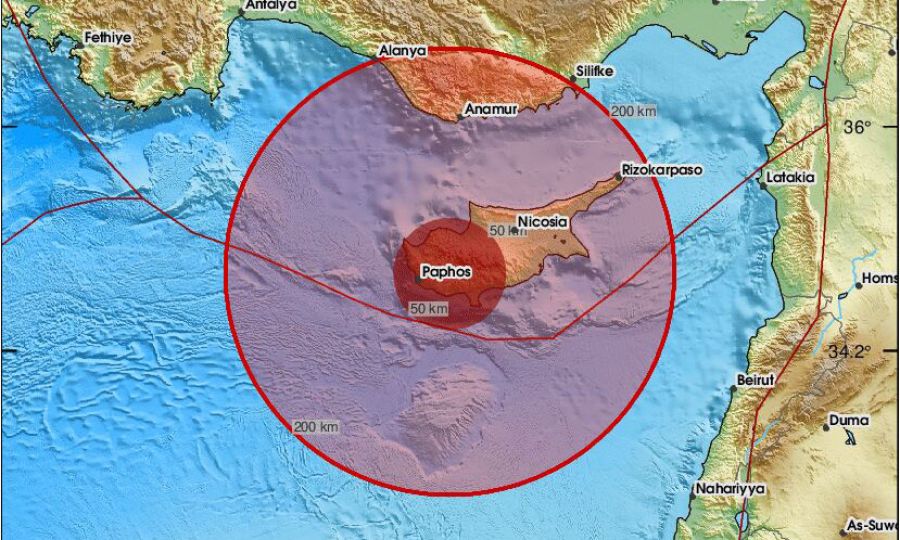
On November 12, the system met a live test. Two earthquakes of magnitude 5.3 struck hours apart near Agia Marina Kelokedaron, followed by more than two hundred aftershocks within forty-eight hours, sixteen of them between magnitude three and four and a half. The first shock came late in the morning with schools and offices full. Buildings emptied quickly, muster points filled, and by most accounts people followed protocol. “Evacuations were organised and safe,” said Liasides, crediting routine drills that have made the basic choreography familiar.
What followed in the school yards was less clear. Teachers and pupils waited for the next instruction, unsure who had authority to declare an all clear. Liasides set out the principle, saying that a reasonable interval should pass, visible damage should be checked and then people should return. In practice that reasonable interval was not defined in a way that could be applied on the spot and no single person on site held the mandate to end the wait. The hesitation that resulted was a sign that the plan needs a sharper line between the drill and the decision to return.
When systems feel the strain
Two predictable stress points surfaced within minutes. Phone networks jammed briefly as thousands tried to call loved ones at once. “It is a predictable surge, not a malfunction,” Cyta spokesperson Lefteris Christou told Politis Radio, explaining that capacity is temporarily overwhelmed when so many voice calls hit the network together. Civil Defence urged people to keep calls short, to use SOS lines only for emergencies and to prefer SMS or data for check-ins. That simple etiquette protects the emergency voice layer and should ideally sit in national guidance, not just in a one-off advisory.
The other strain is quieter but just as important. The Seismological Centre does not staff night shifts. Geological Survey director Christodoulos Hadjigeorgiou told Politis Radio that the department has proposed night coverage, yet for now analyst-confirmed parameters can lag after hours. Automated detection still happens, but confirmation and public reassurance are slower at night. Until Cyprus introduces handset cell broadcast alerts, which are targeted for 2026, first-hour messaging rests on sirens, radio and television cut-ins and coordinated social posts. Those channels can work well, provided the state speaks with one voice and repeats instructions in a rhythm people can follow.
Reading the sequence
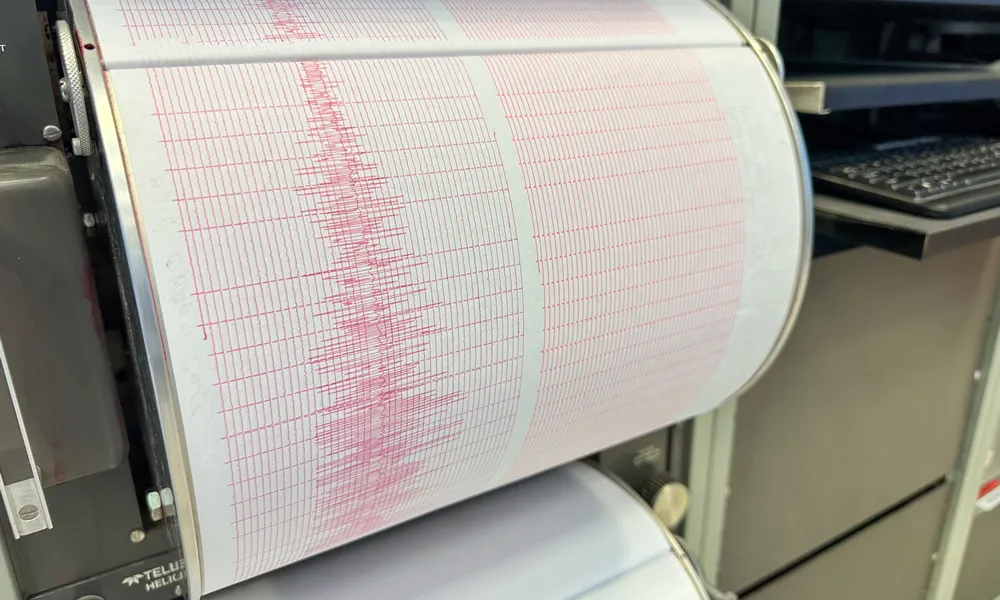
The Geological Survey described the sequence as unusually intense for Cyprus, noting that some tremors arrived so close together they plotted on the same trace. Greek seismologist Efthymios Lekkas, speaking on Politis Radio, offered a measured view. Based on the data the phenomenon appears to be in a phase of release, and moderate aftershocks can be part of that release. He reminded listeners that risk is not defined by magnitude alone, since depth, source mechanism, the specific fault and local soils shape the shaking people feel. For Cyprus the threshold of real concern generally begins above magnitude six, and nothing in the current data points in that direction.
There was another practical reminder that belongs in public guidance. Liasides noted that bunkers are not to be used after earthquakes or during floods, both of which Cyprus experienced during the same forty-eight hours. Subterranean spaces can become traps in a flood and may be structurally unsafe after a quake, so the safest place remains an open area away from walls, trees and power lines until checks are complete.
The culture of drills proved its worth. Schools and workplaces cleared without crush risks or injuries. Civil Defence slipped quickly into liaison with Police, the Fire Service and community councils, placed staff and volunteers on readiness and kept a live loop with the Geological Survey. The division of labour held, with continuity and restoration handled by the operators who own them, from water and power to telecoms, while Civil Defence set tempo and messaging through the ZENON and ENGELADOS nodes.
What comes next
The state’s trajectory is visible. ENGELADOS is under revision and Civil Defence continues training across ministries and, when asked, private organisations. Campaigns and infographics will keep circulating with practical advice that people can act on. In April Cyprus will host a major field exercise under the EU Civil Protection Mechanism with Greece, Italy, France, Germany and Montenegro, as Kyriakou explained. The scenario will simulate an earthquake on Cypriot soil and test interoperability and host nation support.
The broader question, however, is how much of Cyprus’s preparedness relies on outsourced expertise. The ongoing reorganisation, guided by Expertise France, is meant to streamline the structure of civil protection and build institutional capacity. That reliance can bring valuable experience and modern standards, but it also underscores the need for local ownership, the ability to adapt, train and decide without waiting for external direction.
The next months, leading to the 2026 risk assessment update, will show whether the state can translate foreign guidance into domestic reflex. The earthquakes of November 12 were not catastrophic, but they were a warning shot, the difference between readiness on paper and readiness in motion is measured in the first few minutes after the ground moves.