

The European Commission has officially received the European Citizens’ Initiative (ECI) “Ban on conversion practices in the European Union,” triggering a mandatory review after organisers collected 1,128,063 validated statements of support and surpassed signature thresholds in 11 Member States. It is now the 13th initiative to meet all EU requirements for examination.
Cyprus acted years earlier. In 2023, the Cypriot Parliament passed a law criminalising conversion practices with 36 votes in favour, six against, and one abstention, introduced by AKEL MP Giorgos Koukoumas.
Cyprus legislation made it a criminal offence to apply any practice, technique, or service intended to change, suppress, or eliminate a person’s sexual orientation, gender identity, or gender expression. It also prohibits sending minors under guardianship to such practices and bans public promotion or advertisement of them.
Under ECI rules, once an initiative passes the one-million-signature threshold, the Commission must examine it and respond within six months. For this initiative, the deadline is 18 May 2026. In the coming weeks, the Commission will meet with the organisers for detailed discussions, followed by a public hearing in the European Parliament before issuing its formal reply.
Conversion therapy?
Conversion therapy, also called reparative therapy or gay cure therapy, refers to practices that attempt to change, suppress, or eliminate a person’s sexual orientation or gender identity. The British Psychological Society (BPS) notes that in practice, this often means trying to stop someone from being gay or from identifying as a different gender from their sex recorded at birth. Techniques can include talking therapies, counselling, or prayer, and in extreme cases may involve exorcism, physical violence, or food deprivation.
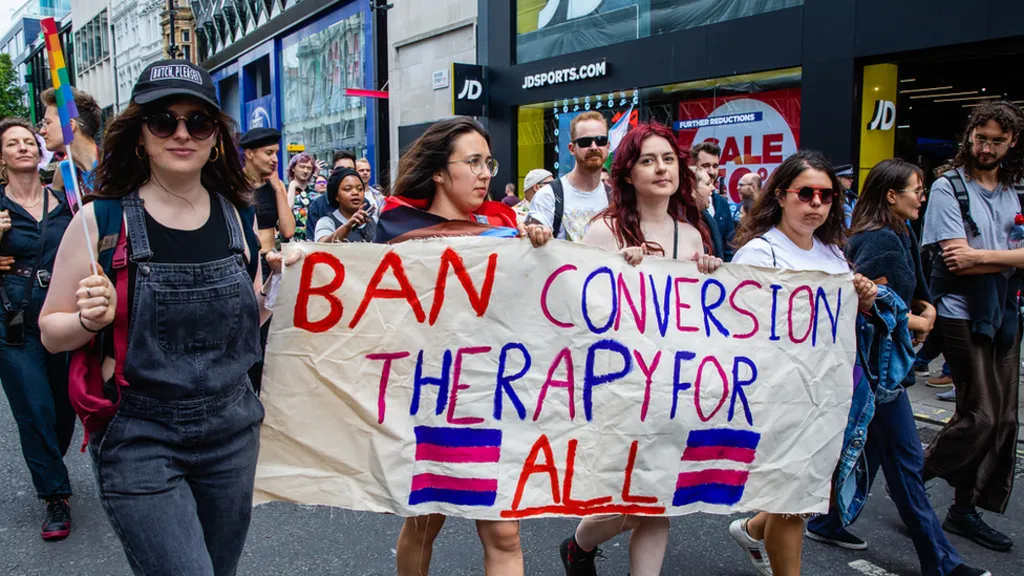
International organisations have condemned the practice:
-
The World Health Organization (WHO) calls it potentially harmful and unethical, with serious mental health risks such as depression, anxiety, and suicidal behaviour.
- The United Nations (UN) Human Rights Office defines conversion therapy as any attempt to change or suppress sexual orientation or gender identity and considers it a human rights violation, affecting rights to health, non-discrimination, and freedom from torture or ill-treatment.
The EU initiative defines conversion practices as “interventions aimed at changing, repressing or suppressing the sexual orientation, gender identity and/or gender expression of LGBTQ+ persons” and calls on the Commission to propose a binding EU-wide ban.
European Citizens’ Initiative is an official EU democratic tool that allows EU citizens to directly call on the European Commission to propose new laws.