The coming year is set to be transformative for science and research, with groundbreaking developments ranging from AI-supported studies and gene therapies to human spaceflight and deep-ocean exploration.
Mapping the universe in unprecedented detail
A new type of telescope designed to revolutionise astronomy has been completed this year in Chile. Unlike most telescopes, which focus on specific objects of interest, the Vera C. Rubin Observatory will continuously scan the sky.
Starting in early 2026, it will map the entire sky in unprecedented detail every three days for a decade, generating millions of nightly alerts whenever an object moves, changes, or appears suddenly. Within a year, Rubin will collect more optical data than all previous telescopes combined, creating the most detailed 3D map of the universe ever produced, accessible via an online portal.
The observatory is expected to track over five million asteroids - including around 100,000 near-Earth objects - and map some 20 billion galaxies, 17 billion stars, and six million smaller Solar System bodies.
Lunar activity intensifies
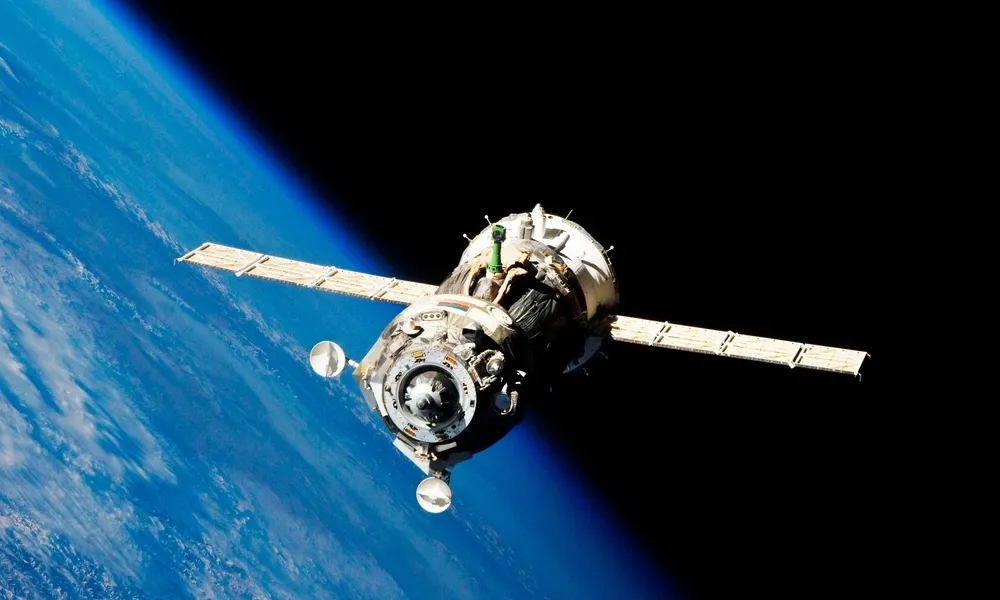
Next year will also be a busy period for lunar missions. NASA’s Artemis II mission will send four astronauts into orbit around the Moon aboard the Orion spacecraft. This ten-day mission will be the first crewed lunar flight since the 1970s, paving the way for future Moon landings and establishing a permanent human presence, as a precursor to historic missions to Mars.
China plans to launch its next lunar exploration mission, Chang’e-7, in August. The mission will deploy a hopping spacecraft capable of absorbing shocks to land near the Moon’s south pole—a region known for its rugged terrain. Chang’e-7 will search for water ice and study moonquakes, following in the footsteps of India’s Chandrayaan-3 mission, which successfully landed near the south pole in 2023.
Eyes on Mars and beyond
Researchers are also focusing on Mars. Japan plans to launch the Martian Moons eXploration (MMX) mission to visit Phobos and Deimos, the Red Planet’s moons. MMX will return surface samples from Phobos to Earth in 2031 - a first in history.
Meanwhile, the European Space Agency will launch PLATO, a satellite designed to detect exoplanets. Equipped with 26 cameras, PLATO will monitor over 200,000 bright stars, identifying Earth-like planets with temperatures suitable for liquid water.
India will also launch its first mission to study the Sun, Aditya-L1, during the solar maximum of the 11-year cycle, providing crucial data on sunspots, solar flares, and storms to improve understanding of solar activity.
China embarks on deep-ocean drilling
The Chinese ocean drilling vessel Meng Xiang is set to begin its first scientific expedition in 2026. The ship will drill up to 11 kilometres through the oceanic crust into the Earth’s mantle to collect samples, helping researchers understand how the ocean floor forms and what drives tectonic activity.
AI-Supported science takes centre stage
Artificial intelligence has made leaps this year and is set to play a growing role in 2026. Autonomous AI “agents” that incorporate large language models (LLMs) will handle complex, multi-step research tasks with minimal human supervision.
The next year may see the first scientific breakthroughs achieved by AI itself. At the same time, widespread AI use could reveal critical system failures, such as data loss. Researchers are also developing smaller, more specialised AI models that can learn from limited datasets and solve specific reasoning problems without generating text, focusing instead on mathematical information processing.
Gene editing advances
Two clinical trials are expected to launch in 2026, developing personalised gene therapies for children with rare genetic disorders. These build on the treatment of KJ Muldoon, a baby cured of a rare metabolic disorder using customised CRISPR therapy.
One trial in Philadelphia will test gene-editing therapies for children with seven rare metabolic disorders, while another aims to treat genetic immune system disorders.
Early cancer detection
A UK clinical trial testing a single blood test capable of detecting around 50 types of cancer before symptoms appear is expected to report results in 2026. The test detects fragments of DNA released by cancer cells and can identify the tissue or organ of origin. More than 140,000 participants took part, and promising results could see the test rolled out across UK hospitals.
Milestones of 2025
2025 saw historic achievements across medicine, space, and energy:
-
A child with a life-threatening metabolic disorder became the first patient to receive a fully personalised gene-editing therapy.
-
Two new gonorrhoea drugs proved effective in large trials and were approved by the US FDA—the first new treatments in decades.
-
Genetic analysis confirmed that a 146,000-year-old skull, known as the “Dragon Man,” belonged to a Denisovan, offering unprecedented insight into early human species.
-
Xenotransplantation advanced with genetically modified pigs providing safer tissues for human transplants.
-
Vera C. Rubin Observatory captured its first images, revealing millions of previously unseen asteroids and distant galaxies.
-
Renewable energy surpassed coal globally as the leading source of electricity, with China leading the expansion of solar, wind, and battery storage technologies.
-
The 2025 Nobel Prize in Physiology or Medicine was awarded to Mary E. Brunkow, Fred Ramsdell, and Shimon Sakaguchi for discoveries in peripheral immune tolerance, paving the way for new cancer and autoimmune disease therapies.