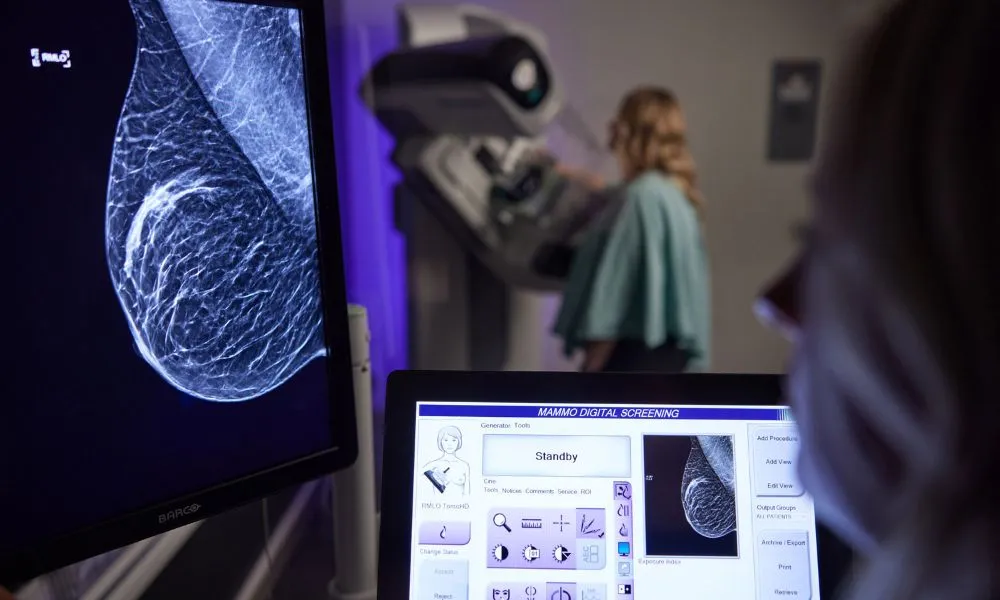
Artificial intelligence–supported mammography is more effective than conventional screening, according to results from a large randomised clinical trial published in The Lancet. The findings add to growing evidence that AI can strengthen breast cancer screening programmes without increasing false positives.
Why It Matters
Mammography is known to reduce breast cancer mortality through earlier diagnosis and treatment. Even so, a significant number of cancers still go undetected. Estimates suggest that 20% to 30% of cancers diagnosed between screening rounds could have been identified at the previous mammogram.
The Study at a Glance
The study was conducted between April 2021 and December 2022 and involved more than 100,000 women across four screening centres in Sweden.
Participants were randomly assigned to:
- AI-supported mammography, or
- Standard practice, involving double reading of mammograms by radiologists without AI assistance.
In the AI group, a specialised system analysed mammograms, assigning low-risk cases to single reading and high-risk cases to double reading, while also flagging suspicious findings. The AI system had been trained and validated on over 200,000 examinations from multiple institutions in more than 10 countries.
Key Findings
According to the full results published this week:
- AI use led to a 12% reduction in cancers diagnosed in the years following screening
- 16% fewer invasive cancers were recorded
- 21% fewer large tumours were detected
- 27% fewer aggressive subtypes were found
- 81% of cancers in the AI group were detected during screening, compared with 74% in the control group
- There was no significant difference in false-positive rates between the two groups
Reduced Workload for Radiologists
Earlier interim findings from the MASAI trial, published in The Lancet Oncology in 2023, showed a 44% reduction in radiologist workload when AI was used.
A further early analysis, published in The Lancet Digital Health in March 2025, reported a 29% increase in cancer detection without a rise in false positives.
Implications for Screening Programmes
Researchers say the findings could support wider adoption of AI in breast cancer screening, particularly given ongoing shortages of specialised medical staff.
Lead author Kristina Lång, from Lund University, said that broad implementation of AI-supported mammography could both ease radiologists’ workload and identify more cancers at an earlier stage, including aggressive forms of the disease.
However, she stressed that AI integration in healthcare must proceed cautiously. “AI should be introduced using validated tools and continuous monitoring, to assess its impact on national and regional screening programmes,” she noted.
Study Limitations
The researchers also highlighted several limitations:
-
The trial was conducted only in Sweden
-
It involved one type of mammography machine and a single AI system
-
Participating radiologists had moderate to very high levels of experience
Despite these constraints, the study is among the most comprehensive to date and adds significant weight to the case for carefully regulated use of AI in population-based breast cancer screening.