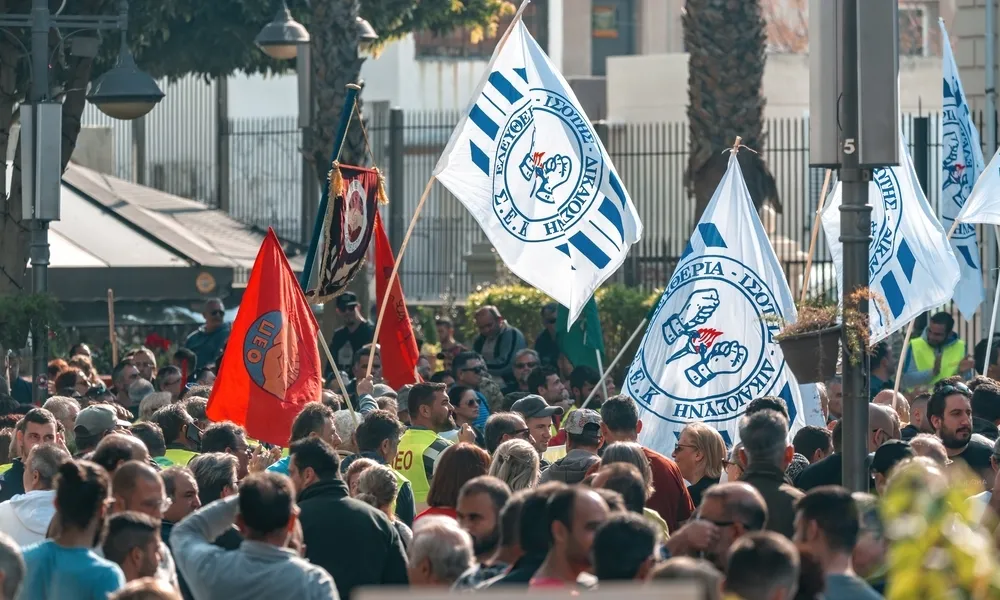



Cyprus has long been considered one of the EU member states with a relatively strong trade union footprint. Yet that presence has thinned over the past two decades, particularly in the private sector and in services. At the same time, Brussels is moving in the opposite direction. Under the Directive on Adequate Minimum Wages (2022/2041), the European Union has set a target for 80 per cent of workers to be covered by collective bargaining.
On the ground in Cyprus, however, collective influence has been steadily eroding. Trade unions have seen their bargaining leverage narrow and their public image come under strain. The shift did not happen overnight. It was the cumulative result of structural changes, with the 2013 financial crisis acting as a decisive turning point. That period introduced a climate of fear and urgency into labour negotiations, while accelerating more flexible and often more precarious employment models.
The expansion of individual employment contracts deepened that transition. Work became increasingly personalised, and with it the notion of collective protection weakened in practice. Meanwhile, the economy’s shift towards services, coupled with higher workforce mobility, made organising more complex and union presence less visible and, for some workers, less essential.
A fracture in trust
For many within the labour movement, 2013 marked a rupture. Nikos Loizides, vice-president of the Union 'Isotita', says the concessions made during the banking collapse left lasting damage.
“In 2013, unions accepted everything concerning workers so that the banks would not go bankrupt. That created doubts about the motives of the unions,” he says.
Wage cuts, the freezing of benefits and restrictions to the cost-of-living allowance (CoLA) were agreed in a context of widespread uncertainty. According to union officials, that period planted a distrust that has never been fully reversed. In several sectors, the loss of a 13th and 14th salary, the shrinking of provident funds and reduced purchasing power reinforced the perception that hard-won collective rights were no longer secure.
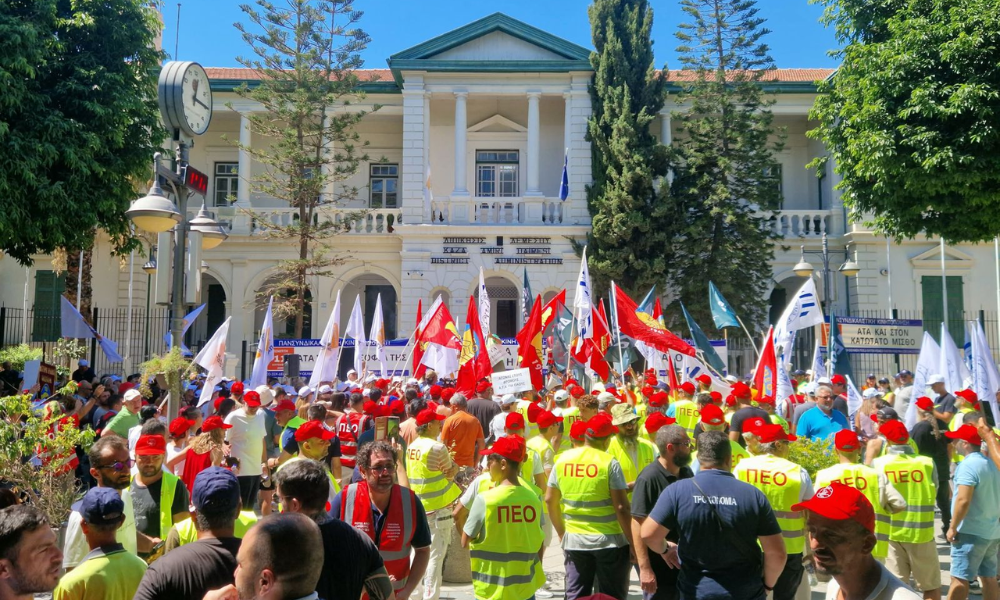
The rise of individual contracts
At the centre of the shift lies the dominance of individual contracts.
George Frangos, president of the Cyprus Union of Journalists (ESK), describes them as “a slow-burning bomb that undermines labour relations”.
“An individual contract isolates the worker and leaves them alone opposite the employer,” he says. Although collective agreements legally and institutionally override individual contracts, in practice, he argues, they are frequently sidelined.
Sotiroulla Charalambous, General Secretary of the Pancyprian Federation of Labour (PEO), points out that the trend predates the crisis. Even before 2013, she says, employers were increasingly using personal contracts outside collective frameworks. The hiring of EU nationals often came with contracts detached from existing collective agreements, gradually breaking the link between recruitment and collective coverage.
The crisis accelerated that shift. With unemployment rising and job security fragile, bargaining power tilted. As Charalambous describes it, the message became blunt: “If you want a job here, there are no unions.” Negotiation migrated from the collective table to one-on-one arrangements. What had once been the exception became, in many sectors, the norm.
The result has been a new workplace culture in which claims are pursued individually and agreements struck privately, rather than collectively negotiated.
Fragmented workplaces
Cyprus’s economic model has also evolved. Services now dominate, and the landscape is defined by small and often family-run businesses. These settings are harder to organise.
In retail and food chains, Charalambous says, workers face pressure not to unionise. Beyond that, the rise of remote work and digital operations has altered the terrain altogether. Employees increasingly work apart from one another, without a shared physical space that once enabled collective discussion and mobilisation.
At the same time, the growth of freelance arrangements and multi-employer collaborations has blurred traditional employment lines. Collective organisation becomes more complex when the workforce itself is fluid and dispersed.
Mobility has also become a coping mechanism. Particularly in lower-paid roles, workers move between companies in search of marginally better conditions rather than investing in long-term collective action. Exit replaces negotiation.
Image and political climate
Public perception has played its part.
Loizides argues that the executive branch has, at times, sought to frame unions negatively, especially during debates over the cost-of-living allowance and the minimum wage. In his view, coordination between government and employer organisations has weakened workers’ bargaining standing.
From PEO's perspective, there has been a broader effort to devalue organised labour and to divide workers into “privileged” and “non-privileged” camps, particularly during discussions around CoLA.
Frangos highlights another dimension: generational distance. Younger workers have not experienced union culture in the same way as previous generations. They have not worked alongside veteran trade unionists or witnessed collective struggles firsthand. Moreover, the question “Are you a member of a union?” during recruitment processes, he says, can itself foster apprehension.
The question of institutional backing
Across the board, there is agreement on one point: collective bargaining cannot survive without institutional reinforcement.
Charalambous argues that without active state intervention, “the freedom of a worker to organise is illusory”. She calls for guaranteed union access to workplaces and for meaningful enforcement of collective agreements.
From the journalists’ union side, the position is clear: “There is no substitute for collective struggle.” Yet without regulatory and economic incentives that favour collective agreements, reversing the decline will be difficult.
An overturned balance
The balance between organised labour and employers has shifted. Employers have adapted quickly, adopting new tools and flexible models of work. The trade union movement, by contrast, has been forced into reactive adaptation within an economy transforming faster than its institutions.
The weakening of union influence is not the product of a single cause. It reflects the aftermath of economic crisis, institutional gaps, labour market restructuring and changing social attitudes. The open question is whether European pressure and internal reorganisation will be enough to restore stronger collective representation in a labour market that continues to fragment and evolve.