
Redux
Every journey circles home
The constant repetition of Ankara’s “unchanged position” on a two-state solution in Cyprus is not only a sign of a lack of political vision, it is also a crude undermining of the culture of resolution.
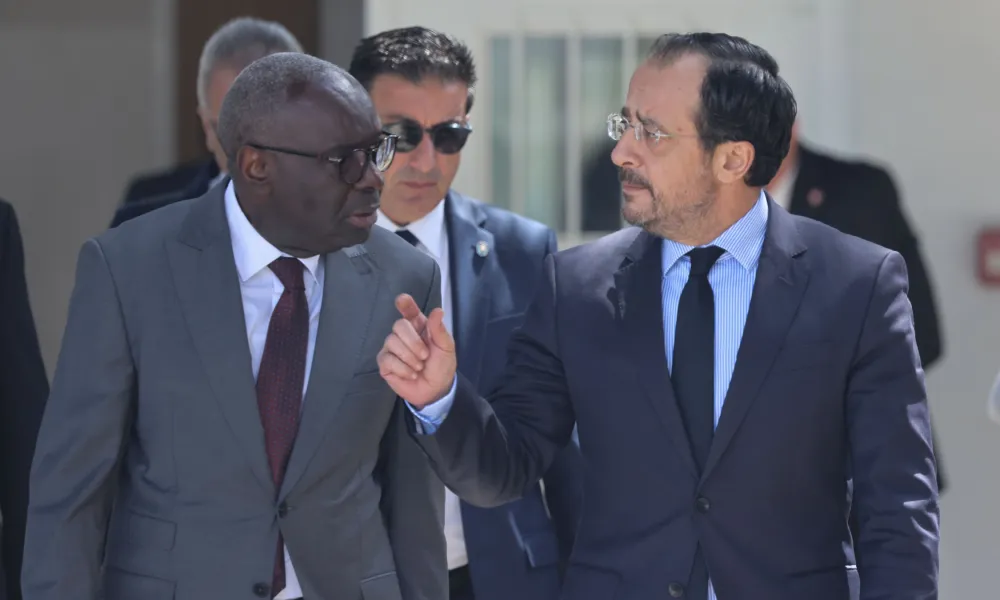
Every meeting, every briefing, every “government source” ensures we are reminded that “there has been no change.” In statements following the meeting in Ankara, Kyriakos Mitsotakis spoke of a “window of opportunity,” referring to the UN Secretary-General’s initiatives and the need to restart negotiations from where they were interrupted in 2017 at Crans-Montana. The Turkish President made no mention of Cyprus. Perhaps he has vowed not to be caught off guard by the Cypriots again. Perhaps he does not wish to escalate publicly, or to make rhetorical commitments at a time when the wider agenda demands low-key diplomacy.
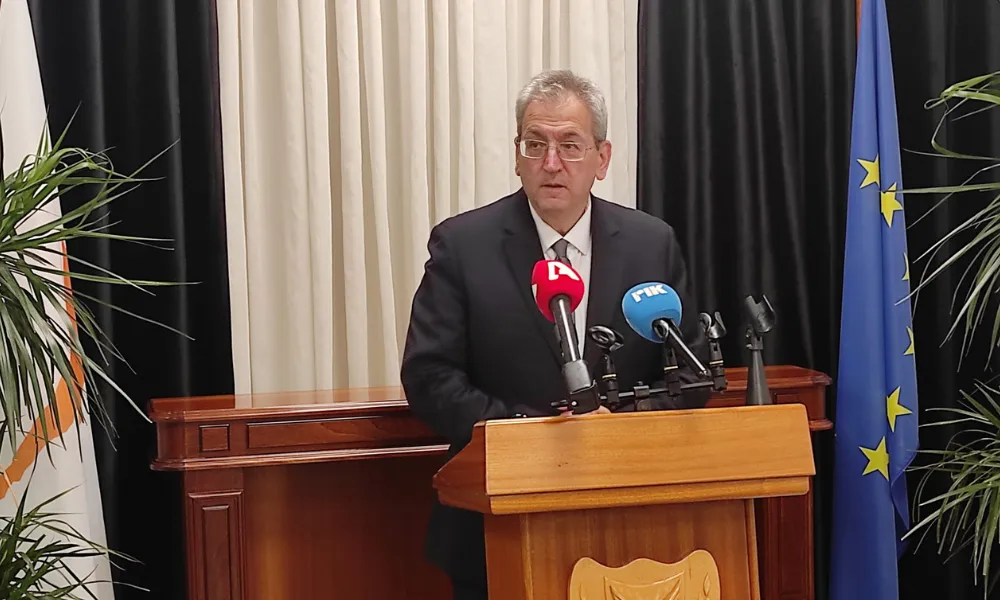
The following day, official briefings via an objective “government source” made sure to bring back into the spotlight that “there has been no change in positions.” And the pattern was faithfully reproduced: top story on RIK Three, not RIK Four, the same tune every hour, “the Turkish position on two states was repeated by the Turkish President according to the briefing Nikos Christodoulides received from the Greek Prime Minister.” As if anyone expected Recep Tayyip Erdoğan to suddenly adopt the Swedish position on Cyprus. Of course, he will repeat his own Turkish stance. But why do we persistently reproduce Turkish rhetoric instead of focusing on what can move forward? What exactly did we expect the source to reveal? That tectonic activity took place? That some shift is visible? By definition, government sources are not bearers of optimism, they are managing expectations. But managing expectations should not become the maintenance of fear.
The Cyprus government insists on presenting every repetition of the Turkish position as proof of intransigence and deadlock. And it works, even if it is as reliable as a game of Chinese whispers. What Erdoğan actually said to Mitsotakis and how exactly the Greek Prime Minister conveyed it to the Cypriot President matters little, as long as a culture of assumed failure is cultivated: “he says the same thing, so there is no point.”
Diplomacy for a solution does not function through public statements, certainly not these statements. It works through painstaking and persistent behind-the-scenes efforts, and publicly through the building of trust and maintenance of communication channels. It is far from trivial to “maintain a climate of low tension and functional communication.” In a period of crisis, calm is a necessity, not a luxury.
Whether the Greek Prime Minister said “a few good words” or whether the Turkish President kept silent publicly does not change the fact that attempts to advance the talks continue. That is what matters.
Peace in Cyprus will not emerge from hardline readings or from dismissing the other side. It arises when your counterpart repeats their position, you repeat yours, and yet you persist in dialogue. The repetition of the Turkish position is not news. Real news would be a collapse of communication.
If there is a “window of opportunity,” it will not be opened by news bulletins or leaks. It will be opened by the political will not to be trapped in the rhetoric of stagnation. So rather than endlessly recycling what “the Turkish President repeated,” perhaps we should ask what we can repeat ourselves: a commitment to dialogue and the desire for Cyprus to be reunited. Above all, the understanding that no conflict has ever been resolved by headlines.