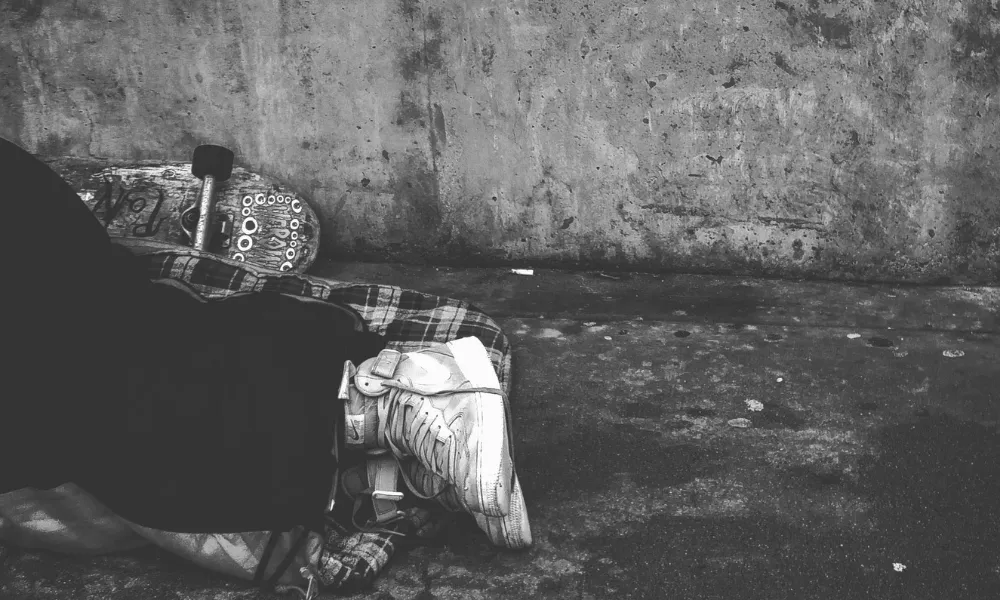

Around 40 people in Cyprus are currently dealing with temporary housing difficulties, according to official data, despite the country reporting strong economic indicators and significant public debt reduction within the European Union.
The figures emerge shortly after the death of a houseless woman in Kato Paphos, a case that drew nationwide attention after she died outside an abandoned building during cold weather conditions.
Current national figures and demographic profile
According to the Deputy Ministry of Social Welfare, the largest concentration of housing vulnerability is recorded in the main urban provinces, primarily Limassol and Nicosia.
Most affected individuals are solitary middle-aged adults, including European citizens, third-country nationals and Cypriot citizens. A notable proportion are psychiatric patients or individuals with substance dependency issues, while a smaller group consists of families with children.
These individuals are temporarily accommodated in hotels or similar facilities, with costs covered by the Social Welfare Services, until permanent rental housing can be secured.
Nationwide, the houselessness phenomenon ranges between 200 and 250 individuals annually. Social Welfare Services handled 225 cases in 2024, 380 cases in 2023 and 206 cases in 2022.
Reporting process and emergency response procedures
Reports regarding individuals or families seeking shelter are typically received directly from those affected, third parties, public agencies, police authorities or non-governmental organisations.
Following notification, Social Welfare Services take over case management and provide temporary shelter, financial assistance and psychosocial support.
Officials make immediate contact with affected individuals or families, provide urgent assistance and arrange temporary accommodation in hotels or other facilities funded by Social Welfare Services.
Authorities then assess socio-economic conditions and contributing factors and provide guidance on benefit applications, including rent subsidies available under the Minimum Guaranteed Income legislation.
Emergency financial assistance may be provided under Article 11 to cover immediate basic and specialised needs, including food, clothing and footwear. Referrals may also be made to services such as Mental Health Services for psychological assessment or treatment where required.
In cooperation with non-governmental organisations and local authorities, efforts are made to secure suitable accommodation tailored to each individual’s needs.
Monitoring, resettlement and long-term support mechanisms
Social Welfare Services arrange short-term accommodation and provide guidance on securing permanent housing. Broader housing policy remains under the responsibility of the Ministry of Interior.
Following resettlement, typically in rental housing, monitoring and counselling support may continue where necessary. Guidance is provided on applications for benefits including Minimum Guaranteed Income and disability allowances.
Individuals facing housing difficulties or requiring support can contact Social Services offices in Lakatamia (22608400), Latsia (22803500), Nicosia City Centre and Strovolos (22804605), Polemidia (25821895), Zakaki (25804514), Germasogeia (25811660), Kamares (24800207), Agioi Anargyroi (24821080), Paphos (26821600) and Famagusta (23811720).
European houselessness trends and comparative data
Across Europe, the scale of housing vulnerability is significantly higher.
A 2025 report by the European Federation of National Organisations Working with the Homeless (FEANTSA) found that more than 1.27 million people experience houselessness each night across Europe. Approximately 5% of the European Union population is expected to experience houselessness at some point in their lifetime.
Germany records the highest total number, with 531,600 houseless individuals, although this includes multiple housing vulnerability categories, including people temporarily staying with friends or relatives.
France recorded an increase of 20,000 people, bringing the total to 350,000, linked to housing shortages and rising rental costs.
Relative to population size, the Czech Republic records the highest proportion, with more than 230,000 people living in alternative accommodation or without stable housing.
According to the FEANTSA report, houselessness figures are also increasing in several European Union countries, including Finland, Denmark and Ireland.