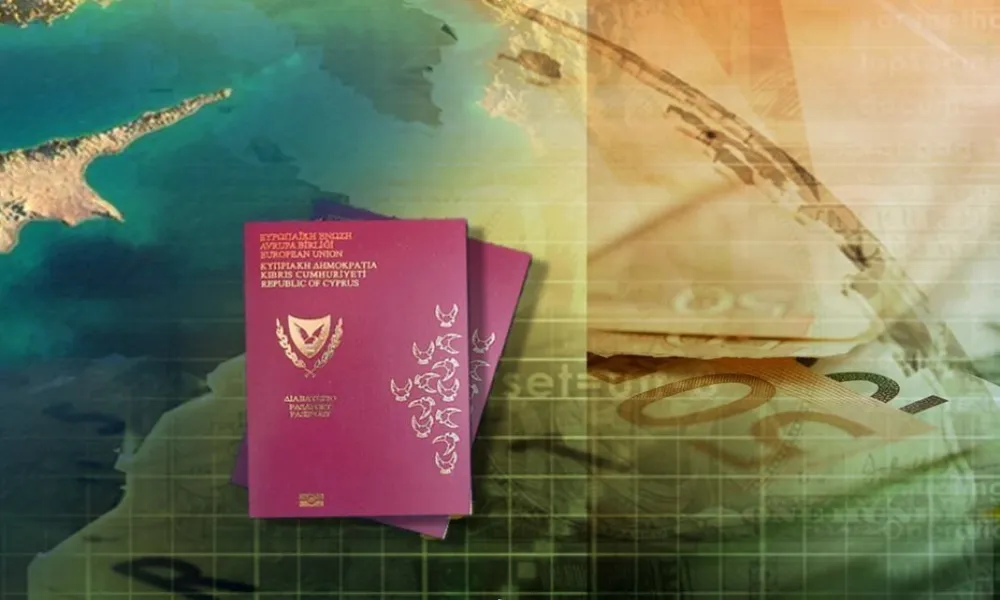
The broader perception in Cyprus, and the view among citizens that corruption prevails and even touches the highest institutions of the country, is unfortunately reinforced by the fact that in major scandals that exposed the country internationally, no convictions have resulted.
Once again, since last Tuesday and following the announcement of the majority decision of the Nicosia Criminal Court in the citizenship-by-investment case linked to the Al Jazeera video, the public sense of justice is being tested. Does justice, and more broadly the justice delivery system in all states, always satisfy the public sense of fairness? Without hesitation, the answer is no.
The public sense of fairness is not satisfied solely by the justice system. There is a range of factors that may contribute in that direction. Every citizen must understand that justice constitutes one important link in this complex chain. The public sense of fairness may, for example, be satisfied by the resignation or enforced resignation of an official for whom criminal offences are not established but are limited to disciplinary matters.
The broader perception in Cyprus, and the view among citizens that corruption prevails and even reaches the highest institutions of the country, is reinforced by the fact that in major scandals that exposed Cyprus internationally, no convictions have resulted and, consequently, at least to date, no one has been held accountable. A characteristic example is the “golden” passports.
Referring to the recent example related to the major scandal of the Cyprus Investment Programme, a review of events over the past years makes it easy to understand why the perception of impunity and lawlessness dominates society.
The “golden” passport scandal erupted following the investigative revelations by the Al Jazeera television network. From November 2020, the Cyprus Investment Programme was abolished. Everyone saw, heard, reacted and expressed anger. Since then, regarding the citizenship scandal, investigations were conducted by two investigative committees, Nikolaou and Kalogirou, four criminal cases were filed before the Criminal Court by the Law Office of the Republic, and complaints were submitted to the Anti-Corruption Authority against members of the then Council of Ministers.
To date, there has been no conviction of any natural or legal person in relation to the “golden” passport scandal. In the first case, following an acquittal at first instance, the Law Office filed an appeal, with the Court of Appeal ordering a retrial. In the second case, the acquittal was appealed and the completion of proceedings before the Court of Appeal is pending. The third concerned the case in which Dimitris Syllouris and Christakis Giovanis were acquitted, and an appeal will be filed by the Law Office. The fourth case remains at a very early stage before the Nicosia Criminal Court, with all defendants having pleaded not guilty to the charges they face.
The Nikolaou report
Amid the climate created by the majority decision of the Criminal Court, the findings of the Nikolaou Committee on the “golden” passports remain of interest. The conclusions record illegalities and irregularities, something which, for public opinion, would logically have led to criminal convictions for those bearing responsibility. Below are the conclusions of the Nikolaou Committee:
From the total of 6,779 natural persons who were naturalised, 53.24%, namely 3,609 persons consisting of family members of investors and senior executives, were naturalised outside the legal framework and were therefore unlawfully granted citizenship.
Of the remaining 3,170 natural persons, namely the investors who were naturalised within the legal framework, 67 investors were not examined because their files are held by the Police.
Of the remaining 3,103, 33.58% appear not to have met all formal criteria at the time of examination, while 66.42% appear to have met them.
From the examination of high-risk investor files within the legal framework, it emerges that 27.64% of the 199 such investors did not meet the criteria set by the Council of Ministers itself, while 72.36% appear to have met them.
With regard to low-risk investors, namely 2,904 persons examined during the period 2007–2020, 66.01% appear to have met all formal criteria at the time their applications were examined by the Council of Ministers, while 33.99% appear not to have met them. It is also noted that 91.8% of low-risk investors appear to have substantially met the economic criterion, while for the remaining 8.2% irregularities or deficiencies were identified and they do not appear to have met it.
Furthermore, 87.9% appear to have substantially met the privately owned residence criterion, while 12.1% do not appear to have met it.
According to the report, the numbers of exceptional naturalisations per presidency are as follows:
1 January 2007 – 29 February 2008, Presidency of Tassos Papadopoulos: 5 naturalisations
1 March 2008 – 28 February 2013, Presidency of Demetris Christofias: 228 naturalisations
1 March 2013 – 17 August 2020, Presidencies of Nicos Anastasiades: 6,546 naturalisations
The Law Office relies on appeals
In the shadow of strong criticism over the handling of the latest citizenship case, in which former Speaker of the House Dimitris Syllouris and former AKEL MP Christakis Giovanis were acquitted, the Law Office maintains that since no case has reached final judgment, the “fight” continues. Specifically, it argues that no case has collapsed, given that in one instance a retrial was ordered by the Court of Appeal, in the second the outcome of the appeal is pending, and in the third an appeal will be filed on the basis that judicial errors exist in the decision.
Even if one accepts the position of the Law Office, does that mean justice will be delivered? Society and citizens are not lawyers with specialised legal knowledge. Therefore, the climate could only be reversed through convictions by the courts. This is the only way to send a strong message of equality before the law, that a surname does not influence in any way the process of criminal prosecution at any level.