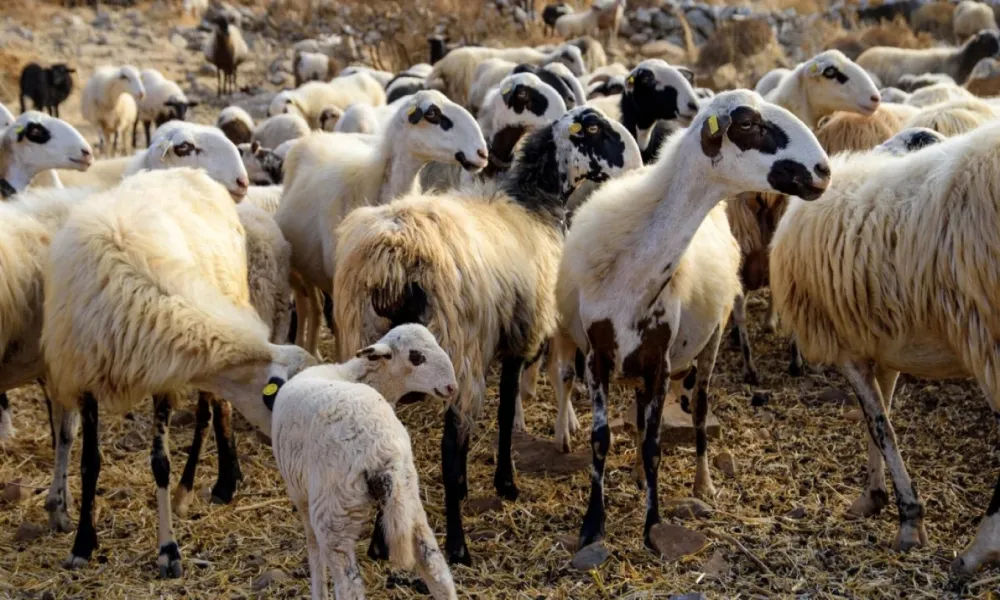
The European Commission has confirmed outbreaks of Foot and Mouth Disease (FMD) at a cow-breeding unit and two large sheep-breeding establishments in Livadia, in the Larnaca district of Cyprus.
Cypriot authorities have already implemented the necessary control measures in line with EU legislation, including epidemiological investigations and laboratory testing. The Commission stressed that immediate and determined action is essential in both the affected farms and the surrounding restricted zones.
These measures include the immediate stamping out of animals on affected farms, the destruction of dead and culled animals and their products, thorough disinfection of premises, and the enforcement of movement restrictions. Strict biosecurity protocols and enhanced surveillance are also being applied in accordance with EU rules.
The Commission confirmed that an EU Veterinary Emergency Team (EUVET) will be deployed to Cyprus from 24 to 27 February. The team will provide scientific, technical and practical assistance on the ground, support the national authorities in combating the disease, and advise on the possible use of vaccination, including the development of an emergency vaccination plan.
In addition, the Commission will adopt emergency measures this week to address the evolving situation. A total of 529,000 vaccine doses are expected to be sent to Cyprus in the coming days.
Emergency Measures and Restricted Zones
At EU level, the Commission will formally demarcate the areas to be included within restricted zones surrounding the affected establishments and determine the duration of those restrictions.
Under established EU legislation, measures in these zones include the immediate killing and safe disposal of all susceptible animals kept at affected establishments, cleaning and disinfection of premises, and a ban on movements of susceptible animals and their products. Intensive surveillance is required within both the three-kilometre and ten-kilometre protection and surveillance zones, as well as within a wider restricted area.
No susceptible animals may leave the external perimeter of the further restricted zone, except for immediate slaughter within the territory of the Member State concerned.
The Commission emphasised that the fight against animal diseases and deadly viruses forms a key pillar of its animal health and One Health policy. It remains in permanent contact with the Cypriot authorities.
Once an outbreak is reported by a Member State, national authorities are required to take immediate disease control measures under Union legislation. The Commission then submits emergency measures for approval by Member States, updating them continuously to reflect developments on the ground.
Trade Implications
The outbreaks in Cyprus follow a single FMD case in Germany in January 2025 and outbreaks in Slovakia and Hungary in March and April, which have since been closed.
Cyprus’ status as a country free from FMD has been suspended by the World Organisation for Animal Health (WOAH). As a result, exports of FMD-susceptible animals and untreated animal products from Cyprus to non-EU countries are temporarily suspended.
Cypriot authorities can no longer sign export certificates for animals and certain animal products requiring “country free from FMD status”. However, the Commission has called on third countries to respect the regionalisation principle and to avoid imposing blanket bans on exports from the entire territory of Cyprus once the situation has stabilised.
Impact on Milk and Halloumi
Milk from affected or suspected farms must be safely disposed of.
If emergency vaccination is implemented, additional risk mitigation measures will apply within vaccinated areas. These include prohibitions on the movement of raw milk, although derogations may be granted for heat-treated milk and dairy products — such as halloumi cheese — provided they undergo, at a minimum, pasteurisation. Such heat-treated products may continue to be placed on the EU market.