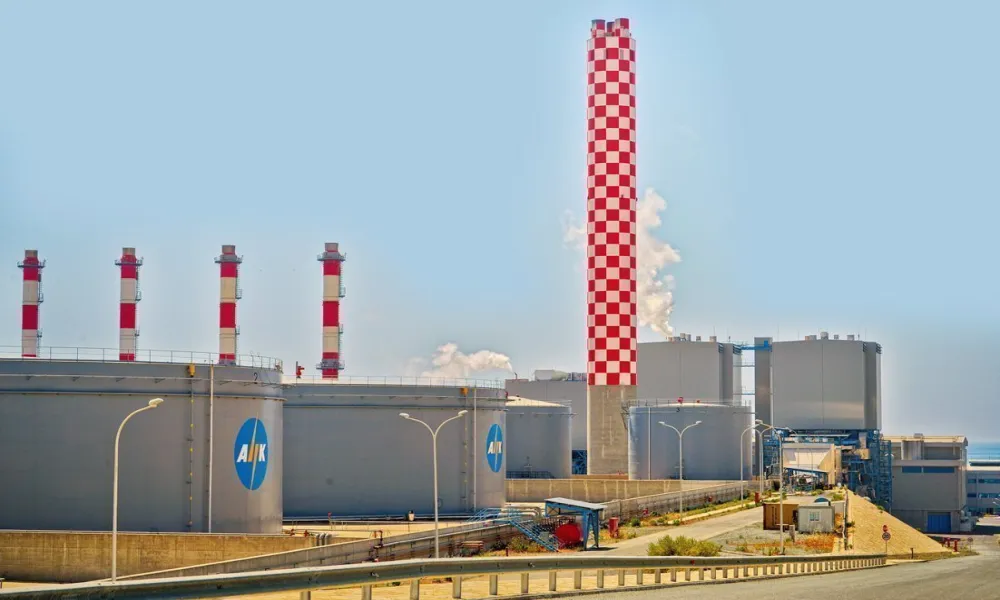
Significant weaknesses across multiple areas of the Electricity Authority of Cyprus (EAC) are placing a burden on consumers, according to a Special Report published by the Audit Office of the Republic of Cyprus following an audit of the Authority.
In a foreword to the report, Auditor General Andreas Papaconstantinou highlights limited progress in the development of renewable energy projects by the EAC. As of September 2025, the Authority had four photovoltaic parks in operation with a total capacity of 20MWp, out of a nationwide total of 420.1MWp.
These figures, he notes, restrict the Authority’s ability to increase the share of renewables in its generation mix. Delays are attributed in part to the failure to secure approvals from the Cyprus Energy Regulatory Authority (CERA) at an early stage, reportedly in an effort to safeguard competition. However, the report raises “reasonable questions” over the lack of a substantive response from previous EAC boards on what it describes as a strategic issue of major importance.
During the same period, private operators developed a significant number of solar projects or secured the relevant licences, yet no clear impact on electricity prices has so far been observed.
High fuel and emissions costs
Fuel costs and greenhouse gas emissions allowances account for around 70% of the EAC’s total operating expenditure. Spending on emissions allowances has risen sharply in recent years, reaching €211.2 million in 2024, according to unaudited figures.
The cost of emissions allowances is passed on to consumers and, combined with the limited uptake of renewables, the absence of electrical interconnection, limited storage capacity, delays in the arrival of natural gas and the ageing of the EAC’s thermal generation units, contributes to persistently high electricity prices, the Auditor General says.
Citing data published by Eurostat for the second half of 2024, the report states that Cyprus ranked as the second most expensive country for electricity when adjusted for consumers’ purchasing power.
It also notes that despite a sharp global decline in the levelised cost of energy (LCOE) for large-scale solar projects, Cyprus has not managed to translate this reduction into tangible and measurable benefits for end-users.
Between 2020 and 2024, expenditure on greenhouse gas emissions allowances rose from €74.7 million to €211.2 million, peaking at €256 million in 2023. The report stresses that these costs are ultimately borne by consumers.
Delays in renewable energy projects
The report states that significant delays in integrating renewable energy projects into the EAC’s generation capacity allowed private companies to take the lead in developing large-scale solar parks and securing licences, occupying much of the available land — including some state-owned land — without delivering clear benefits to consumers.
Correspondence cited in the report suggests this has contributed to network saturation and reduced the availability of suitable land for further solar development.
A new spatial planning policy is described as particularly restrictive, creating substantial obstacles to licensing new renewable projects. This, the report says, makes it especially challenging for the EAC to meet a CERA decision of October 2023 setting a target of up to 600MWp of cumulative renewable capacity by 2032.
The prolonged absence of meaningful dialogue and necessary cooperation between the EAC and CERA on renewable development is said to have worked in favour of private interests and to the detriment of the final consumer.
The report further suggests that, where legislation allows, CERA should examine the possibility of revoking unused licences, amid concerns that some existing licence holders may be profiting from reselling development rights.
Environmental compliance risks
The Vasilikos and Dhekelia power stations are operating despite their Industrial Emissions Licences having expired on 31 December 2020, the report says. Renewals have not been possible because emission limit values set out in EU Directive 2010/75/EU and the Best Available Techniques conclusions are not being met. Required certification for certain existing structures at the plants also remains pending.
On 4 February 2025, the EAC submitted a request to the European Commission seeking a derogation from emission limit values for combustion units at the two stations. If the request is not approved, the Republic of Cyprus could face sanctions, the scale of which cannot currently be estimated.
Billing and customer service concerns
Auditors identified cases in which companies delayed settling electricity bills without the Authority proceeding to disconnect supply in line with its internal procedures. In some instances, repayment plans were agreed despite repeated breaches of previous arrangements.
Weaknesses in the application of internal procedures have, in at least two cases, led to unrecovered debts of €31,258 and €27,869, despite legal action having been taken. The report also raises concerns about unequal treatment of consumers.
As at 31 December 2022, the value of electricity supplied but neither invoiced nor collected from Turkish Cypriots residing in areas not under the control of the Republic amounted to €276.1 million for the period 1964–2022, without the imposition of interest. Of this, €1.3 million related to 2022 consumption, exclusively in the Pyla area.
The Authority’s Customer Call Centre is also criticised, with 384,702 calls between 2022 and 2024 going unanswered after being placed in a queue. The issue appears longstanding, with complaints repeatedly submitted to management in recent years without effective corrective action.
Legal representation and financial exposure
Despite repeated recommendations from the Audit Office, the Authority has effectively retained the same law firm for around 72 years. Although additional firms were appointed in 2019 for specific civil cases, 95% of legal fees paid between 2020 and 2023 — amounting to €2,063,876 — went to the longstanding firm, with the remaining 5% (€108,247) shared among others.
The EAC’s audited financial statements for the year ended 31 December 2024 include provisions of approximately €22.7 million recognised following a February 2024 court ruling against the Authority in a case involving a fuel supplier. The Authority has lodged an appeal. A second lawsuit in the same matter is pending, with the claimant seeking damages exceeding US$18 million. No provision has been made for this amount, although it is disclosed as a contingent liability.
In concluding remarks, Papaconstantinou states that the findings underline the need to strengthen the EAC’s effectiveness and accelerate strategic action, particularly in the field of renewables, in order to prevent the emergence of controlled oligopolies and ensure healthy competition. However, he adds that many policy decisions directly or indirectly affecting electricity prices fall outside the Authority’s control and require strategic action by the state and CERA.