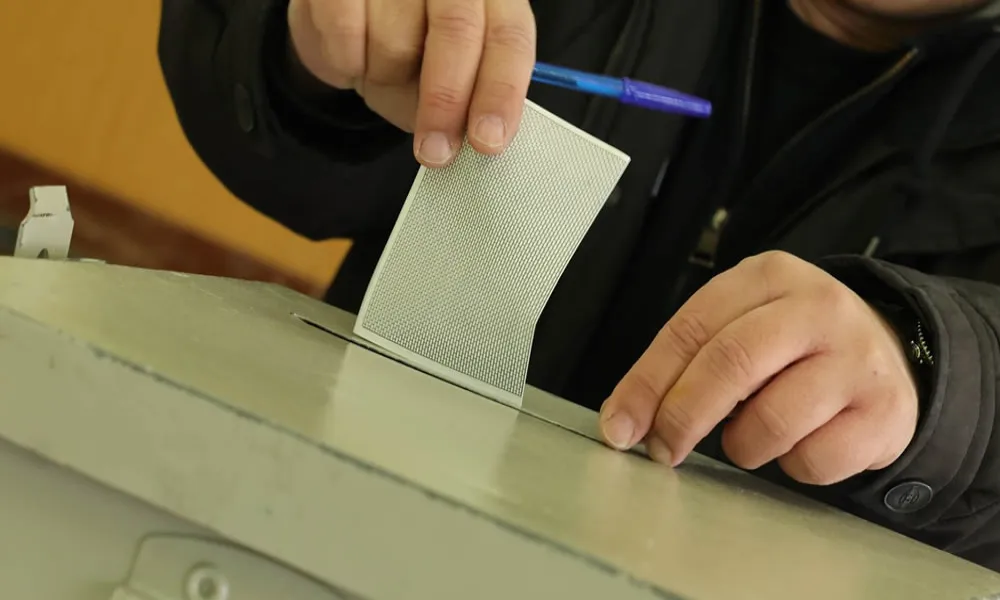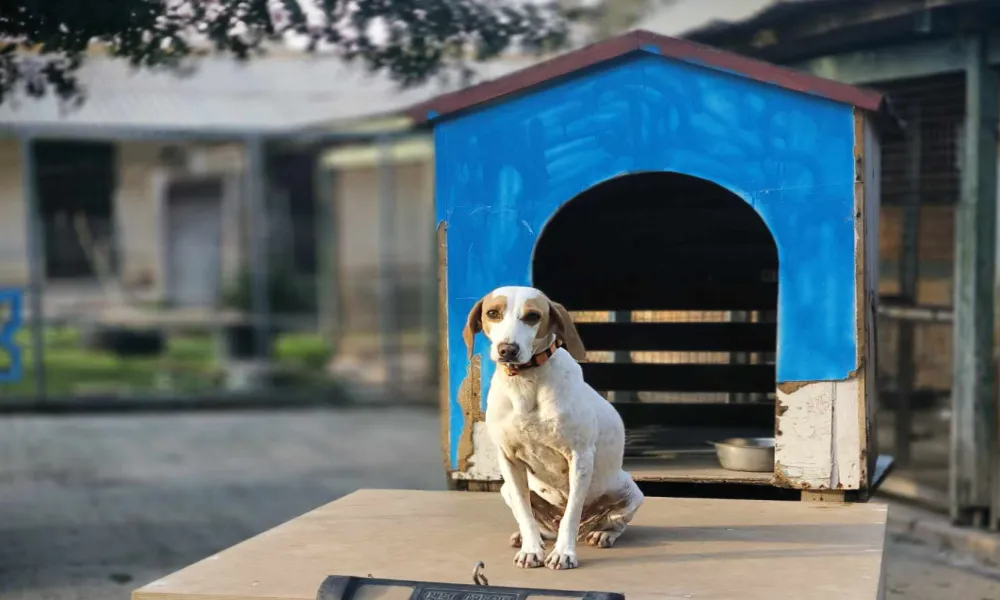
The House of Representatives on Thursday approved a bill and law proposals introducing stricter provisions governing dog ownership, the responsibilities of authorities and owners, and measures aimed at addressing the issue of stray dogs.
Legislative framework approved by parliament
The plenary session considered a unified text combining a government bill and legislative proposals submitted by Charalambos Theopemptou, MP of the Ecologists Movement – Citizens’ Cooperation, and independent socialist MP Costis Efstathiou.
The issue has been under discussion in parliament for three years and had previously been postponed and returned to the House environment committee for further examination. The matter was first raised in 2016 by Theopemptou, who is not seeking re-election. His role in initiating the process was acknowledged by House president Annita Demetriou.
During the debate, some MPs called for another postponement, raising concerns about the lack of shelters and the need for executive authorities to support local authorities in establishing such facilities.
The plenary debate also included disagreements after the House president accepted an oral amendment submitted by Akel regarding hunting dogs, which was ultimately approved.
Measures introduced by the legislation
The proposal submitted by Theopemptou aims to tackle dog abandonment and uncontrolled breeding.
Under the new provisions, owners who no longer possess a dog due to its death must submit a death certificate issued by a registered veterinarian instead of simply filing a declaration with the competent authority, as previously allowed. The minimum age for registering dogs in the official register maintained by the director of veterinary services is reduced from six months to three months, while annual dog ownership fees are increased.
Efstathiou’s proposal establishes offences for walking a dog without a leash attached to its collar and for failing to carry a bag for collecting dog waste.
The government bill revises the legislative framework to clarify the responsibilities of competent authorities and introduce provisions intended to ensure more effective implementation of the law.
Among the measures included are preventive and enforcement provisions, as well as a specific section providing procedures for out-of-court settlements of offences, with the aim of promoting responsible dog ownership and reducing the number of stray dogs.
Changes following committee recommendations
Following discussions and concerns raised during the legislative process, amendments were introduced regarding provisions on dog trapping.
The legislation clarifies that trapping or capturing dogs may be carried out by police officers, game wardens or authorised persons appointed by the competent authority who install and use traps or other means of capture, as well as by appropriately trained and authorised individuals designated by the veterinary services.
The definition of a “dangerous dog” was also amended to refer to a dog that, while outside the owner’s premises or roaming freely, displays unprovoked and unjustified aggression towards people or animals.
Additional obligations for dog owners
The legislation establishes uniform annual dog ownership licence fees across the Republic, instead of leaving them to be determined by local authorities.
In addition to assistance dogs and dogs used by security services and other government departments, the licence for one sterilised dog per owner will be issued free of charge for low-income pensioners.
The law also strengthens provisions regarding the declaration of a dog’s death. Owners must submit both a statutory declaration and a death certificate issued by a registered private veterinarian within seven working days of the animal’s death.
Competent authorities are also granted the power to impose conditions when issuing dog ownership licences, including requirements relating to the dog’s living environment or the location where the dog is kept if it is not housed at the owner’s residence.
The legislation removes the possibility of euthanising healthy dogs and allows euthanasia only when a dog is determined to be dangerous to the public or other animals.
Dog owners must also ensure their dogs wear a collar with a tag displaying the ownership licence and the owner’s telephone number. The competent authority will provide the tag upon payment of a fee.
Hunting dogs are exempt from the requirement to remain on a leash when located in designated hunting areas.
The law also increases annual ownership fees for both sterilised and non-sterilised dogs, introduces a category for sterilised dogs of dangerous breeds and raises the breeding fee per litter for commercial or other purposes.
All dogs older than two months must be registered in the official registry maintained by the director of veterinary services. It also becomes an offence to fail to inform the competent authority within two working days of discovering the loss or theft of a dog, or of finding the dog again.
Another offence introduced concerns the refusal to surrender a dog to the competent authority if, after inspection, the authority determines that the owner does not maintain adequate living conditions for the dog. The out-of-court fine for this offence is set at €100, while reasonable costs for carrying out the seizure will be borne by the owner.
Training certification for assistance dogs
Regarding assistance dogs, the committee maintained the requirement for international certification from organisations recognised by the International Guide Dog Federation (IGDF) or Assistance Dogs International (ADI), which must issue the relevant certificate.
Positions expressed by MPs
Costis Efstathiou said the legislation introduces an obligation for owners to clean up their dogs’ waste, helping to reduce environmental pollution.
Charalambos Theopemptou highlighted the significant difficulties faced by local authorities in establishing animal shelters, stressing that the government must be pressured to support their creation.
He also said the next parliament should address the issue of defining assistance dogs and noted that the legislation clarifies licence renewal procedures, introduces provisions regarding living conditions and owner identification on collars, and ends euthanasia of healthy dogs.
Elam MP Linos Papagiannis said he would not vote in favour of the legislation, arguing that certain provisions could create problems, including those concerning dangerous breeds and hunting dogs.
Independent MP Alexandra Attalides said the proposals introduce stricter controls and aim to address the problem of stray dogs, adding that animal welfare reflects education, culture and societal values.
Diko MP Christos Orfanides said the legislation establishes a legal framework for the Dogs Law, including provisions defining assistance dogs trained by certified trainers for persons with disabilities.
Akel MP Nikos Kettirou submitted an oral amendment exempting hunting dogs in designated training areas, which triggered reactions.
Akel parliamentary spokesman Giorgos Loukaides said the amendment seeks to address omissions identified in the legislation.
Disy MP Nikos Tornaritis said his party would abstain from the vote, stating that a request for postponement had not been accepted and that disagreements over oral amendments created procedural disorder.
Diko MP Pavlos Mylonas said that if all parties are concerned about animal welfare, they should either allow oral amendments from everyone or return the text to committee for further discussion.
Disy MP Savia Orfanidou criticised the acceptance of the oral amendment while a request for postponement had been rejected, describing the situation as a “theatre of the absurd”.
Akel MP Marina Nicolaou said challenges remain regarding the support of shelters, sterilisation programmes and the management of stray animals, but noted that the legislation establishes a legal framework for the first time aimed at improving dog welfare.
Source: CNA