Cyprus’ political and legal system remains gripped by allegations made by journalist Makarios Drousiotis, nearly a week after their publication triggered widespread shock.
The claims, first posted on Drousiotis’s personal website and social media accounts last Monday evening, have since sparked intense debate. Regardless of their validity, a broader concern has emerged: public trust in state institutions to investigate serious allegations appears to be at a low ebb.
Questions have been raised over confidence in the police, the Legal Service and even independent criminal investigators. Concerns have deepened further as criticism has come not only from the public but also from figures within the legal profession, particularly lawyers.
At the centre of the debate is whether an impartial and credible investigation can be conducted domestically, especially given the alleged involvement of members of the judiciary. Some argue that only investigators from outside Cyprus could ensure independence.
While there have been formal statements from the lawyer representing the woman referred to by Mr Drousiotis as “Santi”, other legal voices have also questioned whether local authorities can handle such a sensitive inquiry. Calls have been made for involvement by European Union bodies, including GRECO, though concerns have been raised about the risk of undermining domestic institutions.
There are also growing calls for swift action, with legal experts stressing that all aspects of the allegations—direct and indirect—must be examined without delay.
Progress of the investigation
Police sources have urged the public to allow the investigative team, established under the instructions of police chief Themistos Arnaoutis, to carry out its work without interference.
According to a senior police source, investigators are expected soon to determine a clear direction for the inquiry. A key initial question is whether the evidence presented is authentic or fabricated, potentially using modern digital tools.
Particular focus is being placed on messages cited in Drousiotis’s allegations. The police forensic laboratory for electronic data is said to have the expertise and technology to verify their authenticity beyond doubt—an issue seen as central to the case.
Depending on the findings, further steps are expected. Individuals named in the allegations have publicly stated they have no objection to the examination of their bank accounts to assist the investigation. Additional related aspects of the case are also expected to be scrutinised.
Identity of “Santi”
In the early days following the allegations, questions arose over whether the woman referred to as “Santi” actually existed. By Thursday, it was confirmed that she is a real person, identified as Kyriaki Kyriakou.
Her lawyer, Nikos Clerides, has acknowledged representing her, while former judge Michalis Christodoulou has said he knows a woman by that name and will provide details to police.
Other unverified information has circulated, but authorities are expected to rely only on formally obtained evidence.
Who knew what - and when
Reports that elements of the allegations had been widely known within legal and judicial circles prior to their publication have been largely substantiated in recent days.
It has also emerged that some of the material may have reached other individuals before becoming public, either for investigation or potential reporting. However, no formal action was taken until Mr Drousiotis made the claims public.
Police are expected to call on anyone with prior knowledge of any aspect of the case to come forward and provide statements.
Social media speculation
The allegations—ranging from claims of judicial corruption to serious criminal offences—have triggered widespread reaction online, with many presenting themselves as commentators or investigators.
While public interest in the case is understandable, authorities have cautioned that speculation and “trial by social media” risk undermining due process. Observers have also stressed that those involved are individuals with families, underscoring the need for restraint.
A long road ahead
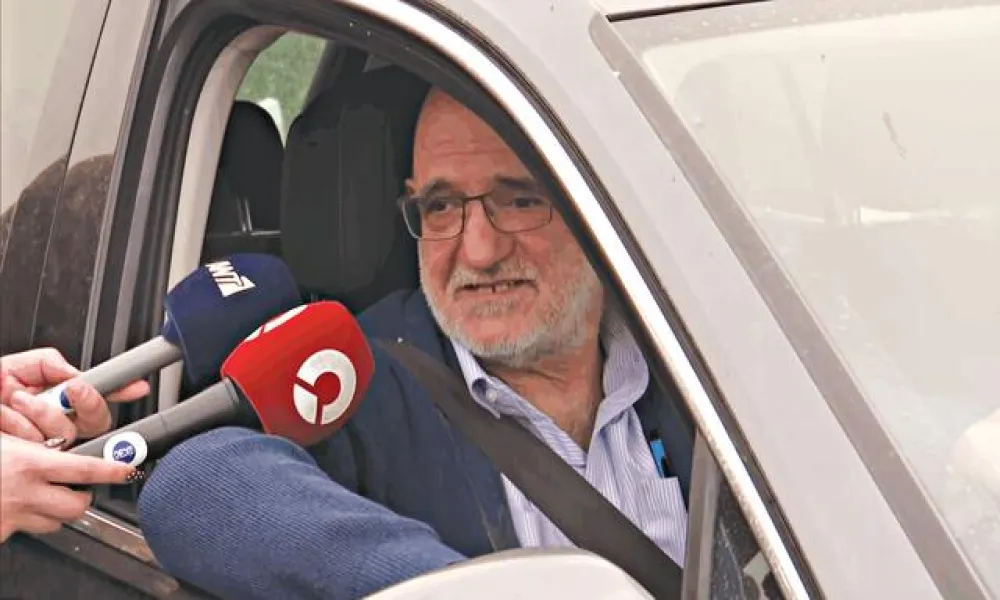
As the investigation continues, Mr Drousiotis is expected to return to police for further questioning. During an initial two-hour statement on Friday, he did not submit the evidence cited in his publication.
A process has reportedly been agreed between the journalist and investigators regarding how and when such material will be handed over.
In parallel, a number of individuals have already provided statements to the investigative team, as authorities continue to piece together the case.