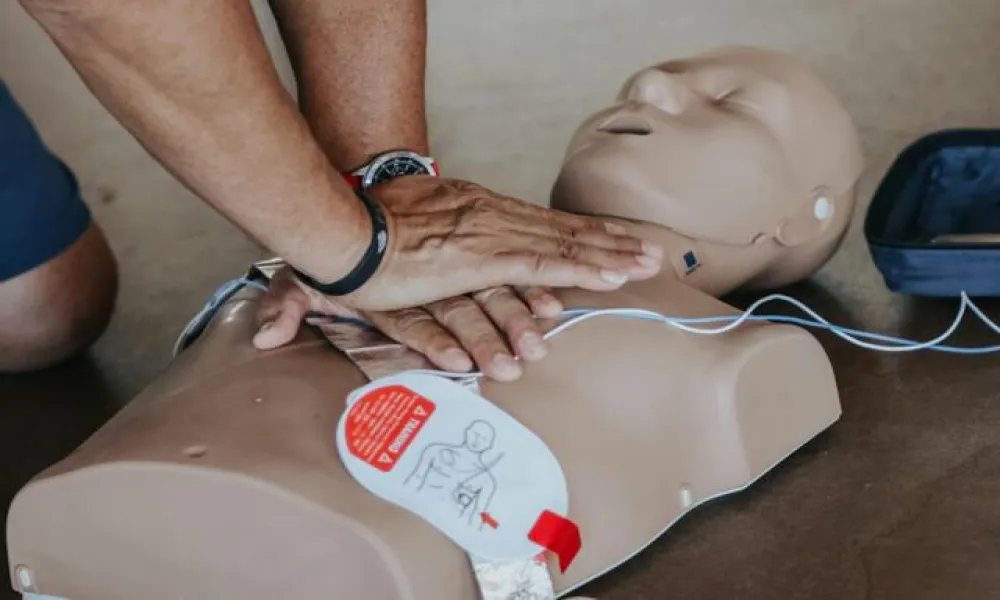
Only 20% of people in Cyprus know how to respond to a cardiac arrest, a figure that costs lives, according to interventional cardiologist Dr George Georgiou, director of the Cardiology Clinic at Apollonion Hospital. Every minute without intervention in a cardiac arrest reduces the chances of survival by 10%, he warned, making the island's low rate of bystander response a serious public health concern.
Speaking on Politis radio's morning programme, Georgiou said there is no clear scientific evidence that cardiac arrests increase significantly in specific months such as January or April. There is a general trend of higher heart attack rates in winter, he explained, likely due to cold-induced vasoconstriction, and during holiday periods when dietary excess is common, but the available data does not allow firm conclusions.
The most alarming finding, in his view, concerns how bystanders respond when a cardiac arrest occurs. In Cyprus, only around 20% of people present at such an incident intervene, compared to rates exceeding 50% and reaching as high as 80% in other countries. Defibrillator use stands at roughly 1%, even in locations where the devices are readily available.
Georgiou attributed this primarily to a lack of training and public familiarity with first aid, noting that many people do not know what cardiopulmonary resuscitation (CPR) involves, or are afraid to act for fear of causing harm. He stressed that chest compressions are straightforward and can keep a person alive until professional help arrives.
He placed particular emphasis on the time factor, noting that after the first ten minutes without intervention the chances of survival are nearly zero, and that an immediate response from bystanders is decisive for the outcome. In other countries, he noted, first aid training begins at school and is repeated systematically in universities and workplaces, a practice that has not been adequately developed in Cyprus.
On the ambulance service, Georgiou said it operates at a high level, with satisfactory response times and accurate telephone triage, but underlined that this is not sufficient if no one intervenes in the critical first minutes.
On the question of whether Covid-19 vaccines are linked to increased cardiac events, he was unequivocal: there is no scientific evidence to support that claim.
Ahead of Easter, he called on the public to avoid excess in food and drink, adopt healthier habits, and take the opportunity to learn basic first aid.