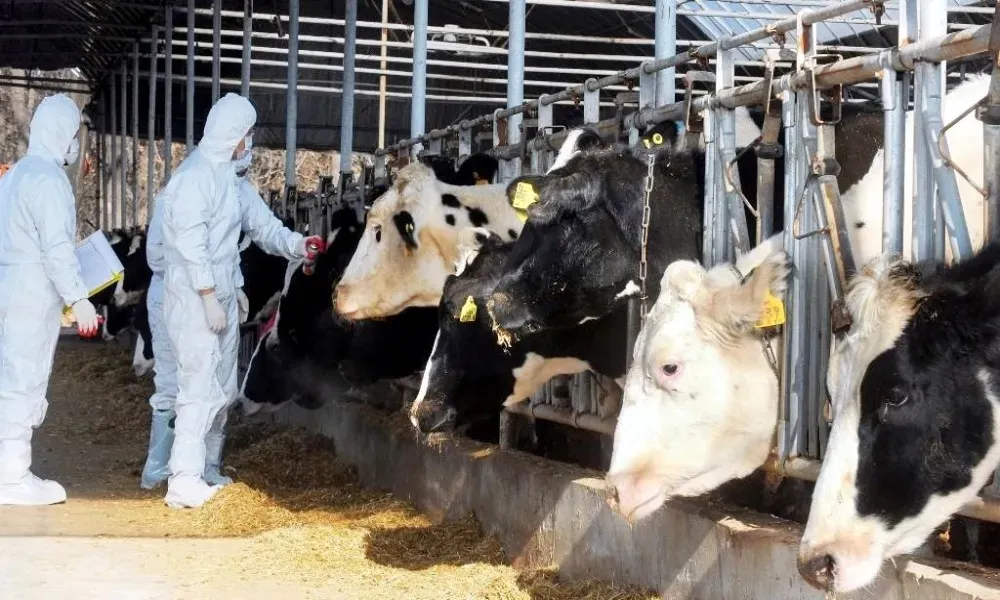
Up to 50 per cent of livestock farmers in Cyprus may not rebuild their farming units following the recent outbreaks of foot-and-mouth disease, according to Petros Kailas, president of the Pancyprian Pig Farmers Association.
Speaking to CNA, Kailas said many farmers are reluctant to return to the sector due to the uncertain future of livestock farming.
“It is not easy to return to a sector where you do not know when you will face the same negative consequences again,” he said.
He also pointed to differences in disease management between the government-controlled areas and the Turkish Cypriot side. According to Kailas, while authorities in the Republic of Cyprus aim to eradicate the virus, Turkish Cypriot farmers vaccinate and continue operating alongside it.
“These are two completely different scenarios,” he said.
The comments came after a second case of foot-and-mouth disease was confirmed at another pig farm in Palaichori. Kailas said the development was “unfortunately expected”, explaining that three pig farms belonging to three brothers operate in close proximity in the area, increasing the risk of infection.
Samples have also been taken from a third nearby farm, with results expected from the Veterinary Services.
“We are certainly in a difficult situation,” Kailas said, expressing hope that the disease can be contained.
On compensation for affected farmers, Kailas said the association has a representative participating in the committee established to examine the issue. However, he noted that the process will take time.
The government has already provided initial financial assistance through a de minimis scheme, while further compensation depends on approval from the European Union.
“For anything we do as the Republic of Cyprus, we must request permission from the European Union. It will certainly take about two months before we receive an answer,” he said.
Kailas also argued that the European Union, which provides approximately €12 million annually to the Turkish Cypriot community for animal disease control, should press for coordinated measures on both sides of the island.
Otherwise, he warned, it may only be a matter of time before the virus spreads again from the north to the government-controlled areas.
Meanwhile, Panikos Kaponas, speaking on behalf of the Coordinating Committee of Goat and Sheep Farmers, told CNA that he had no involvement in a livestock farmers’ protest held today at the entrance to Nicosia.
He said the committee had not been informed about the demonstration and stressed that, given the current situation with foot-and-mouth disease, they are against such gatherings.
Regarding compensation for affected goat and sheep farmers, Kaponas said that so far only initial aid of €20 per animal has been provided.
“For the moment, the process has stopped there,” he said.