
With cancer being the second leading cause of death in Cyprus, the European initiative EU Cancer Mission brings to the forefront new possibilities for prevention, early detection, diagnosis, treatment and patient support. It is one of the European Union’s key missions under the Horizon Europe programme, with a clear objective of improving the lives of more than 3 million people by 2030.
From research to practice
The need for such an initiative is significant. Every year in the European Union, approximately 2.7 million new cancer diagnoses and 1.3 million deaths are recorded, while the economic cost amounts to €200 billion annually. Projections also show that new diagnoses in Europe may exceed 3.2 million by 2040, due to population ageing, unhealthy lifestyles and inequalities in access to screening and care.
The EU Cancer Mission seeks to respond to these challenges through an approach that is not limited to treatment. It focuses on prevention, strengthening research on risk factors, promoting behavioural changes, population screening programmes, the development of more effective diagnostic tools and therapies, as well as improving the quality of life of patients during and after treatment.
A central element of the Mission is the link between research and real-world care. Its philosophy is based on the collaboration of scientists, healthcare professionals, policymakers, as well as patients themselves, so that scientific knowledge is translated into practical solutions. The focus is not only on increasing survival rates, but also on ensuring a better quality of life for those affected and for their families.
Data, innovation and inequalities
The use of data and digital technologies is a key pillar of the European strategy. The use of tools such as artificial intelligence and the analysis of large datasets enables scientists to better understand how cancer develops and progresses, to identify patterns earlier and to support more accurate and effective care.
At the same time, the discussion is not limited to technology. The EU Cancer Mission places particular emphasis on inequalities , seeking to ensure that none is left behind in access to innovation, knowledge, research and new care opportunities. For smaller countries such as Cyprus, this is particularly important.
Cyprus’ participation
In this context, Cyprus has an active participation. According to the data made public, 14 organisations from the country have taken part in 14 EU Cancer Mission related projects, with the support of €5.65 million in EU funding. This participation strengthens Cyprus’ connection with European research and expertise networks, while at the same time introducing new tools and knowledge into the healthcare system.
Among the projects involving Cypriot partners is ECHoS, which brings together researchers, healthcare professionals and policymakers, with the aim of connecting research more effectively with real-world care through National Cancer Mission Hubs. EU-CiP contributes to the creation of a European online platform that will provide clear and reliable information to patients, families and caregivers, enabling them to better understand their diagnosis and options. UNCAN.eu focuses on improving the use of cancer data and digital tools, facilitating collaboration among researchers and the use of larger and more diverse datasets.
Nicosia at the centre of the European discussion
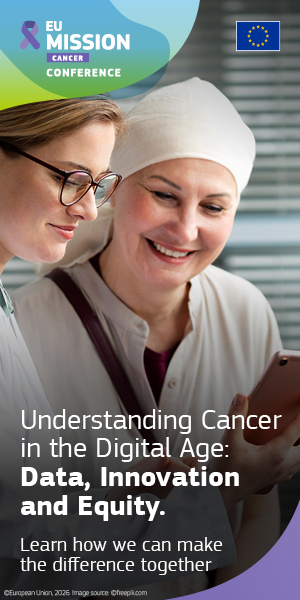
On 27 April, Nicosia will host the European conference entitled “Understanding Cancer in the Digital Age: Data, Innovation and Equity” at the Hilton Hotel, in a hybrid format with simultaneous interpretation in Greek and English.
The event brings together policymakers, researchers, clinicians, experts in digital health and patient representatives from across Europe. Among the speakers are former European Commissioner for Health and Food Safety Stella Kyriakides, Joanna Drake Deputy Director General and EU Cancer Mission manager, from the European Commission’s Directorate-General for Research and Innovation, as well as Cypriot representatives from the fields of healthcare, patients and research.
The programme includes discussions on the UNCAN.eu network and the European Health Data Space, on artificial intelligence and digital innovation in understanding cancer, on the European Cancer Patient Digital Centre, as well as on strengthening the research capacity of countries such as Cyprus through the ECHoS network.
The event highlights the importance of European cooperation in a field where research, data, public policies and patient experience are called to function in a complementary way. The aim is for innovation not to remain at a theoretical level, but to be translated into better prevention, more accurate diagnosis, more effective treatment and meaningful support for patients.
More information and registration: