
Over the past two years, the official picture of migration in Cyprus has changed significantly. After the peaks of 2020–2022, when arrivals and pressure on reception systems were intense, there has been a substantial decline in flows. According to the President of the Republic’s address at the State of the Union, arrivals fell from around 17,438 in 2022 to 2,444 in 2025 -an unprecedented decrease- while returns of individuals to their home countries rose to 11,610 in 2025.
Yet, despite the improvement in the data, migration remains one of the primary concerns of citizens in opinion polls. The latest Eurobarometer shows that 86% of Cypriots consider uncontrolled migration flows a significant problem, a rate far above the EU average. This means that nearly nine out of ten citizens are worried about migration, even when official numbers point to a decline in new arrivals.
This gap between real data and social perception is not accidental. On the contrary, it reflects deeper political and social dynamics in the country.
The “legacy” of the crisis
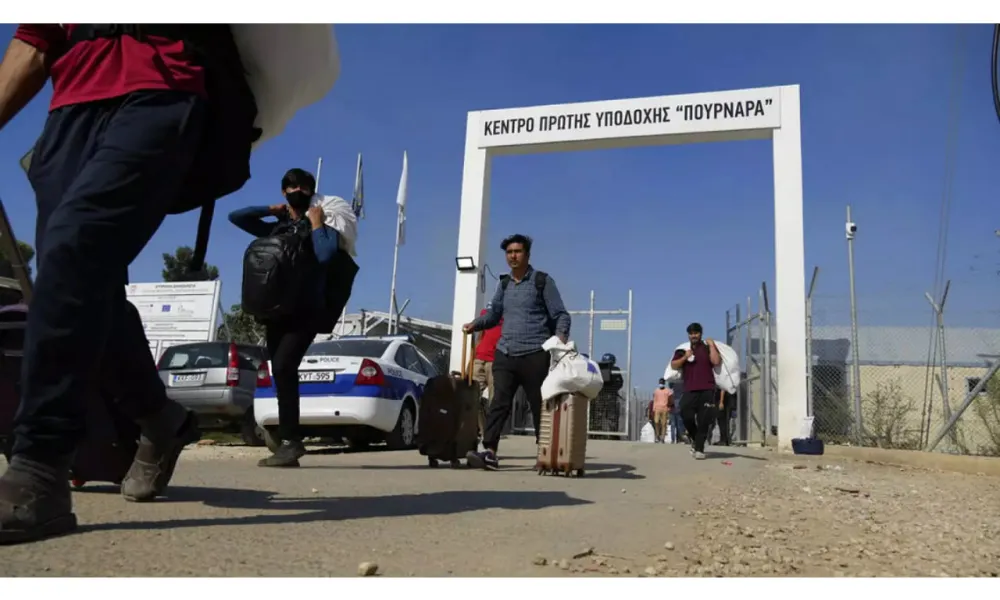
The intense migration pressure of recent years left a deep imprint on collective memory. Images of overcrowded reception facilities, public disputes over Pournara, and tensions in local communities were daily news. Even though flows have now decreased, many citizens still perceive migration as an ongoing and explosive issue. In politics and public debate, perceptions often lag behind statistics because the experience of crisis is not easily forgotten.
Another factor reinforces this: while national averages show reduced overall pressure, in specific neighbourhoods, schools, or public services the presence of migrants remains visible. There, the experience is not abstract but everyday and tangible. Many residents observe changes in the composition of their communities and associate these with problems in their daily lives, even when these issues are not directly linked to an actual “migration crisis.”
The housing crisis
Cyprus faces intense housing pressure, with rising rents and limited affordable housing. In public opinion, this is often attributed to migration flows, even though the main drivers are different: short-term rentals, the investment market, lack of social housing, and economic inequality.
In reality, it is not poor migrants living in substandard accommodation who are driving up rents, but high-income digital nomads who settle in Cyprus with major tax incentives and the ability to rent all types of available housing, pushing prices sharply upward.
Political dynamics and the rise of ELAM
In this context, political rhetoric further shapes perceptions. In recent polls on voting intentions, ELAM stands at around 11–11.5%, making it the third strongest party ahead of the 2026 national elections. This marks a stable, and potentially growing, presence compared to previous elections where the party had lower support.
This rise is closely linked to migration. ELAM exploits public anxiety and makes migration a central pillar of its agenda, offering simplistic but dramatic explanations and solutions that appeal more to emotions than to complex realities.
Why are ELAM’s positions simplistic? According to a recent Eurobank analysis, the labour market is close to full employment, with unemployment at around 4% and many open vacancies, creating a need for foreign workers and specialists. There are currently about 175,000 legal foreign workers in Cyprus (from both the EU and third countries) helping to cover labour shortages, yet according to the former Labour Minister, the economy needs an additional 100,000 foreign workers.
Traditional parties, instead of addressing the issue rationally, often appear hesitant or resort to narrow technocratic analyses, leaving a gap in responding to a society that demands clear answers. This vacuum -combined with broader insecurities about the economy and public services- allows far-right rhetoric to gain traction.
Migration as a crisis of perception
Overall, migration in Cyprus may have weakened in terms of flows and new arrivals, but it remains a “crisis” in public opinion because it touches deeper anxieties about security, identity, the economy, and the future.
Polls highlight this social dynamic and help explain why, even when numbers improve, the political issue remains intense.
The next challenge for the political system is not only to manage migration flows effectively, but also to understand and address how citizens perceive the issue -because only then can a credible, stable, and effective policy response be built for the future of society.
In short, a society cannot allow itself to be carried away by the far-right of ELAM, as happens with other fascist-minded parties across Europe. Migrants should be treated within a framework of humanitarian values and the real hosting capacities of each country -not through the lens of parties that base their politics on insecurity and fear.