Countdown
Something isn’t right. It never was. Since the dawn of humankind, our planet has floated in blood and ruin.
News from elsewhere: the thunder over Gaza has quieted, drones in Ukraine continue to sow death, and the “leader of the free world” has grown tired of Putin, now turning his attention to the slaughter of Christians in Nigeria. “If it doesn’t stop, we will intervene,” he says. Who are we? The Americans, of course. They still can, when it suits them. In Tanzania, the thousands of butchered remain unburied. No one cares. Everyone rushes to save what they can.
Somewhere, a whisper was heard that Trump is thinking of “getting involved” (with the Cyprus issue, too). A planetary leader of a planet lost in space, where no one, except perhaps God, cares about our existence.
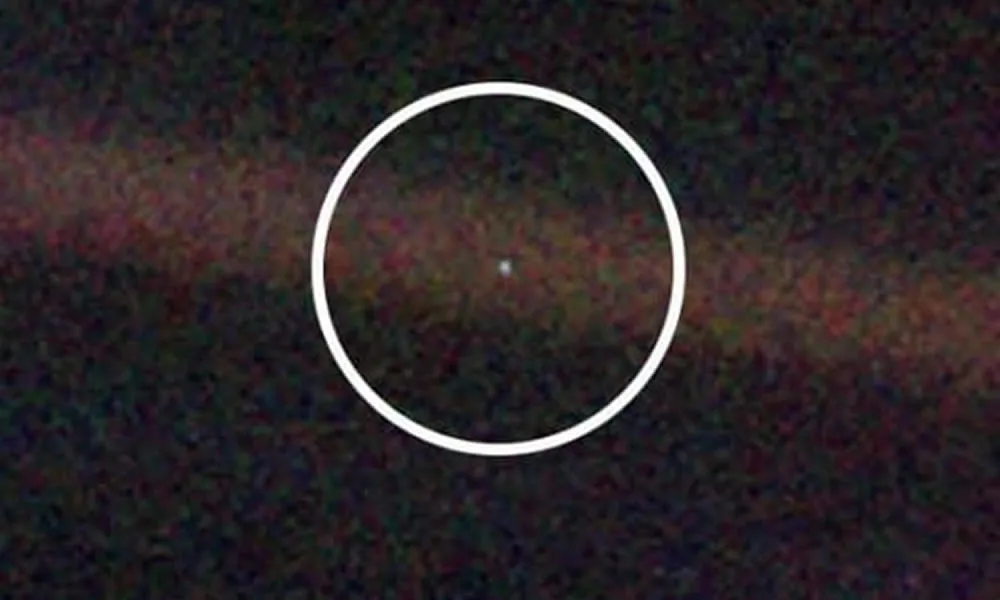
Carl Sagan, the American astrophysicist who created the legendary Cosmos documentaries, once wrote an unmatched little text about Earth, inspired by a photograph of it. He called it The Pale Blue Dot and penned a few lines that can sink anyone who reads them into deep melancholy:
“Our planet is a lonely speck in the great enveloping cosmic dark. In our obscurity, in all this vastness, there is no hint that help will come from elsewhere to save us from ourselves. It is up to us. Astronomy is said to be a humbling and character-building experience. There is perhaps no better demonstration of the folly of human conceits than this distant image of our tiny world. To me, it underscores our responsibility to deal more kindly with one another, and to preserve and cherish the pale blue dot, the only home we’ve ever known.”
In the photograph, you can spot that faint blue speck. To spot the folly, you have to be living on it.