Redux
Every journey circles home
Cyprus is preparing to assume the presidency of the European Union, an institution founded, at least in principle, on pluralism, freedom of expression and the protection of minority voices. And yet, at home, we watched an art exhibition by artist George Gavriel, collapse under the weight of death threats, political pressure, fake news and moral outrage, while political parties and the head of Cyprus Church, the omnipresent Archbishop George, issued statements and paraded the TV channels, that tried to speak both languages at once: respect for art, yes, but only if it does not disturb “our faith” and “our values”.
Whose faith? Whose values? Do artists, thinkers and citizens have the right to express themselves only if they share the religion, values and sensitivities of the loudest nationalists? Or have we accepted that deviation still comes with risks?
Europe is not a single faith space but a plural one. Alongside its Christian majority, mainly Catholic, Orthodox and Protestant, it is home to tens of millions of Muslims, as well as Buddhists, Jews, Hindus and a rapidly growing number of non-religious citizens, agnostics and atheists. And this feature is defining contemporary Europe, its laws, institutions and public life. European pluralism rests on the principle that no single belief system, however historically dominant, holds a veto over expression in the shared civic sphere. Basics...
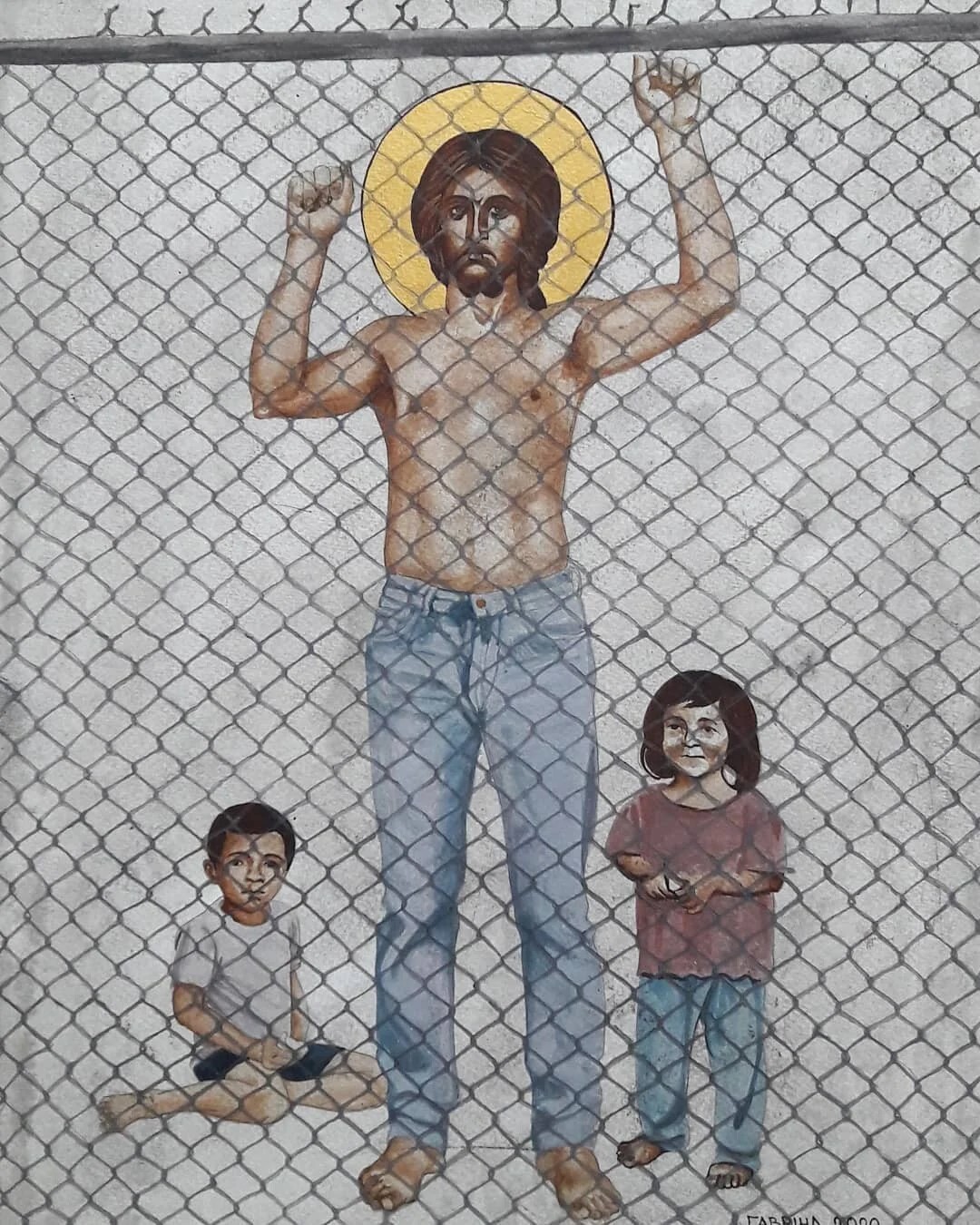
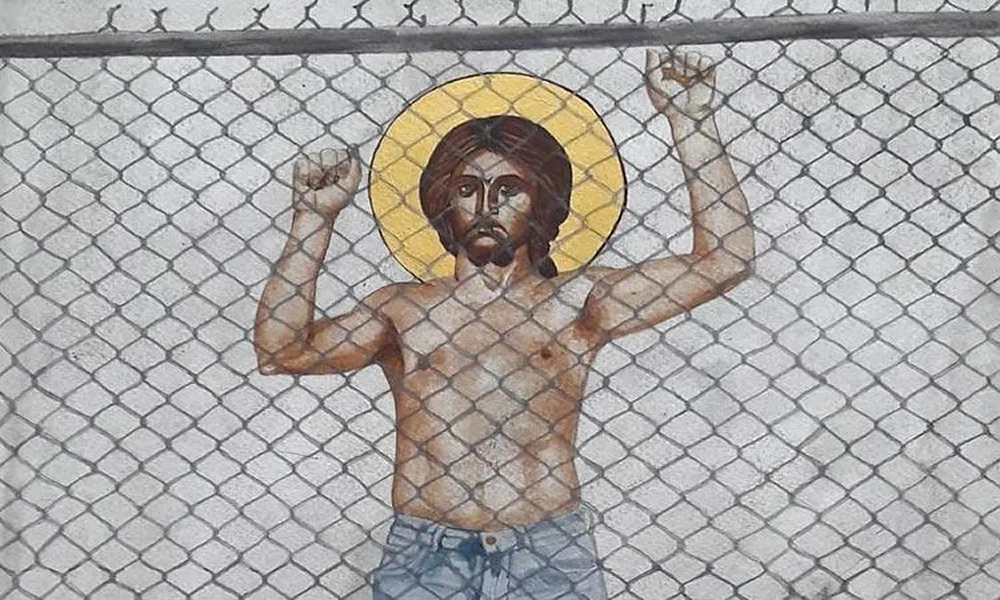
headmaster over paintings that placed Jesus in unconventional settings,
including works contrasting the wealth of the Church with the humility
of religious figures among refugees.
Cyprus today is not the monochrome society some politicians still invoke. It is home to Orthodox Christians, Muslims, Catholics, Maronites, Armenians, atheists, migrants, refugees, LGBTQ+ citizens and people whose beliefs do not fit neatly into any box. Yet many politicians speak only to those they believe can keep them in power. They speak in Greek and assume their audience is Orthodox and culturally “clean” whether or not that reflects reality. This narrow view does not represent society as it exists or its contemporary challenges. Pretending others do not exist is dishonest and dangerous. It also ignores the future, which will be shaped by a more diverse population and by today’s children and young people. When a single religious or ideological narrative is untouchable, diversity itself is at risk.
The Gavriel case is alarming not because certain groups were offended, offence is a normal part of living in an open society, but because offence was allowed to escalate into intimidation. Fear is what forced a gallery to shut its doors. And our elected officials amplified outrage instead of calming it. This is the real elephant in the room: censorship. It may not yet arrive with a ban stamped by the state, but it still arrives, through fear, harassment and “moral” panic.
Freedom of expression is tested often on the island. Freedom should not be tested by agreeable art. It is tested precisely when art unsettles, questions or reinterprets sacred symbols. To insist that faith must never be challenged is to confuse spiritual belief with power. A confident faith does not need prosecutors or cancelled exhibitions to defend it.
So Cyprus wishes to lead Europe as a place where art exists only with permission from political and religious gatekeepers. As these incidents keep repeating themselves and as President Christodoulides met with his French counterpart in Paris, perhaps Emmanuel Macron shared experience as to where intolerance and fanaticism can lead and why pluralism matters in a modern European democracy.
Perhaps he told him that respect cannot coexist with fear. And values imposed through intimidation are not values at all.