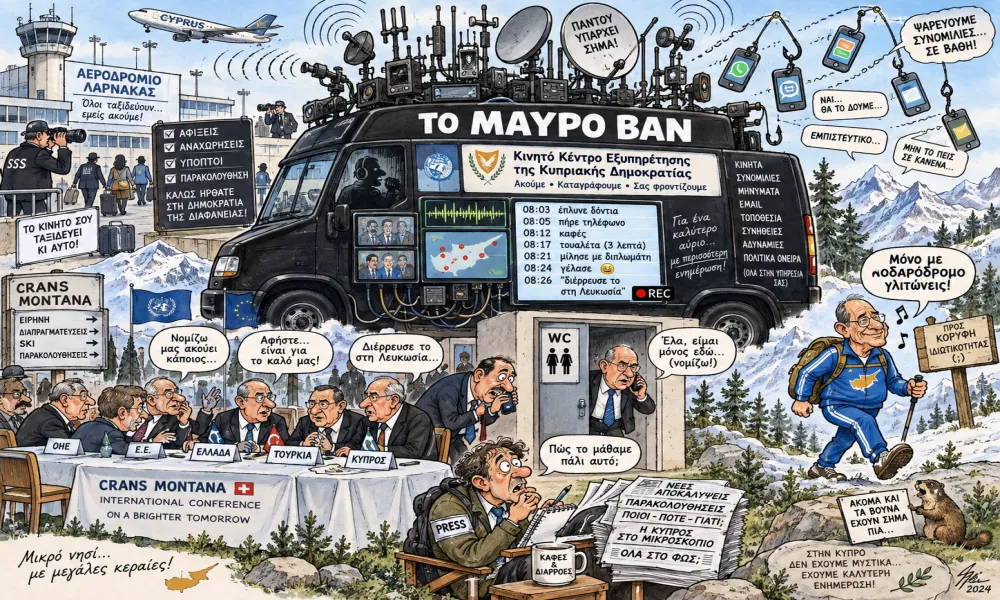

The President of the Republic thought it wise to attack the personal envoy of the United Nations Secretary-General, Maria Angela Holguín, over her comments on the Cyprus issue. Guterres and Holguín insist that targeted confidence-building measures could help break the deadlock in the talks. Meanwhile, the President insists on convening a five-party meeting to discuss the substance of the Cyprus problem, picking up from where the Crans-Montana talks left off.
Clearly, everyone would be pleased if substantive negotiations could begin immediately. It must be reminded to Christodoulides that during President Anastasiades’ tenure, and with him as Foreign Minister, not only did we fail to return to substantive issues after Crans-Montana, but our side was the first to speak of a two-state solution.
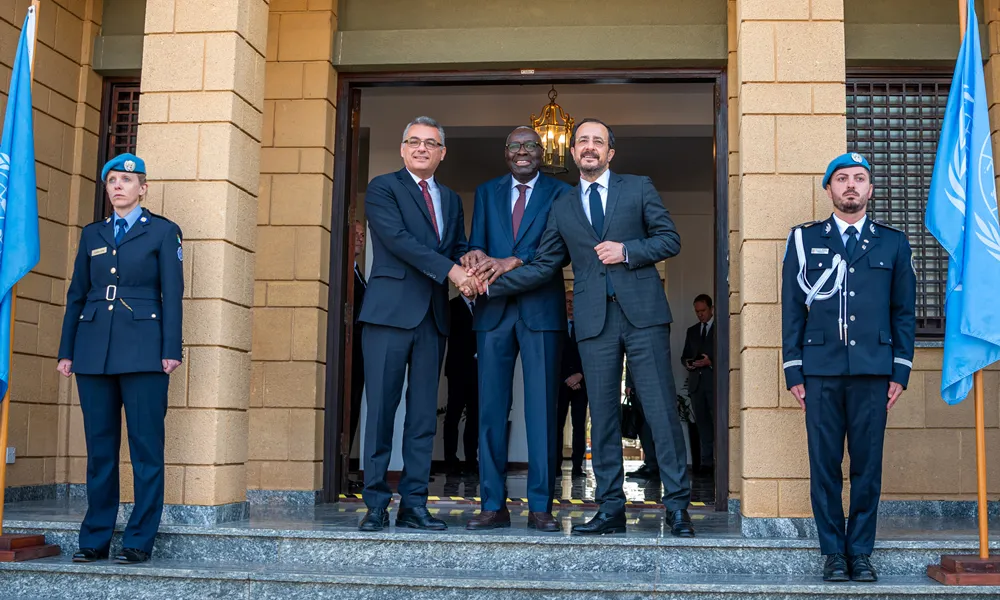
Contradictions continue to this day. Just a few days ago, during a meeting with Erhürman in the presence of Holguín, the President proposed reopening discussion on the convergences, allowing each side to decide which they accept and which they reject.
In short, it is clear that the President is attempting, within a blame-shifting strategy, to pressure the Turkish side into revealing its position to prove, as he believes, that it is not ready for the final substantive step. It should be recalled that this was also our strategy in 2004, which left us internationally exposed.
Today, both Guterres and Holguín, recognising Turkey’s not particularly constructive stance, recommend that both sides proceed with confidence-building measures, which in practice amount to more roadblocks. The Greek Cypriot side, speaking of reciprocity as if we are discussing two equal, internationally recognised states, demands that the Turkish Cypriot side open routes relating to territory within the buffer zone. Incidentally, in every proposed solution plan, this buffer zone is among the first areas slated for return. This is the same strategy the Greek Cypriot side followed for years regarding the construction of the Kokkinotrimithia–Evrychou road, which they wanted to pass through the buffer zone, with some military officials referring to it as an anti-tank barrier.
We believe that this tactic only allows the Turkish side to gain points unnecessarily.