By Demetris Georgiades
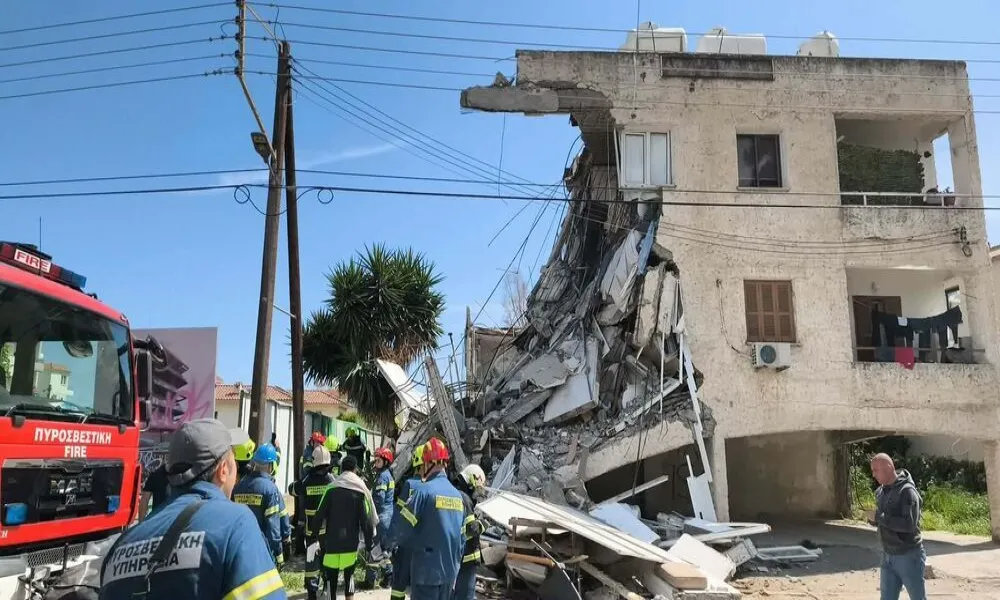
An apartment block collapsed, costing the lives of fellow citizens. How can further collapses be prevented? The answer now being put forward is MOT inspections for buildings.
When proposals refer to MOT-style inspections for buildings, one assumes they mean something analogous to vehicle MOT tests. Yet every day we see vehicles on the road that are clearly unfit for circulation. Trucks with defective tyres that burst repeatedly, without any consequences for anyone, even though everyone knows what is happening. Trucks overtaking you as if you were stationary while you are driving at 95 kilometres per hour. Trucks travelling below 65 kilometres per hour, casually passed by the police – who apparently have no idea that there is also a minimum speed limit on motorways. And many other examples.
Our problem is not the absence of powers, legislation, procedures or deterrent penalties. The core problem is the lack of control and enforcement. There is no punishment. What is the point of increasing a fine if it is never imposed? A €1 fine imposed zero times has exactly the same deterrent effect as a €1,000 fine imposed zero times. So what is the point of introducing MOT inspections for buildings if they will not be enforced, just like vehicle inspections?
To avoid misunderstanding, I am not claiming that all truck drivers, all MOT garage owners or all property owners are lawbreakers. On the contrary, the majority comply fully, and this is easy to verify. However, legislation is designed to punish the few in order to protect the many – including those who break the law.
Beyond this argument, we often hear officials cite staff shortages as an excuse. There is no state service that does not suffer from understaffing. Even if this argument holds, when resources are limited, priorities must be set. If you have to choose between inspections of buildings that are at risk of collapse and green spaces where the grass might dry out, you do not choose the latter. Yet human nature – again due to the absence of control, enforcement and punishment or reward – does exactly that: it chooses the easy option.
This mentality has further knock-on effects. Piracy and illegal activity constitute unfair competition and tarnish the reputation of law-abiding citizens. Consider the damage to Cyprus if we see two or three serious accidents in this type of short-term rental or other unlicensed tourist accommodation.
When, year after year, MPs vote for extensions on the renewal of vehicle licences, suspend smoking bans in enclosed spaces, reduce fines in areas where illegalities occur, what will the outcome be? Buildings will collapse, fires will “kill” citizens and destroy property, helicopters will crash, and more will follow. Worse still, the message sent to everyone else is clear: “Break the law too – you can. You will save the cost.”
That is the real illusion.