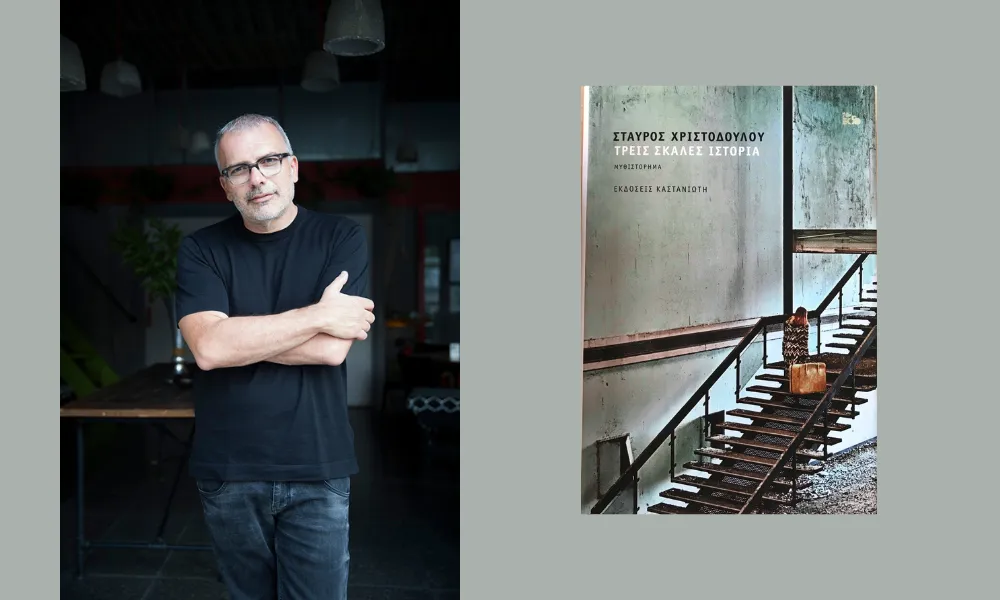
Three Stairs of History (2020) examines the long-term impact of the 1974 events in Cyprus through a narrative centred on personal trauma and memory. The novel follows Chloi Artemiou, whose life is shaped by experiences during and after the Turkish invasion.
At the age of eighteen, Chloi remains trapped with her mother for three months in their summer house in Lapithos, during which she is subjected to repeated sexual violence. She becomes pregnant and chooses to carry the child to term, a decision presented as an act of agency under extreme conditions.
Personal story within historical context
The narrative places an individual experience within the broader historical framework of 1974, presenting a personal account embedded within a larger and often unspoken history. Rather than focusing on political developments, the book centres on the psychological consequences of violence and the persistence of memory.
More than four decades later, the protagonist revisits her past. The narrative unfolds as she stands in an airport in Athens, facing a decision about whether to travel to Istanbul, where the man who assaulted her is now living. This moment functions as a point of tension, raising questions about confrontation, accountability and the possibility of personal resolution.
Themes of memory and time
The book explores how trauma evolves over time and how unresolved experiences continue to shape identity. Memory is presented as active and enduring, rather than confined to the past. Through this approach, the novel reflects on the relationship between personal testimony and collective history, particularly in cases where experiences remain underrepresented.
Literary context
Written by Stavros Christodoulou, the novel contributes to contemporary Cypriot literature addressing the legacy of 1974 through individual narratives.
Three Stairs of History offers a focused exploration of memory, trauma and the long-term effects of conflict on personal lives.