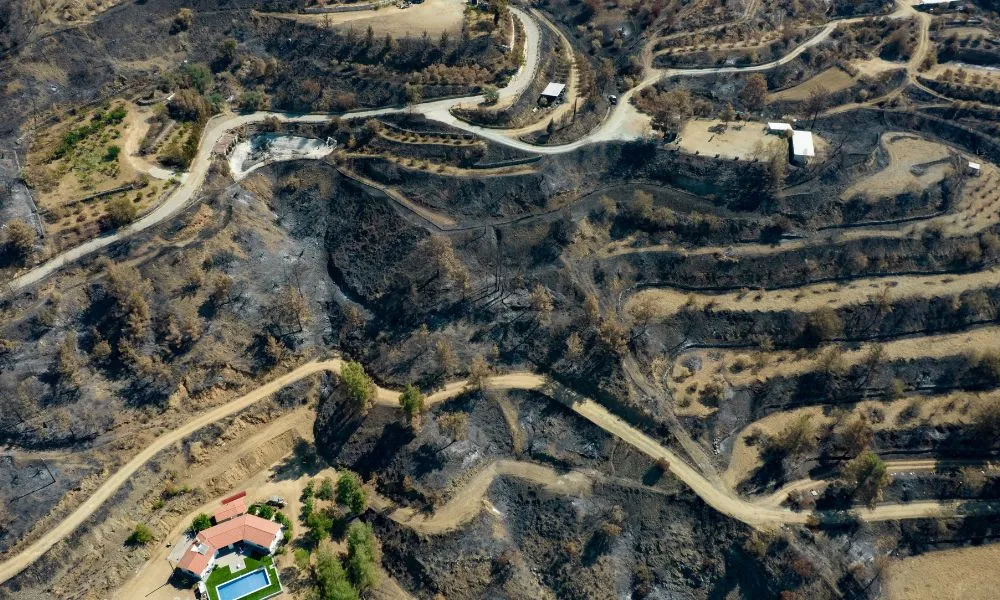

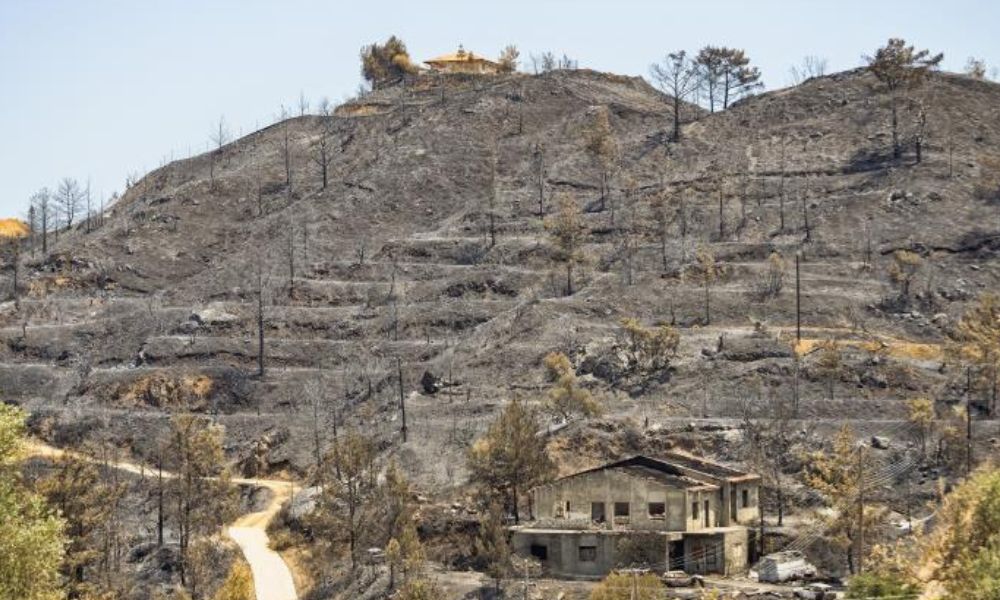
The Interior Committee of the House of Representatives examined the state of Cyprus's wildfire prevention and response mechanism at its first session under its new composition on Thursday, convened just hours after a fire broke out in the Mallias-Dora area of Limassol on Wednesday night. The incident revived memories of last year's major fire in the Limassol mountains, with residents reporting significant anxiety and alleging delays in the fire service's response.
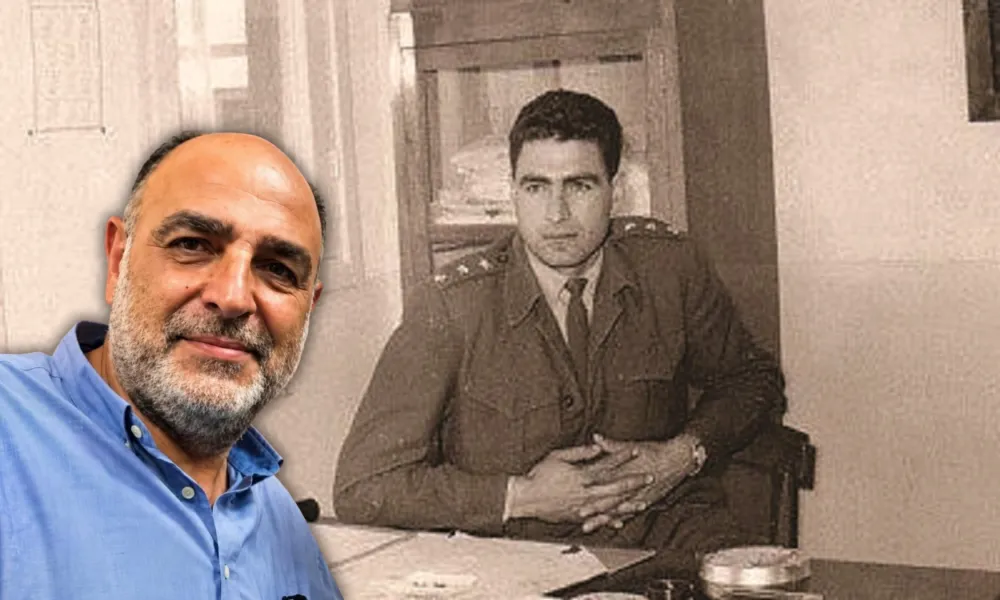
The Fire Service Chief and National Fire Coordinator, Nikos Longinos, and the Director of Operations were present at the Fire Service Crisis Management Centre to coordinate the response, which brought the fire under control after several hours.
According to information obtained by Politis, the first vehicle to respond came from Moniatis, because the much closer Pachna station had closed at 7pm.
The Achilles' heel: stations that close at 7pm
Longinos was emphatic at Thursday's parliamentary session about the gap that has persisted in round-the-clock rural coverage since the Fire Service assumed responsibility for wildfires in 1994. Most rural stations currently close at 19:00, meaning that if a fire breaks out after that time, the half hour it takes a vehicle from another station to reach the scene makes it significantly harder to bring the fire under control.
He acknowledged that this year "a great many steps have been taken on prevention, but if a fire breaks out after 7pm, when a fire engine needs half an hour to reach the scene, it will be difficult to catch the fire."
He also expressed regret that since 1994, successive officials and even Fire Service administrations had failed to resolve the problem. "Over the past two and a half years, we as a Fire Service administration began pushing for this gap to be covered," he said.
Longinos confirmed he has received approval to place personnel on a 24-hour basis at five additional rural stationsfrom 1 July, specifically at Pachna (Limassol), Kelokedara (Paphos), Peristerona (Nicosia), Xylofagou (free Famagusta) and Lefkara (Larnaca), all of which statistically respond frequently to fire incidents.
He has also submitted a study to the Ministry of Justice requesting that all existing rural stations be staffed on a 24-hour basis, and that 14 additional stations be created and similarly staffed to reduce response times.
"We have made improvements"
Eliккos Ilias, Director-General of the Ministry of Interior, told the committee that lessons had been learned from last year's major Limassol mountain fire. He noted that the Ministry of Interior and the District Administrations are assisting communities with vegetation management, which is even denser this year due to heavy rainfall, and that inter-ministerial coordination has improved.
He highlighted as particularly significant the activation in early June of the CY ALERT early warning system. He also referred to the government's intention to establish a Civil Protection Directorate within the Ministry of Interior, for which draft legislation has been submitted to the committee with a request that it be treated as a priority.
€3 million for communities, drones and volunteer training
Longinos outlined further measures taken this season. The Ministry of Interior has allocated €3 million to communities for vegetation clearance, while the Fire Service has had teams on the ground since March identifying clearance priorities. Rural fire stations have been reinforced with 60 additional personnel, and surveillance cameras have been installed in Larnaca, Paphos and Limassol from the new Fire Service Operations Centre.
400 volunteers have been trained, and their contribution to firefighting operations was described as outstanding. A major firefighting exercise was held on 19 May under the coordination of the Forestry Department with the participation of all services. The PYRSOS (wildfire suppression) and POLYVIOS (evacuation) plans have been updated. Grants have also been given to 54 communities to purchase firefighting vehicles, with volunteer training under way and uniforms to follow next year.
Forestry Department: drones, controlled burns and grazing
Savvas Iezekiel, Director of the Forestry Department, reported that forest roads have been maintained and the department's drone unit has been fully staffed, organised in cooperation with the University of Cyprus and the Cyprus Institute. Drone flight hours rose from 200 per year in previous years to 1,000 hours last year.
Iezekiel raised the issue of insulation of Cyprus Electricity Authority (EAC) power lines, which have previously caused forest fires, noting that replacements are being carried out gradually at the most hazardous points in cooperation with the EAC. Controlled burning was applied by the department for the first time this year, and the backfire method continues to be used to halt the advance of fires when other means are insufficient.
He also stressed the need to revive agricultural cultivation as an intermediate buffer between fires and forests, and noted that the department is working with the Agriculture Department on controlled grazing through three pilot programmes, two of them in the Kato Pyrgos and Solea areas. However, he noted that foot-and-mouth disease has created difficulties this year in allowing livestock to graze outdoors.