
The African Continental Stage of the FIDE ISCF World Schools Team Championship 2026 (WSTC 2026) will take place from 6 to 11 July at Stellenbosch University, in Cape Town, South Africa. The event is organised by the International Chess Federation (FIDE) and the International School Chess Federation (ISCF) with the support of general partner Freedom Holding Corp., the parent company of Freedom24.
The tournament is the first African stage in the championship's history and the second continental qualifier of the new WSTC cycle, held within the framework of the Year of Chess in Education 2026 initiative. Nearly 30 school teams from across the continent are expected to compete, with the best teams qualifying directly for the WSTC 2026 Grand Final, where continental champions will play for the title of FIDE ISCF World Schools Team Champion 2026.
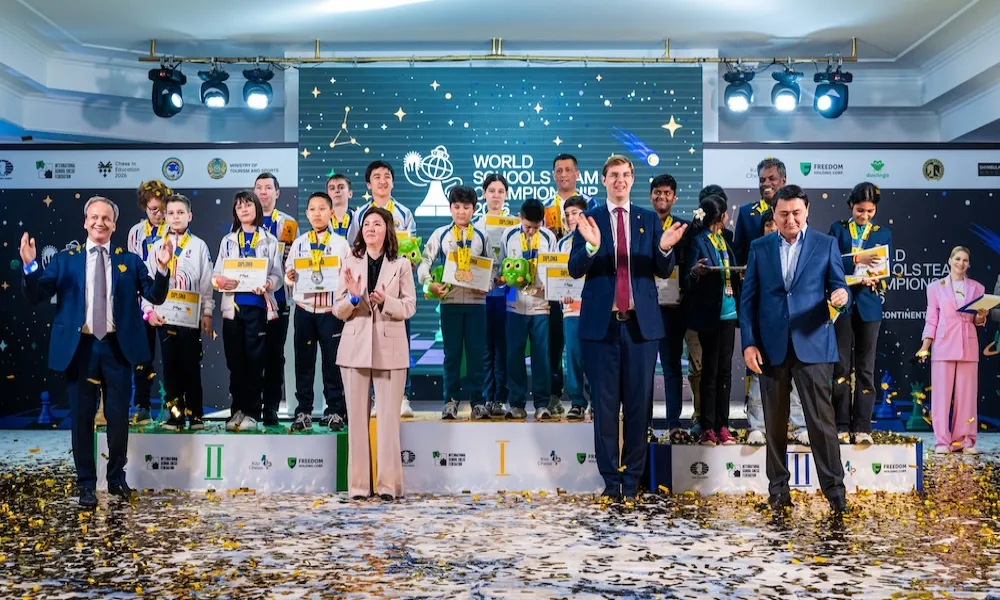
The 2026 championship spans four continental stages covering Africa, the Americas, Asia and Europe. The Asian stage concluded in April in Almaty, Kazakhstan, where Wisdom School of Tashkent took first place. The Americas stage follows in August in San Jose, Costa Rica, while dates for the European stage and the Grand Final, planned for December 2026, are still to be announced.
A championship now spanning four continents began with a conversation in Kazakhstan. In 2023, FIDE President Arkady Dvorkovich and Timur Turlov, CEO of Freedom Holding Corp. and President of the Kazakhstan Chess Federation, discussed how to bring more schoolchildren into competitive chess. Later that year, FIDE and the Kazakhstan Chess Federation launched the first edition in Aktau, bringing together more than 400 students from 53 countries.
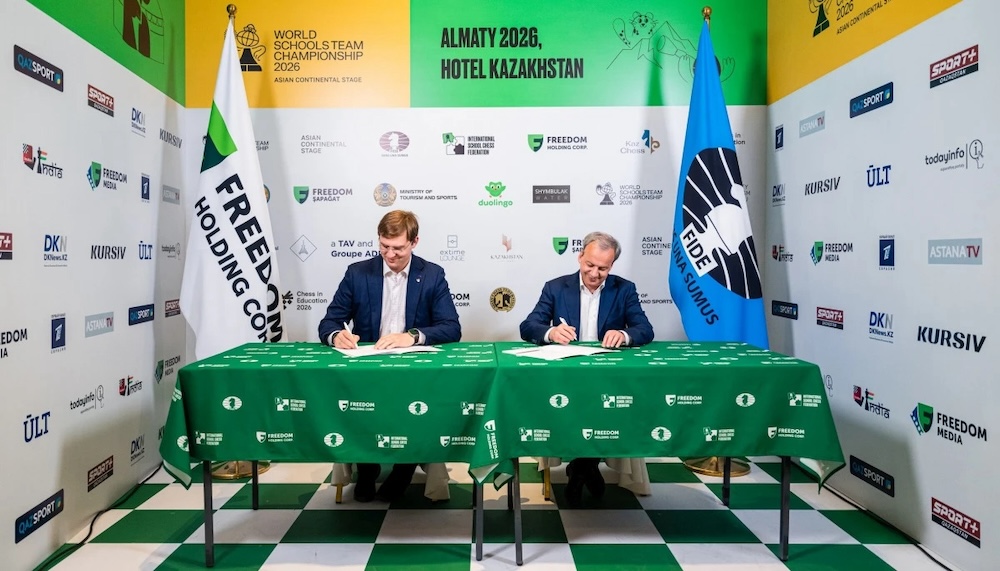
The ISCF was established in September 2024 at Turlov's proposal and approved by FIDE's General Assembly as an affiliated body. As the chairman of the federation, Turlov has described the African and American stages as an important step towards building sustainable youth chess ecosystems in both regions, adding that he expects the Cape Town and San Jose events to inspire a new generation of competitors. In June 2026, Turlov announced his candidacy for FIDE Deputy President, standing on a joint ticket with Dvorkovich ahead of the federation's elections in Samarkand this September.
Kazakhstan remains a reference point for the wider school chess movement. The country's Chess in Education programme, backed by the Ministry of Education, the national chess federation and FIDE, now covers more than 1,500 schools and around 60,000 students, a base that has made Kazakhstan a regular host of international school and junior chess events.
Freedom Holding Corp. supports the championship as general partner and allocates more than $15 million annually to chess development and promotion, including the WSTC, the World Rapid and Blitz Championships and other FIDE events. Earlier in 2026, the group also acquired ChessBase, one of the world's largest platforms for chess software and analytics, further extending its involvement in the game.
Arkady Dvorkovich has described the expansion into Africa and the Americas as part of the federation's Year of Chess in Education initiative, pointing to the progress both regions have made in developing chess infrastructure and school programmes.
In line with the Year of Chess in Education 2026, the competitive programme runs alongside a full schedule of educational and cultural events. Dr Lyndon Bouah, former South African Chess Olympian and author of 14 books on chess history, will deliver a lecture on South Africa's Olympiad history. International Master Henry Robert Steel will give a simultaneous exhibition featuring one board played collectively by the audience. Women International Master and sport psychologist Dr Denise Bouah will lead a session on the mental side of high performance, followed by an interactive workshop on challenging stereotypes through chess, run together with the Teach the Nation initiative. Cultural activities throughout the week will introduce participants to South African music, dance and craft traditions.
"This isn't a week where kids just show up, play, and leave," the ISCF team commented. "The masterclasses and the cultural programme are there so they walk away with something. A skill, a perspective, a connection to a place they'd never been before."