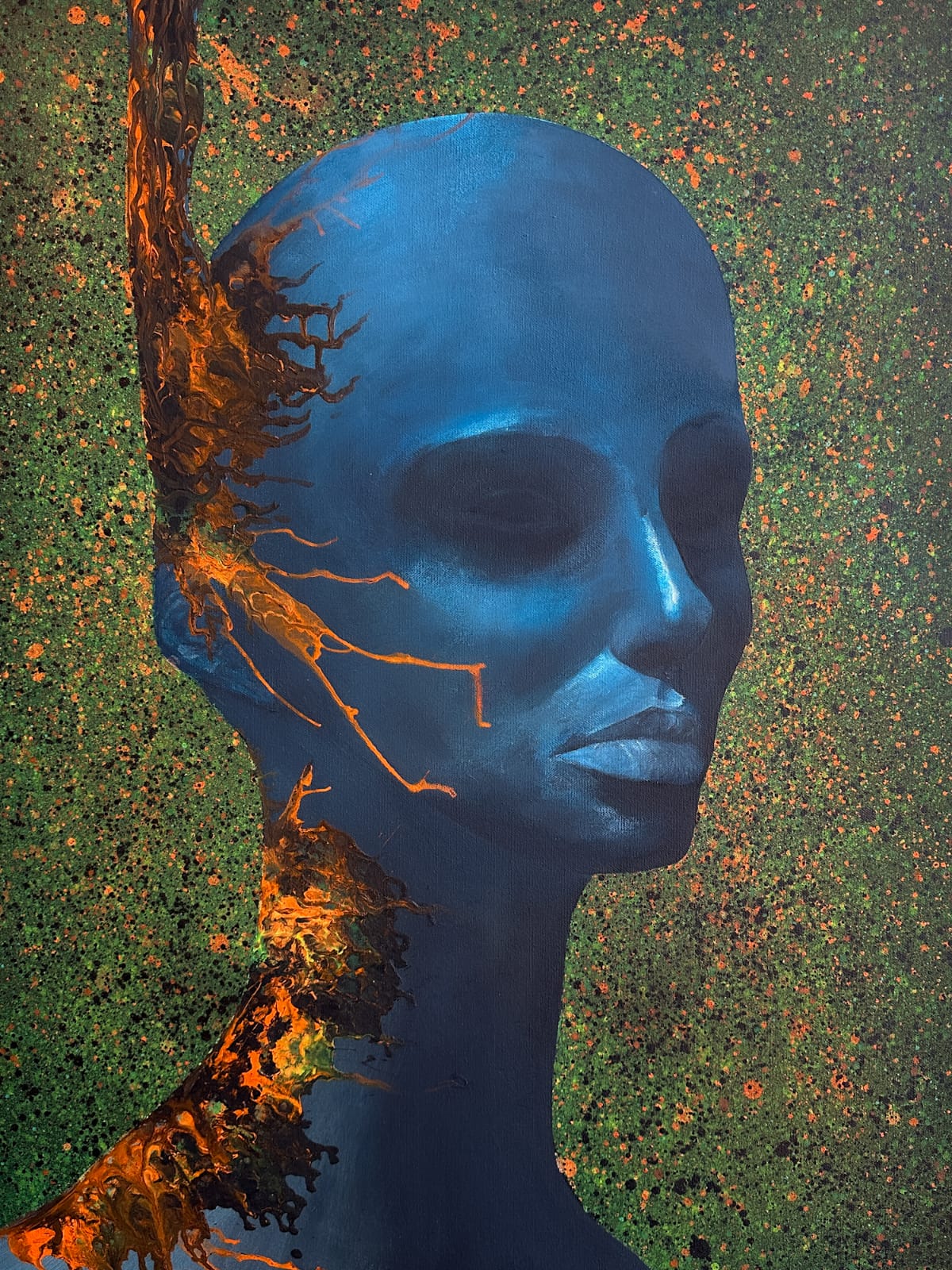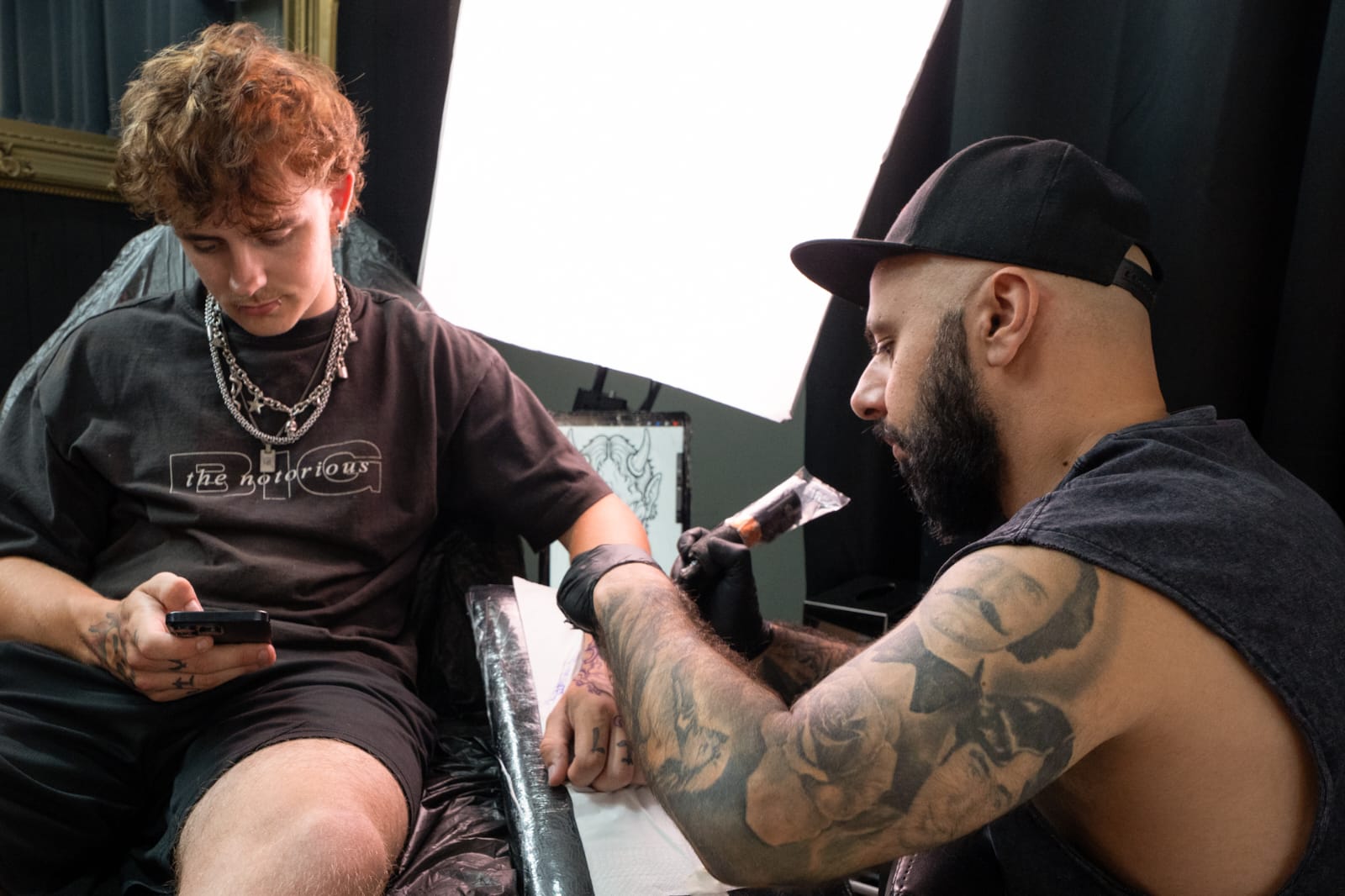
On a hot summer afternoon in Paphos, the door to Gorilla Tattoo Paphos opens onto something far removed from the conventional image of a tattoo studio. Original artworks, carefully chosen decor and a space that feels more like a gallery than a workshop set the scene for a conversation about an art form whose place in Cypriot society has changed considerably in recent years.
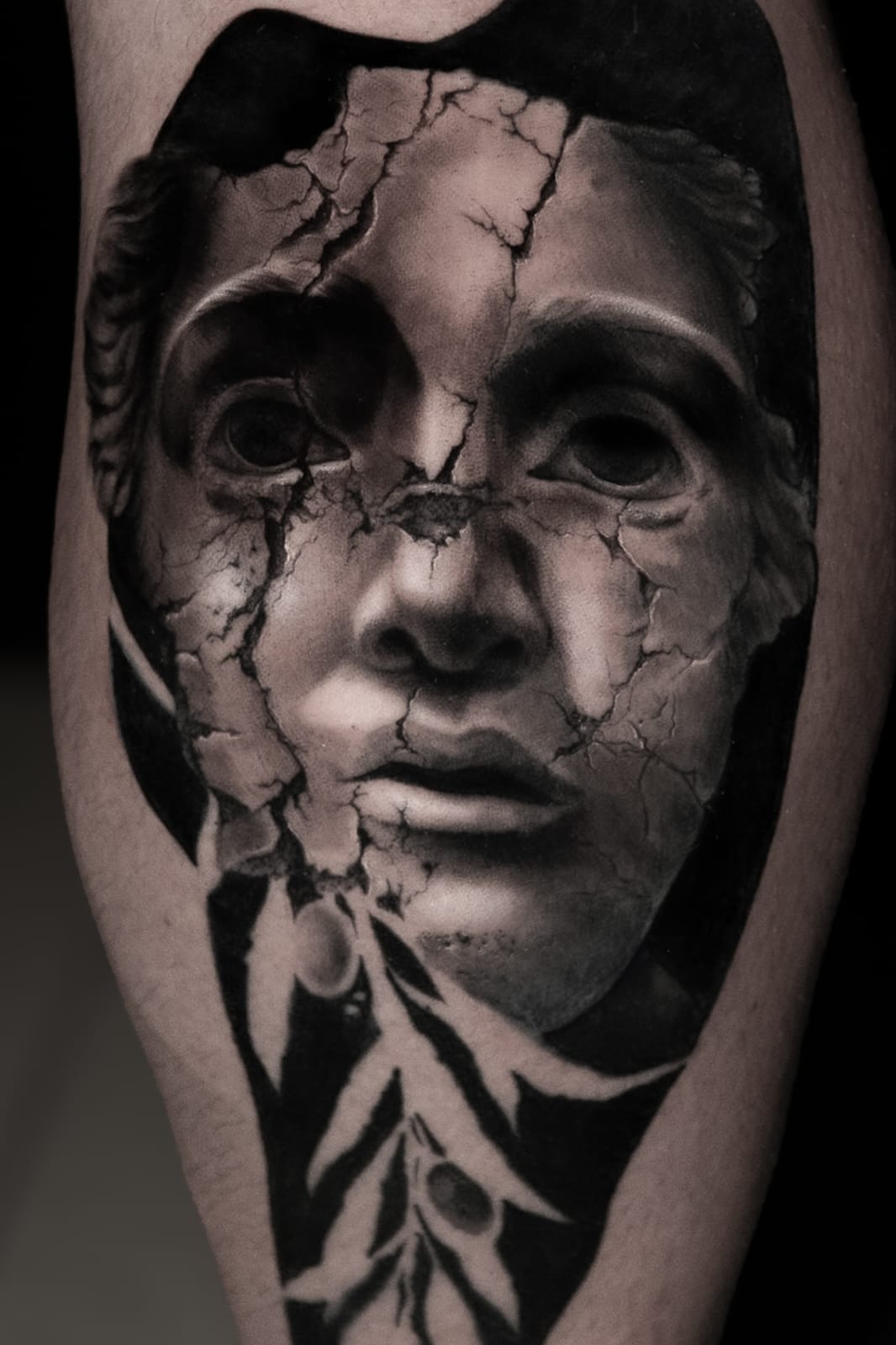
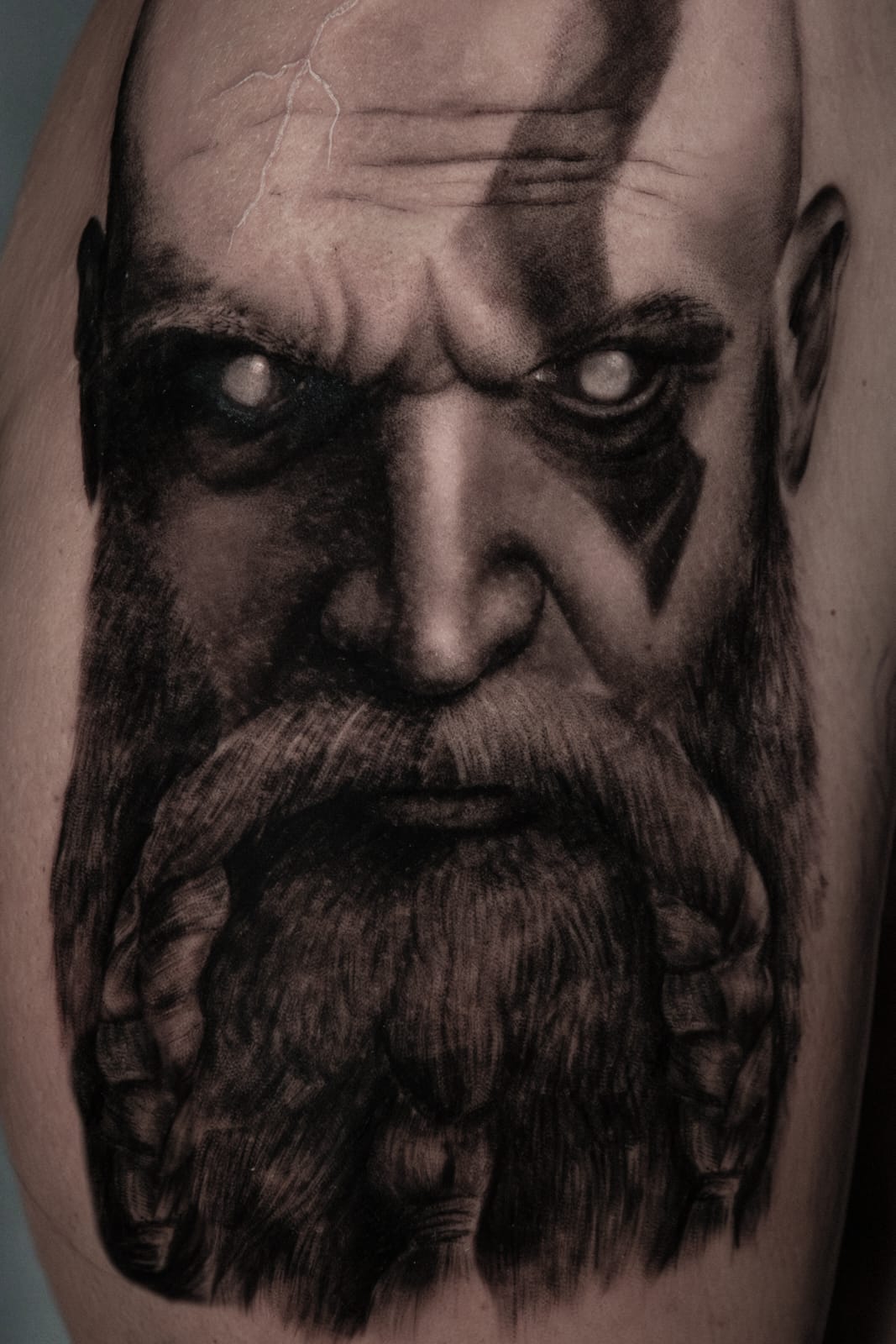
Nick, the founder of Gorilla Tattoo Paphos, has built a long career in the tattoo industry. He worked in London for years before returning to Cyprus and opening his own studio in Paphos. He is known primarily for his highly detailed black-and-grey realism, having previously explored a range of styles and techniques. Before the conversation begins, Nick offers a tour of the premises.
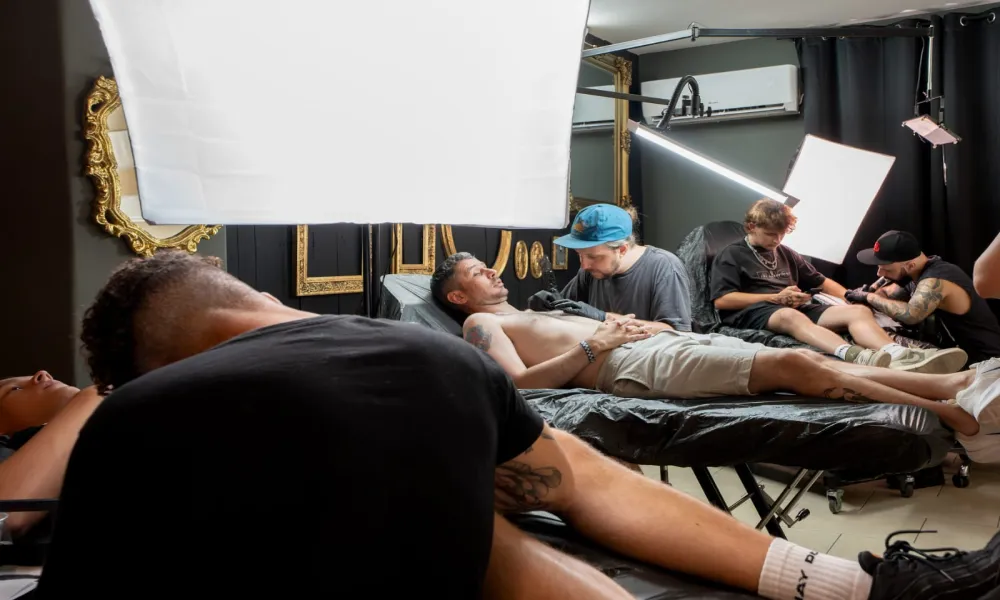
Upstairs, the studio’s other artists are working with their clients. Among them, one family immediately catches the eye. The grandmother is covered in tattoos, as are her children and grandchildren. They have been regular clients of the studio for years. The sight of three generations sharing the same passion is perhaps one of the clearest indications of how much Cypriot society’s attitude towards tattoos has changed. What was once associated with stereotypes and social stigma has become part of everyday life for people of different ages. The atmosphere is lively and welcoming, more reminiscent of a creative community than a conventional service business.
Nick then shows the area where tattooing and body-piercing equipment is sterilised and stored. Its organisation and cleanliness are immediately apparent, revealing an important part of the work that clients rarely see. Behind every design placed on the skin lies an entire system of hygiene and safety.
From social stigma to acceptance
According to Nick, tattoos were viewed very differently in Cyprus two decades ago. They were often associated with negative stereotypes and regarded as a choice that could affect a person’s social standing.
The shift began mainly abroad, where tattoos gradually became more popular and socially accepted. Cyprus followed at a slower pace, but the picture today is markedly different. As tattoos became part of everyday life, what once appeared unfamiliar became commonplace. Society began to see the person before the tattoo.
The change is particularly evident among older generations. People who were once opposed to tattoos now have children or grandchildren who have them. Once that choice becomes part of family life, distance and prejudice begin to recede.
Nick believes prejudice has not disappeared entirely, but today it is more the exception than the rule.
Tattoos in the workplace
Changing social attitudes have also affected professional life. In the past, many people chose areas of the body that could be covered, or avoided tattoos altogether, fearing they might harm their career prospects.
That concern remains in certain professions, but many workplaces have become more accepting of visible tattoos. In fields such as the creative industries, technology, fitness, fashion, beauty and social media, tattoos are now often part of a contemporary professional image.
Despite this shift, Nick believes people should exercise caution before choosing tattoos on their hands, neck or face. Society may be more accepting, but not every profession or employer has changed at the same pace. In some cases, a highly visible tattoo can still affect future employment opportunities.
How the profession evolved
Public attitudes are not the only thing to have changed. The profession itself has also evolved. Equipment, techniques, precision and the level of detail that can be achieved on skin have advanced considerably. The same is true of hygiene, safety and access to knowledge.
Today, almost all equipment that comes into direct contact with a client is single-use. Anything that is not, such as the tattoo machine, is covered with special protective barriers. The process follows strict rules designed to prevent cross-contamination.
For Nick, being a good artist is not enough for a modern professional. A tattoo artist also needs a thorough understanding of hygiene and safety, along with a full awareness of the responsibility the work carries. Tattooing, he explains, is not simply painting on skin.
It combines an artist’s creativity with a craftsperson’s precision and demands considerable responsibility at every stage. It requires knowledge of drawing, composition, anatomy, colour theory, the way skin behaves and hygiene, as well as the ability to communicate properly with the person sitting opposite the artist. According to Nick, that knowledge is built over years of experience.
Clients who travel for a tattoo
Nick’s work is not confined to Cyprus. Some clients travel from abroad specifically to work with him. Several are people he tattooed while working in England. Others discover his work online or come to the studio through recommendations.
For a client who connects with a particular artist’s style, distance can become secondary. Trust in the artist’s approach and confidence in the expected result may matter more than geography.
When a tattoo becomes part of someone’s identity
For many people, a tattoo goes beyond aesthetics. Nick has observed that many clients return not simply because they want more tattoos, but because they become attached to the experience and, above all, to the confidence it gives them.
A tattoo can become part of how someone sees themselves. It can offer a way to reconnect with the body, express personality or feel more comfortable with one’s appearance. For others, it may form part of a healing process, serve as a tribute to someone they love or symbolise a new beginning.
Not every tattoo, however, needs to carry a deeply personal story. Some people choose a design simply because they like it or believe it suits their body. That choice is equally valid.
The new legislation and regulatory framework
The evolution of tattooing and its growing popularity created the need for a clearer regulatory framework. According to Nick, the new legislation governing the registration of tattoo artists and body piercers marked a decisive step for the industry. For the first time, the profession acquired a clear legal framework, with specific requirements covering hygiene, safety, premises, equipment and professional practice.
Gorilla Tattoo Paphos was the first studio in Cyprus to receive licences for both tattooing and piercing under the new legislation. Both licences bear the number one. The process, however, was not brief. Around 18 months passed between the submission of the application and the licences being issued.
All required qualifications and supporting documents had to be submitted and were reviewed by the Ministry of Health and the competent licensing committee.
Nick makes particular reference to the contribution of Maria Michael from the Ministry of Health, whom he thanks for her guidance throughout the process. At the same time, he notes that, as an applicant, he saw only one part of the wider effort required to implement the new framework.
It is an ongoing process involving different bodies and professionals, including the Ministry of Health and the Tattoo & Piercing Association Cyprus, with the aim of protecting public health and raising professional standards in Cyprus.
What licensing means for the client
According to Nick, licensing is an important factor for clients to consider. A licence means that the studio has been officially inspected and meets the requirements set out in legislation to protect public health.
A licence is not an assessment of an artist’s creative style, nor does it mean that a particular artist is necessarily the right fit for every client. It does, however, confirm that the studio operates legally, is subject to inspection and complies with defined hygiene and safety standards. In tattooing, artistry and hygiene cannot be treated as separate concerns.
The studio inspection
Before the licences were issued, Gorilla Tattoo Paphos was inspected by the Ministry of Health. The inspection covered the premises, workstations, sterilisation and cleaning procedures, equipment and materials, from inks and needles to disposable supplies.
The checks extend to every aspect of a studio’s operation, from the organisation of the premises to compliance with hygiene and safety protocols. For a professional in the field, none of this can be regarded as a mere formality.
The risks and responsibilities
The fact that tattoos have become commonplace can easily create the impression that the process is simple and harmless.
Nick points out, however, that the skin is injured during tattooing and the ink remains in the body for life. Tattooing must therefore be approached with the seriousness it warrants. Without proper training in infection prevention and safe working practices, the consequences can be serious.
There is also an artistic dimension to the risk. Choosing the wrong artist can result in a poorly designed or badly executed tattoo that is difficult to correct. Laser removal is a lengthy, painful and expensive process, while even a cover-up has limitations. It often requires a new design that is larger, darker and bolder in order to conceal the original.
Inks and European restrictions
The changes have not been confined to working practices. They have also affected the materials used. European restrictions covered certain chemicals previously used to produce some coloured inks. The European Union adopted a precautionary approach aimed at improving product safety. Manufacturers adapted by developing new ranges of inks that comply with the European Union’s REACH regulation.
There are now several options for coloured tattoo inks that comply with the new legislation, even if the range is not exactly the same as it was in the past.
Tattoos and cancer
One question that concerns many people is whether tattoos may be linked to cancer. Nick notes that several studies have examined possible associations, but that it has not been scientifically proven to date that tattoos cause cancer.
He also stresses the importance of protecting the skin from the sun. Excessive sun exposure damages the DNA in skin cells and is one of the leading risk factors for skin cancer, regardless of whether someone has tattoos. Once a tattoo has fully healed, Nick recommends using a high-protection sunscreen, ideally SPF 50.
He also considers it important to seek shade and avoid prolonged sun exposure, particularly when the sun is strongest. Ultraviolet radiation affects not only skin health but also a tattoo’s appearance, as it can cause pigments to fade.
From an online image to a personal work of art
The creative process at Gorilla Tattoo Paphos usually begins with an idea. Many clients arrive with an image they have found online or a general sense of what they want. According to Nick, however, many are unaware of the full possibilities offered by tattoo design, the different styles available or the ways in which a design can be adapted to work better on the body.
The artist’s role is to understand what the client genuinely wants to express and develop that initial idea into a design created specifically for them. The final result may differ significantly from the original image.
The composition, size, placement and artistic approach may all change so that the design better suits the client’s body and personality. The artist must also consider not only how a tattoo will look on the day it is created, but how well it will retain its appearance over time.
Different tattoo styles and specialisms
Gorilla Tattoo Paphos is home to artists with different styles and areas of expertise. This diversity allows the studio to direct each client to the artist best suited to their preferred aesthetic and the idea they have in mind.
Nick’s principal speciality is black-and-grey realism. He is particularly drawn to work in which composition, light, detail and texture play a defining role. His career, however, did not begin there. In his early years, he worked in old-school, neo-traditional and Japanese tattooing, before exploring mandala, dotwork and microrealism.
Each style gave him different knowledge, techniques and ways of approaching the work. A broader understanding of tattoo art, he explains, provides him with more tools to experiment, combine different influences and create a more individual result.
Developing a style in realism
Developing a personal artistic style is a lengthy process. It requires experience, experimentation, constant exploration and growth. Nick regards realism, in particular, as one of the most demanding styles because it requires great precision and leaves very little room for error. It took years of practice and experience before he felt ready to devote more of his work to it.
The original artworks displayed throughout the studio are a reminder that drawing remains the foundation of the profession. For a tattoo artist, drawing, anatomy, composition, proportion, perspective, light, shadow and colour theory are transferred directly onto the skin.
The crucial difference is that skin is not a static canvas. It is alive, and it changes and ages. An artist must therefore understand not only drawing but the body itself. The fundamental principles of art, however, remain the same.