
If you stop exercising, you can often rebuild muscle strength within a few months through effort and consistency.
Hearing is different.
"Once it's gone, it doesn't come back," says Valerie Pavlovich Ruff, an audiologist and hearing specialist at the Cleveland Clinic in Ohio.
While age-related hearing loss has long been recognised, specialists are now seeing increasing numbers of younger patients, including teenagers and even children under the age of 10.
"Most of us don't protect our ears properly when we're young," says Jaime Bogle, an audiologist at the Mayo Clinic in Arizona. "The damage accumulates over time, so the habits we had in our younger years can have consequences decades later."
Many everyday activities may have unexpected effects on long-term hearing health.
How hearing works
Deep inside the ear, behind the eardrum, is a fluid-filled chamber known as the cochlea.
Its inner surface is lined with thousands of microscopic sensory hair cells. At the top of each cell are dozens of extremely fine hair-like structures, while at the base each cell is connected to a neuron that feeds into the auditory nerve, transmitting signals to the brain.
When sound waves enter the ear, these tiny hairs move back and forth, much like trees bending in the wind. Their movement is converted into electrical impulses that the brain interprets as sound.
Prolonged exposure to loud noise acts like a violent storm, bending or even destroying these delicate hairs.
Unlike the hair on our heads, however, these sensory hairs do not regenerate.
"The human ear has all the hair cells it will ever possess from birth," explains Pavlovich Ruff. "Once these cells are lost, the damage is permanent and cannot be reversed."
Researchers are working on gene therapies that may one day regenerate these cells, inspired by animals such as zebrafish and chickens, which can naturally regrow them.
Until then, prevention remains the best strategy.
"The most effective way to preserve our hearing is to protect what we have today," Pavlovich Ruff says.
Concerts and headphones
According to Pavlovich Ruff, live music is almost always amplified and typically played at excessively high volumes.
At the sound levels found at many concert venues, damage to the inner ear can begin after only 10 to 15 minutes of exposure.
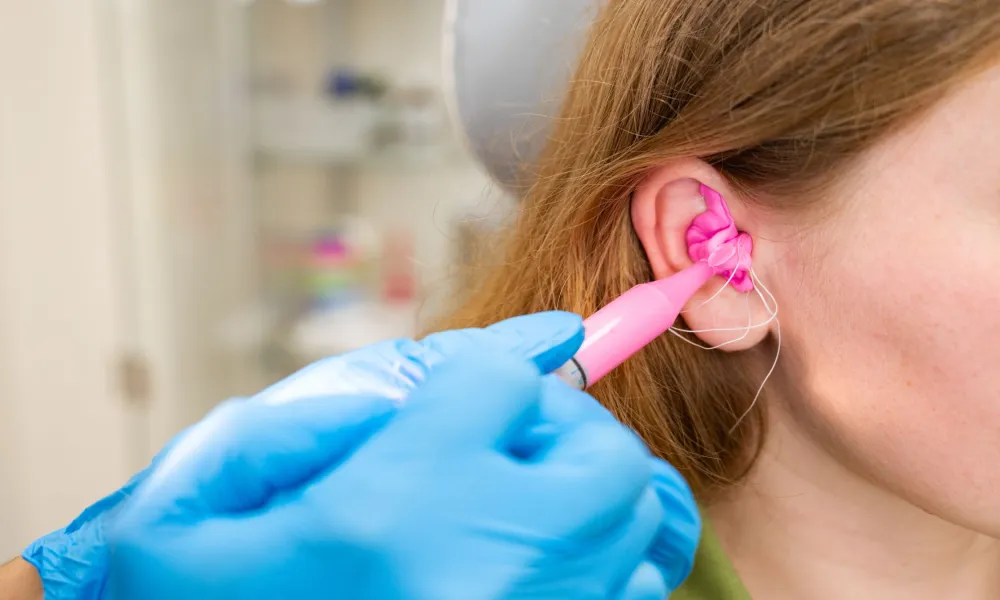
If you plan to stay for an entire concert, experts recommend wearing ear protection.
Traditional foam earplugs can reduce sound quality, so specialists suggest high-fidelity earplugs, which lower volume levels without distorting the music.
The same advice applies to sporting events.
Many stadiums pride themselves on producing extremely high noise levels from cheering crowds.
"I often see babies wearing hearing protection at sporting events, but not their parents," says Pavlovich Ruff. "What about your own ears? Don't you want to hear that child when they've grown up?"
For most people, however, the greatest exposure to loud sound comes not from concerts but from headphones and earbuds.
A study of nine-year-old children in Sweden found a small but statistically significant difference in hearing between those who regularly used headphones and those who did not.
Researchers estimate that up to 1.35 billion people under the age of 35 may be at risk of premature hearing loss because of exposure to amplified sound and personal listening devices.
Many modern devices include volume limiters designed to keep sound at safer levels.
Pavlovich Ruff advises respecting those limits.
"If you're wearing headphones and can still communicate with someone standing nearby, the volume is probably fine. If the other person has to shout or you can't hear them at all, the sound is likely too loud."
Gardening, DIY projects and driving
Gardening and home improvement work can be surprisingly noisy.
Experts recommend wearing hearing protection during such activities, whether that means earplugs, earmuff-style hearing protectors or a combination of both.
Pavlovich Ruff also warns that driving on a motorway with the window open may damage hearing.
The noise generated by rushing air is often much louder than people realise.
Audiologists frequently observe one-sided hearing loss in people who regularly drive with an open window.
The situation is made worse by another familiar habit.
Many drivers unconsciously turn up the radio volume to overcome the noise from the wind.
Motorcyclists should also wear hearing protection.
High-fidelity earplugs are generally recommended because they reduce damaging engine noise while still allowing riders to hear sirens, traffic and other important sounds.
When should you get your hearing tested?
The traditional recommendation is to undergo a preventive hearing test before the age of 60.
However, hearing loss can develop at any age.
Even people in their 30s, or younger, should pay attention if they struggle to follow conversations in noisy environments.
"I would recommend having a hearing test at the first sign of any difficulty," says Pavlovich Ruff.
She notes that noise-induced hearing loss is often preceded by tinnitus, commonly described as ringing or buzzing in the ears.
"If you've been exposed to loud noise and your ears are ringing or buzzing, it's probably a good idea to schedule a hearing examination."
Key ways to protect your hearing
- Wear hearing protection at concerts and sporting events.
- Choose high-fidelity earplugs when possible.
- Keep headphone volume at safe levels.
- Respect built-in volume limits on devices.
- Use ear protection during gardening and DIY work.
- Avoid prolonged driving with windows open at high speeds.
- Wear hearing protection while riding a motorcycle.
- Get your hearing checked as soon as symptoms appear.
- Take tinnitus seriously and seek assessment if it develops.
Source: lifo.gr