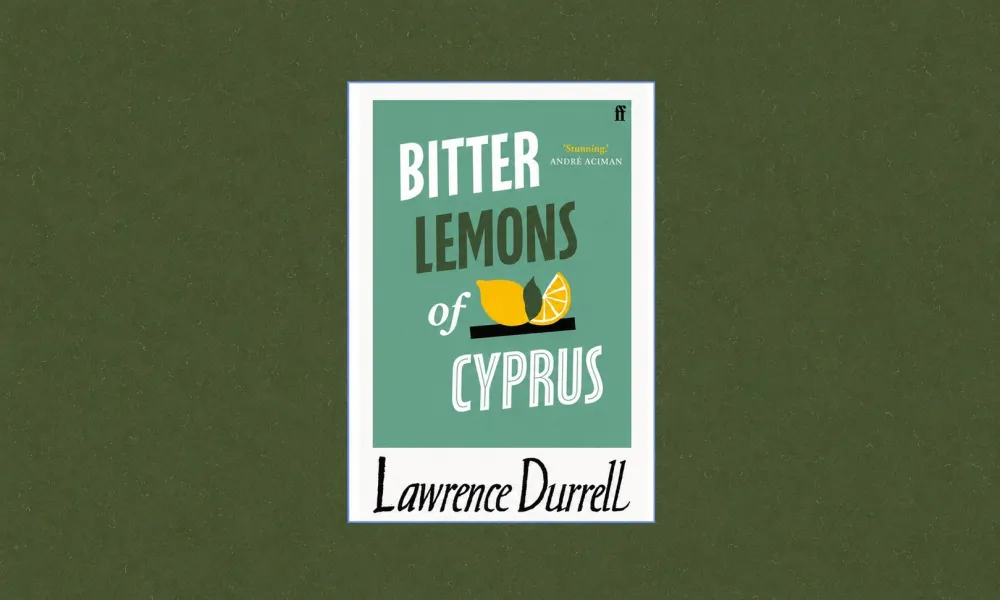

Bitter Lemons of Cyprus is Lawrence Durrell’s memoir of living in Cyprus during the 1950s, just as the island edges toward the EOKA struggle. On the surface, it’s a book about buying a house in Bellapais, learning village rhythms, and watching a place he loves slide into conflict. But beneath that, it’s a portrait of a man who wants the intimacy of belonging without surrendering the authority of the outsider.
Durrell writes Cyprus with tenderness, but it’s a tenderness shaped by hierarchy. He admires the villagers, but often from above; as if they are charming, unpredictable characters in a landscape he is trying to inhabit rather than people with their own political consciousness. There’s a subtle but persistent colonial framing: Cypriots appear as emotional, impulsive, sometimes naïve; the British as rational, weary custodians of order. Even when he criticises colonial policy, he never fully steps outside the worldview that produced it.
And yet, the book is compelling because it captures something true about life on a small island under pressure: the way warmth can coexist with suspicion, how quickly hospitality can turn brittle when identity becomes politicised, how a community can shift tone without ever naming the shift.
Durrell is perceptive about atmosphere. The tightening of the social fabric, the way silence becomes a form of communication, the way fear travels through a village long before violence arrives. What he doesn’t fully grasp (and what the modern reader can’t ignore) is that he is not simply observing history; he is part of the machinery shaping it.
His longing for peace, beauty, and belonging sits uneasily beside the reality that the island’s unrest is tied to the very empire he represents. That contradiction gives the memoir its tension: a man falling in love with a place while failing to understand the depth of its wound.
In the end, Bitter Lemons is not just a travel memoir or a political diary. It’s a study in perspective. How power shapes what we see, how affection can coexist with blindness, how a place can be both deeply known and fundamentally misunderstood. It’s a reminder that Cyprus has always been read through other people’s eyes, and that part of reclaiming its story is learning to recognise the gaze that wrote it.