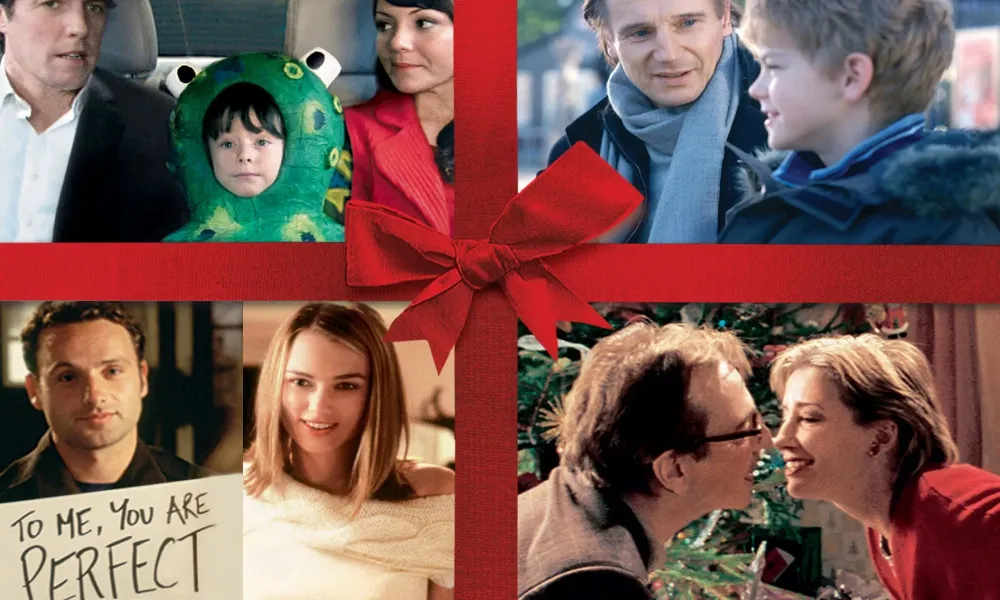

Love Actually is one of my favourites, largely because I am drawn to films that tell many stories at once. There is something deeply cinematic about an ensemble piece that trusts the audience to move between characters, tones, and emotions without holding their hand. Richard Curtis builds a world where love is not singular or idealised, but varied, contradictory, and often messy, which feels far more honest than a single, perfectly wrapped romance.
I want to share something the critic Sebastian Zavala wrote on Loud and Clear Reviews because I found it really insightful, basically that Love Actually “proves to be a product of its time”. “Every time I watch a film from ten, twenty, thirty or more years ago, I have to do so thinking that it was made in another time and place”, he says and I believe this is perfectly spot on, as some elements in movies endure while others simply expire.
From a cinephile perspective, the film’s strength lies in its casting and structure: Hugh Grant, Liam Neeson, Colin Firth, Emma Thompson, Keira Knightley, Andrew Lincoln, Thomas Brodie-Sangster, Bill Nighy, Martine McCutcheon, Laura Linney, Martin Freeman, Rowan Atkinson, Kris Marshall.
I mean I would still watch a fim even if only one of these people were performing. The separate stories structure is my cherry on top.
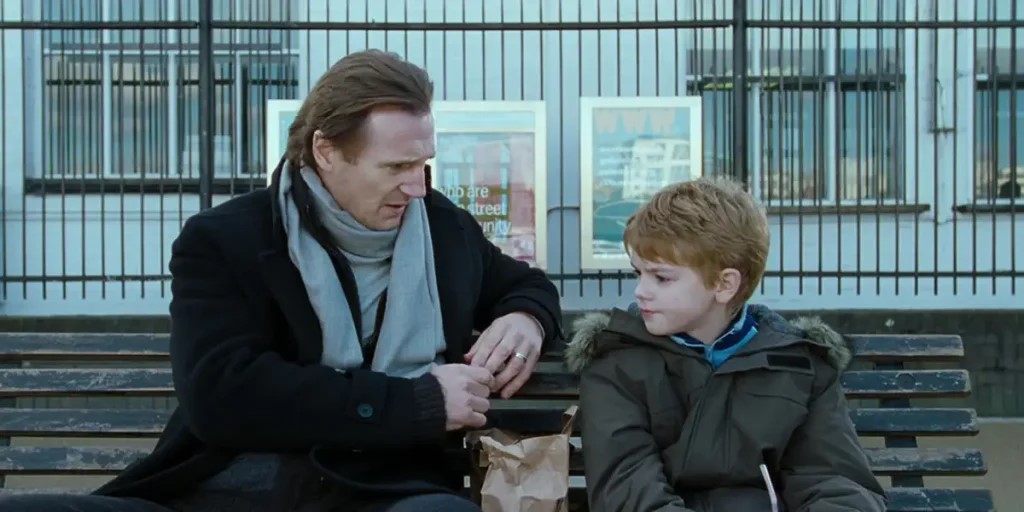
a moment or one of the many hearts of Love Actually.
Curtis uses cross-cutting and parallel storytelling to create emotional rhythm rather than narrative momentum. Scenes echo one another, relationships overlap in subtle ways, and the film finds meaning in proximity. Characters brush past each other, sometimes literally, sometimes emotionally, reinforcing the idea that love exists everywhere at once, especially at Christmas.
Ultimately, Love Actually endures because it understands Christmas as an emotional amplifier. Feelings are heightened, flaws are exposed, and hope feels possible again, just as if you discover there’s still space for one more chocolate...