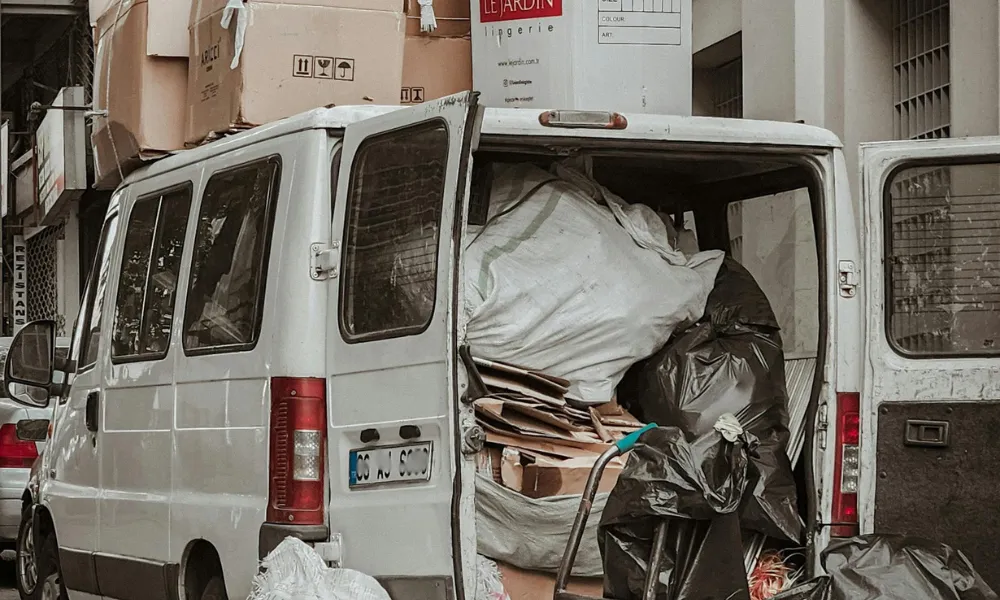

If you died tomorrow, what would you leave behind? Not the poetic answer, not the sentimental one. The real one. A wardrobe that cannot close. Boxes filled with cables that belong to devices you no longer own. Drawers full of forgotten paperwork, warranties, receipts and mysterious keys. A digital universe of old emails, abandoned subscriptions and passwords nobody can find. Modern life accumulates objects faster than we realise. Swedish death cleaning begins with a surprisingly honest question: perhaps the person who should organise all this is you.
The concept may sound grim at first. In Swedish the term is döstädning, which literally translates as “death cleaning.” Yet the practice is not morbid at all. In fact, it is deeply practical and quietly liberating. The central idea is simple: organise your belongings, your paperwork and even your digital life while you are still alive so that your loved ones are not left with the exhausting responsibility of sorting through everything when you are gone. What begins as a practical exercise quickly turns into something deeper – a reflection on what truly matters.
The Idea That Turned Into A Global Conversation
The philosophy entered global culture through the book The Gentle Art of Swedish Death Cleaning by Swedish writer Margareta Magnusson. In the book, Magnusson explains a tradition long familiar in Scandinavian families: older adults gradually sorting through their possessions so that their children will not inherit the burden of organising a lifetime of accumulated objects.
Her tone is light, often humorous, and surprisingly comforting. Rather than presenting the practice as something sombre, Magnusson describes it as a practical way of taking responsibility for the traces we leave behind. The book resonated internationally because readers recognised something universal: most of us own far more than we actually need, and eventually someone has to deal with it.
Not Just Decluttering – A Different Philosophy
At first glance Swedish death cleaning may resemble the minimalist trend popularised by Marie Kondo. Kondo famously asks people to keep only the objects that “spark joy.”
Swedish death cleaning asks a different question. Instead of focusing only on personal happiness, it introduces a broader perspective: will this object matter to someone else when I am gone?
This subtle shift transforms the entire process. Decluttering becomes less about aesthetics and more about responsibility. It is no longer simply about creating a tidy home. It is about deciding which objects deserve to remain part of your story.
Why Clutter Affects The Mind
Clutter is not just a visual inconvenience. It carries psychological weight. Studies repeatedly show that environments filled with disorder tend to increase stress levels, reduce concentration and create a constant sense of unfinished tasks. Every pile of unsorted objects becomes a silent reminder of something that still needs attention.
Swedish death cleaning addresses this problem gradually. Instead of confronting the entire house at once, the method encourages people to sort through belongings step by step. As objects disappear, something else happens as well: the feeling of mental pressure begins to lift. Many people report a surprising sense of calm when they realise that their surroundings finally reflect the life they actually live rather than the life they once imagined.
Starting With The Easiest Decisions
One of the key principles of Swedish death cleaning is to begin with the least emotional items. The process usually starts with clothing. Wardrobes are ideal because they reveal our daily habits with brutal honesty. There are the clothes we wear regularly, the ones we keep for special occasions and the pieces that have not been touched in years but somehow remain hanging there.
Sorting clothes creates momentum. When people recognise how many unnecessary items they own, the decision-making process becomes easier. Gradually the same approach can extend to other parts of the home.
Moving On To Larger Objects
After clothing, attention often shifts to larger household items. Furniture, decorative objects, kitchen equipment and boxes stored in cupboards or storage rooms are common targets. These items often dominate the visual space of a home and contribute significantly to the feeling of clutter.
The evaluation process is straightforward. Ask simple questions: Do I actually use this? Does it serve a purpose? Would someone else benefit from it more than I do? Sometimes the answer leads to donation. Sometimes it means recycling or letting go. Occasionally it means rediscovering an object that still deserves a place in everyday life.
The Often Forgotten Paperwork
Another essential part of Swedish death cleaning involves documents and paperwork. Bank statements, insurance contracts, tax records and legal documents tend to accumulate quietly over the years. Without organisation, they can create enormous confusion for family members later.
Sorting and clearly labelling important documents is one of the most practical gifts a person can leave behind. When financial information, legal agreements and administrative papers are easy to locate, loved ones are spared unnecessary stress during difficult moments.
Decluttering The Digital Life
Modern life has introduced a new form of clutter: digital accumulation. Email inboxes, online subscriptions, cloud storage accounts, photo archives and social media profiles form an invisible layer of possessions that rarely receive proper organisation.
Swedish death cleaning now includes this digital dimension. Creating clear records of passwords, cancelling unused subscriptions and organising digital files can simplify everyday life while preventing confusion in the future. In an increasingly online world, digital order has become just as important as physical order.
The Simple Three-Box Method
Many people use a simple technique to keep the process manageable. Items are sorted into three categories: keep, discard or donate, and decide later. This system prevents decision fatigue and allows the process to continue without becoming overwhelming. Not every object requires an immediate decision. What matters is consistent progress.
Why The Philosophy Goes Beyond Cleaning
At its heart Swedish death cleaning is not about objects. It is about self-reflection. As people sort through possessions, they inevitably confront memories, unfinished plans and emotional attachments. Some objects represent chapters of life that are over. Others represent dreams that never quite happened.
Letting go of these items can feel surprisingly freeing. It allows people to focus on the present rather than remaining surrounded by reminders of past expectations. In that sense, Swedish death cleaning becomes a form of personal awareness rather than simply a housekeeping method.
A Method That Is Really About Living
Despite its unsettling name, Swedish death cleaning ultimately celebrates life. By reducing unnecessary possessions and organising responsibilities, people create more space – physically and mentally – for what truly matters. Relationships become clearer, priorities become simpler and everyday life becomes lighter.
You do not need to wait until old age to begin. Anyone can start. Every object that leaves your home may find a new purpose somewhere else. Every document you organise removes a future burden from someone you love. Every drawer you clear creates a little more calm in your daily routine.
In the end Swedish death cleaning is not really about preparing for death. It is about understanding how to live with intention while you are still here.
Source: Lifo.gr