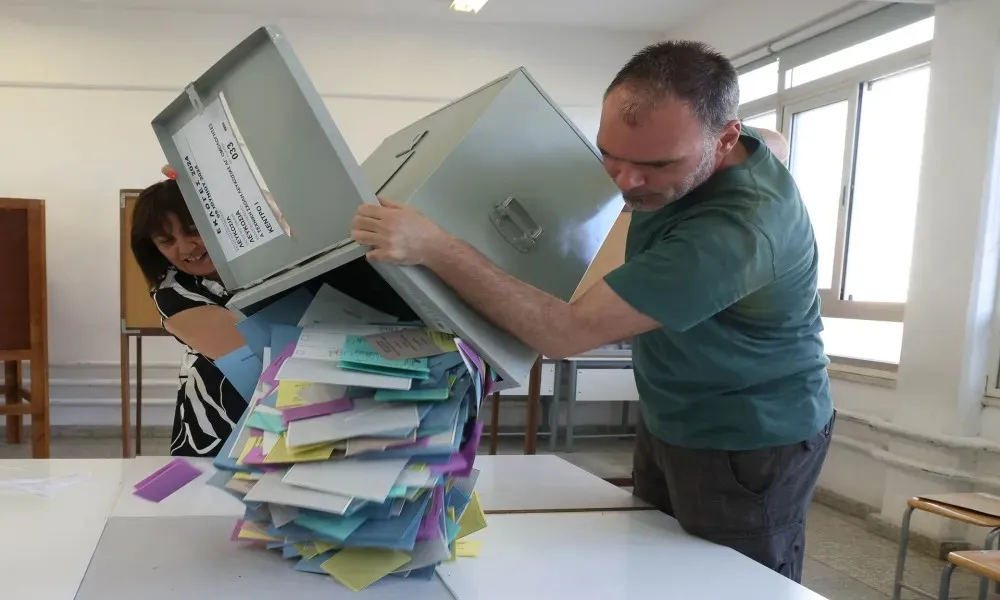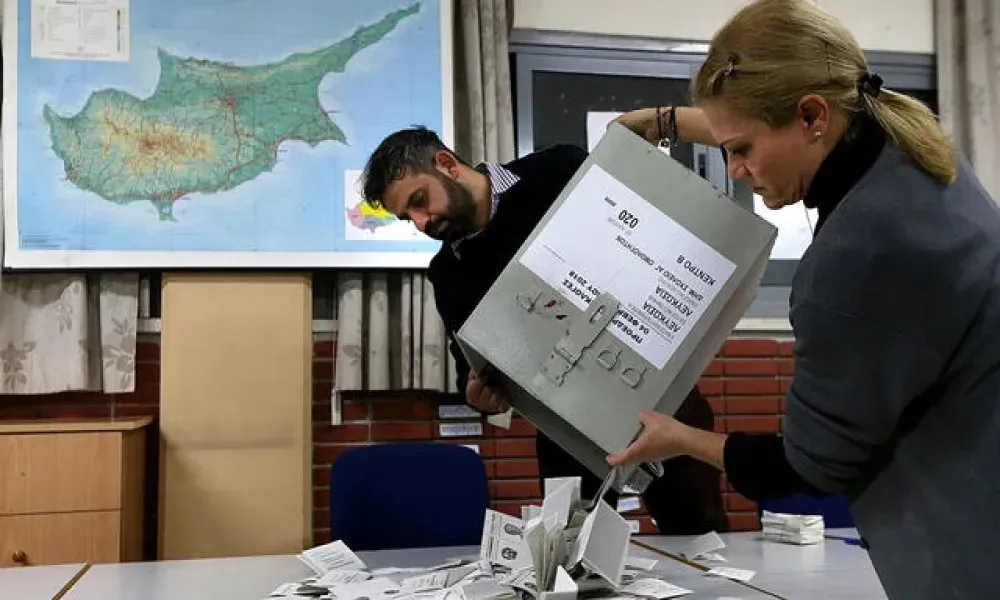
Anastasia Anthousi, a DISY candidate in the Nicosia district, received 7,606 votes. Did she enter parliament? No. By contrast, in Paphos, Dimitris Baros from Direct Democracy received 280 votes. Did we see him at the official proclamation of winners at the Nicosia municipal theatre on Monday? Yes, we did.
Baros, apart from holding one of the movement’s four seats and being the youngest MP by a margin of three months, also holds another record. He enters parliament with the fewest preference votes.
And one can reasonably ask: is this result democratic? The answer, unfortunately, is not the one expected. Because, dear voter, it is democratic. It is, however, not fair in the commonly understood sense of 'justice.'
Is this the first time something like this has happened? No, and it will not be the last, as long as the electoral system aims at proportional representation of political forces. What does that mean? It means that if you are not good at mathematical equations and complex calculations, give up. Become a beekeeper, become a fisherman, do something else.
Journalist Michalis Hadjistylianou explained how the 56 MPs are selected in Sunday’s edition of Politis (24 May 2026), in plain Greek but not for plain voters. I am on my third reading of the piece and still have not grasped the process, and certainly have not decoded its logic.
It is understandable that each district is represented by a different number of seats, because each has a different number of voters. This, indeed, is democratic and fair. The more voters, the more seats. Up to this point, it makes sense.
After that, the divisions begin and “zero in the quotient.” It starts with dividing valid votes by the number of available seats, which gives the electoral measure per district. That I understand. Then comes the division of the electoral measure by each party’s valid votes, producing the number of seats per party.
When we begin calculating the remaining votes from the division and then stack them as unused remainders to be used in the second allocation as unused votes for unallocated seats – really? – which are then combined with unused votes from across the country for that party and divided again by the remaining seats, I am sorry but no. I am writing sober, unlike Bukowski, but even in my greatest drunken states I could not make sense of this.
From the choice of wording to the way our democratic system distributes votes, the result is absurd. And even though I still have gaps regarding the second allocation, which Hadjistylianou refused to explain to me, instead asking me to read his article a fourth time, I did understand that the third allocation is the most hypocritical. In the third allocation, the seat goes to whoever has the most unused votes, that is, whoever did not produce a neat quotient in previous divisions. A gamble, in other words.
I apologise on behalf of the system, Anastasia. I am truly sorry.