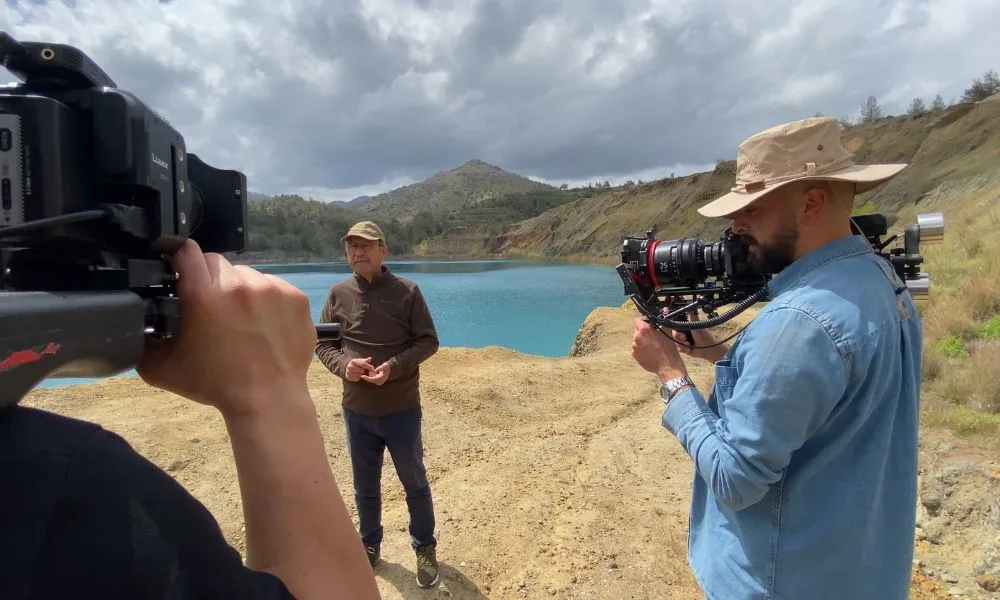
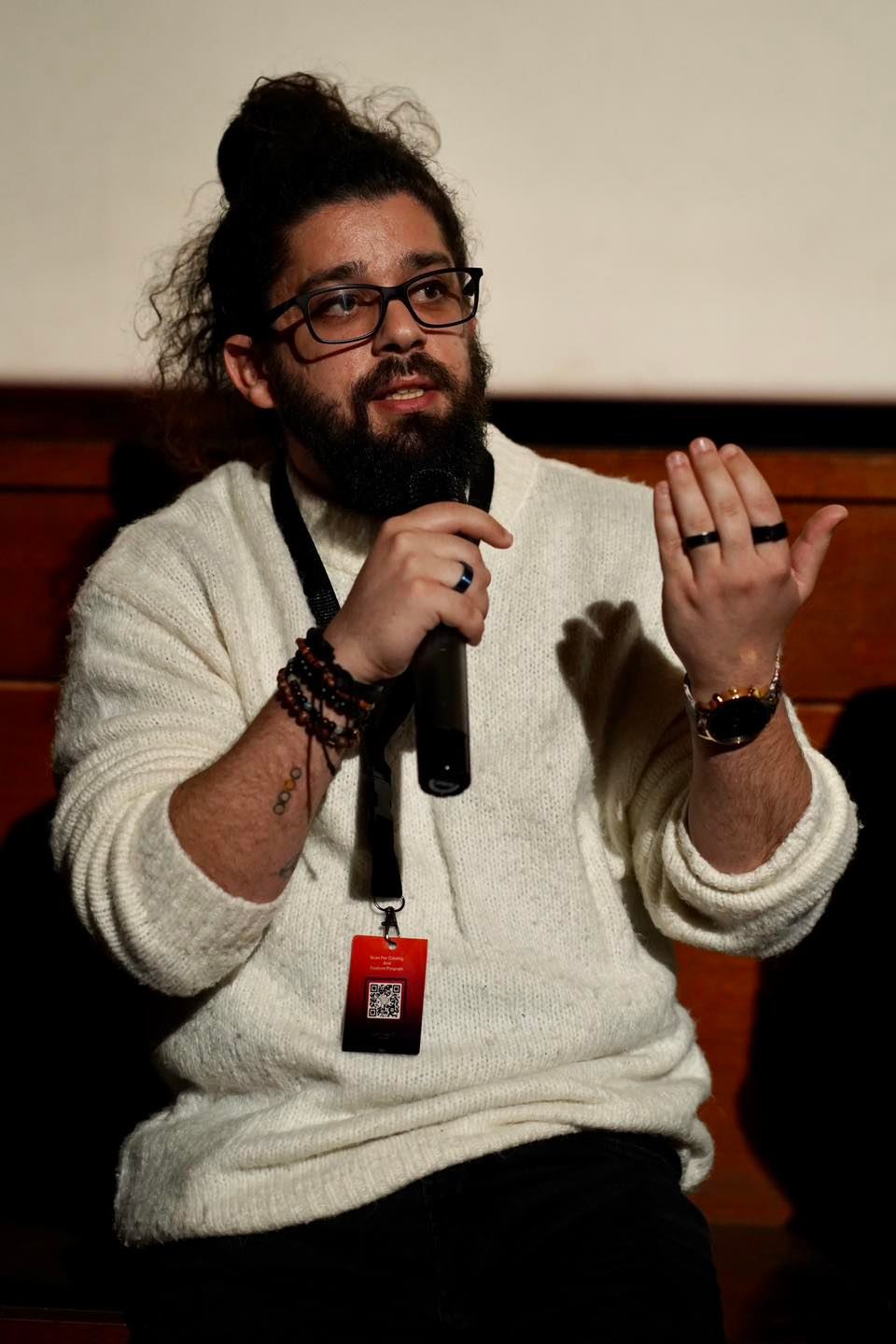
Andreas Sheittanis introduces himself as a director, but, as he says, in Cyprus “we do a bit of everything”. With more than ten years of experience in the field, he has built up an extensive body of work: films, television series and now documentaries. He studied in the United Kingdom but entered the Cypriot television industry at an early stage. When he is not behind the camera, he creates his own stories, mainly fictional and at times comedic.
Each project is different, a world of its own. On the occasion of the release of the documentary PLEIADES: Victims of a Serial Killer, which tells the stories of the victims of the serial killer known as ‘Orestis’, he speaks to Politis not about the journey that led to the making of the documentary, but about the journey towards reaching an audience – a journey that is only now beginning. In a wide‑ranging interview, he talks about today’s cultural landscape in Cyprus and about what makes the seventh art so distinctive.
What is your title?
Supposedly director, but in Cyprus we do a bit of everything. I usually introduce myself as a director. I studied in Britain.
How many years have you been in the field?
Twelve to thirteen years. My first job was as a crew assistant on television series.
Next weekend, 16 and 17 May 2026, your documentary ‘Pleiades’ will be screened for the first time in Cyprus. Can you tell us more about this project?
It is a project that began with Paris Prokopiou, also a director, three and a half years ago, in 2022, as an idea. After the research, the filming and the travel we did, it was completed just before Christmas 2025. From the outset, our aim was to stay away from sensationalism and not to focus on the crimes or on the perpetrator himself.
So we focused on the victims and wanted to give a voice to people who were directly involved in this story, but whose experiences, actions and the details of what happened were unknown. We all knew things only superficially and, over time, many historical facts began to be distorted, with rumours, lies and coffee‑shop talk circulating. That was our initial goal.
Is this a theme or an approach you usually adopt in your projects?
No, this was my first documentary. I am a fan of true crime, but I had never made a project in this genre. My films were usually dramatic. So it was a very interesting experience, working in a completely different way.
A documentary has a different kind of freedom in filming. You have to adapt. When we started, we did not know where it would lead us, because you do not know who will agree to speak to you or whether the money will be enough. There were people we tried to persuade to talk to us for more than a year.
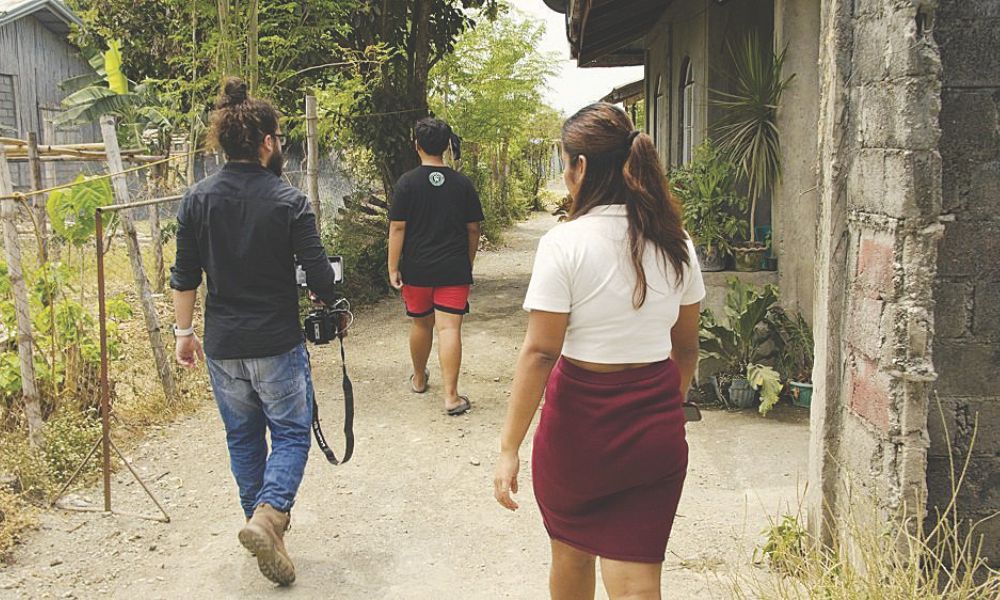
A film has a script, a schedule, a beginning and an end. It also requires a large crew. This documentary, because it had a low budget, was made by a small team. We went to Nepal, the Philippines and Romania. We certainly did not expect the cost to grow so much, but once we were in it and things were moving, we decided to make it as complete as possible.
The work involved many favours. Since I also did the editing, I could add footage that I realised I needed later on. You do not have that flexibility in a film; you work with what you have.
And then you reach the point of distribution…
Yes. So far we have sold the broadcasting rights in Poland and in Greece, specifically to ERT. The documentary remains ours as a project because we wanted to retain creative control and the trust of the people who shared very personal information with us. We sell the broadcasting rights. So far it has been sold in Greece and Poland, to ERT.
How was it received in Cyprus?
The project was presented to all private channels. We heard very positive comments and expressions of interest from everyone, but a year and a half later no collaboration went ahead. I do not want to speak on their behalf; each cited its own reasons. So now we are trying to find alternatives. It is seven episodes of 50 minutes each, which makes it very difficult to screen in cinemas.
What is the impact if it does not manage to be widely shown?
I have faith that it will find its way. I do not think it is something that will be lost, because it is already moving abroad. I hope that gradually it will also find its way to Cyprus.
A lot of research went into the documentary. What was it like to immerse yourself in that process?
Another contributor to the film was Michalis Terzis, who helped us with the research. The three of us, together with Paris, were the core team. It was a process where one thing led to another. We would speak to one person, who would give us information that led us elsewhere.
We went straight to the sources, who then led us to the next ones. It kept evolving. That is why we did not know initially where it would lead us.
Do you think the Cypriot market is fertile ground for such projects?
In general, television in Cyprus now has a huge problem compared with when we started. Back then, television channels produced around 15 Cypriot productions per season. Now there are two. Television production in Cyprus has died. Channels now prefer to buy ready‑made content to reduce their own risk.
Does this affect other types of work in the field?
Yes, especially over the last three to four years. Even established colleagues are leaving the field entirely because it is no longer sustainable. Our sector is suffering greatly. There is a need for investment in the industry, and that takes time.
Globally, studios have changed the way they operate. They make fewer productions that cost a lot of money, and as a result the mid‑budget film has disappeared. Even advertising, which supported many people in the field, has been heavily affected by artificial intelligence.
Is advertising considered an artistic creation?
Of course. It depends on the advertisement. There are many people involved, with the priority being to satisfy the client rather than the artist. But it can be artistic, and it also has the budget to support an idea.
Each of your projects is different. Why? Do you not want to settle into one formula?
Many artists believe it is important to have a recognisable stamp. At university, we were told to do what we like, because we do not define our style – the audience discovers the pattern that defines us.
Especially in the early stages, you try things until you find it. Otherwise, I would never have made the documentary. I follow what expresses me at each period. My last film was a comedy, because after the documentary I wanted something completely different.
How do you see the course and development of your own work in all this?
Should I judge that? I want to believe that I am improving. I am certainly learning. Each project is very different, and I like that each one has its own look, its own world.
Each time, however, the issue is whether you have something to say through your work, something to leave with the viewer, so they do not feel you wasted their time. Personally, for me to engage with a project, it has to express me, because it demands years of your life. If you do not feel it, you will get bored and abandon it halfway.
Have you ever left something unfinished?
No, at least not among my personal projects, apart from one script I wrote years ago that was not approved for funding. In retrospect, I understand why it was not approved and I am glad it did not go ahead. Even though it is a topic that still nags at me, it was not a good script.
Given today’s conditions in cinema, how do you manage to make a living from it?
It is very difficult, especially now with the limited productions we have in both cinema and television. We are forced to do everything, in terms of roles and projects. There are times when I am a director, others when I am a cameraman, editor or producer. When a proposal comes along, you do whatever you can, because you need to get through the month.
So do you end up drifting away from your field over time?
I consider myself lucky that I am still in the industry; others leave entirely. Despite the difficulties, compared with abroad, professional advancement is much easier here. When I was 28, I was writing and directing a television series. That would never have happened abroad.
You have taken part in short‑film festivals in Cyprus and abroad. What is the difference?
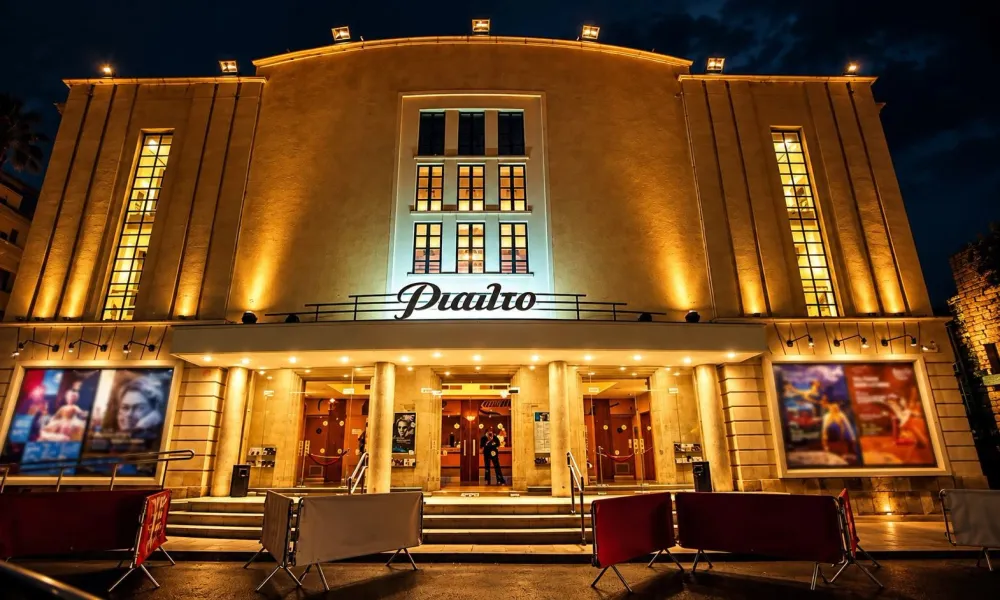
In Cyprus, there are excellent festivals, such as the International Short Film Festival of Cyprus, held every year at the Rialto Theatre and certified by the European Film Academy – the European equivalent of the Oscars. That is very important and significant. The standard is very high.
I like festivals a lot, and in the end what matters is not the award you win but networking, meeting people who speak your language, the cinematic language. Like‑minded people. Talking about your projects and creating collaborations. That is why I love festivals, especially smaller ones – they hide gems.
You choose the Cypriot dialect in your films.
Through the period dramas I worked on, I learned to love the Cypriot dialect and to appreciate how rich and descriptive its vocabulary is, its musicality, its history – how it blends Greek, Arabic, Turkish, Italian and Spanish. It is our identity.
For some reason, I remember that when we were growing up, we were made to feel ashamed of Cypriot Greek. I am very proud of it, and including it in my work comes naturally to me. Today it is also more accepted for a film to have subtitles and to be made in the creator’s language.
Has cinema culture started to decline in Cyprus?
Not only in Cyprus, but globally. When we were young, going to the cinema was a big event. That has changed, and I think it is a combination of factors. First of all, streaming and the convenience of staying at home.
I would say these are two very different experiences. It is one thing to dedicate two hours to watching a film at the cinema, and another to watch at home with distractions. The second factor is that abroad – not yet in Cyprus, thankfully – going to the cinema has become very expensive.
Third, in my view, we filmmakers may also be partly to blame. I feel that very few films today are made as an experience for the cinema. Twenty years ago, cinema had prestige. Now television has more.
Why did that change?
Much more investment now goes into television, producing higher‑quality content, and investment interest has shifted. In recent years, very well‑written series have also emerged, giving you a reason to sit down and watch.
On television, you have time to develop your characters and build your world. Personally, I love cinema and I still go, but I understand this shift because it is also my profession.
Is it difficult to compete with foreign productions?
I believe you should not try to compete with them. The solution is to invest and produce something that builds on your strengths and resonates with the audience – for example, the Cypriot element, culture, problems and lived experiences.
So what is the future of directing in Cyprus?
I feel I have been very negative, even though I am not a negative person. We are now going through a transitional period in which I believe we will either come out stronger or not, as an industry.
What I would say to anyone who wants to enter this industry is this: if it is not something you will wake up and breathe for, do not do it, because you will simply give up. I cannot imagine doing anything else.