The highly significant distinction awarded to Professor Michalinos Zembylas, Dean of the School of Economics and Management at the Open University of Cyprus, as the most productive researcher internationally in the field of peace education, is recorded in a recent study titled “Mapping global trends in peace education: A bibliometric analysis 2015–2024”.
The study, published in the peer-reviewed academic journal Journal of Peace Education, highlights the steadily growing international presence and influence of research in this field.
Professor Zembylas’s work focuses on critical peace education, with particular emphasis on post-colonial contexts and societies that have experienced conflict. Notably, the analysis ranks Cyprus among the countries with the most significant global contribution to research on peace education, while also recognising the Open University of Cyprus as one of the leading institutions internationally in this area.
In this way, the study underscores the role of the Open University of Cyprus as a key centre of knowledge production that contributes to peace, reconciliation and social progress.
Learning through experience
Can peace be learned, Dr Zembylas?
Peace, Ms Iliadi, is not a “lesson” added to the timetable but a complex social and pedagogical practice shaped through relationships, emotions and narratives. In this sense, yes, peace can be “learned”, but not in the way we learn information or skills. It is learned through experiences that engage young people and adults as ethical and political subjects, inviting them to deal with disagreement, uncertainty and discomfort, particularly in countries with traumatic pasts such as Cyprus.
Addressing the difficult issues
How does peace education work?
Critical peace education recognises that there are unequal power relations, trauma, historical injustices and competing memories. Our research in Cyprus as well as in other divided societies – Northern Ireland, Israel–Palestine and South Africa – shows that the meaningful contribution of peace education emerges when pedagogical spaces are created in which young people and adults can express, challenge and process their emotional and cognitive relationships with the past, historical trauma and conflict.
This means that discomfort, doubt – and even conflict itself – are not obstacles but necessary elements of learning. Peace, in other words, is not the absence of conflict but the ability to live and learn through it.
Educational systems, however, including Cyprus’s, often choose a “safe” approach: they promote general values such as tolerance and cooperation, while avoiding difficult or controversial issues. The result is a depoliticised, superficial and emotional version of peace that does not address the deeper causes of conflict.
What is the difference between peace education and history education?
Peace education and history education are not identical, although they often intersect and reinforce each other. History education focuses primarily on how we understand and interpret the past, while peace education is more concerned with how relationships of coexistence, democratic dialogue and social justice are cultivated in the present and the future.
However, particularly in divided societies such as Cyprus, synergies between the two fields are necessary, especially when addressing controversial and difficult issues linked to memory, identity and trauma. At the same time, these fields intersect substantially with other areas of education, such as human rights education, citizenship education and life education, since all share the common question of how we can learn to live together with differences, conflicts and multiple narratives without resorting to exclusion or demonisation of the “other”.
A Cypriot contradiction
Is peace education taking place in Cyprus? At what level and by whom?
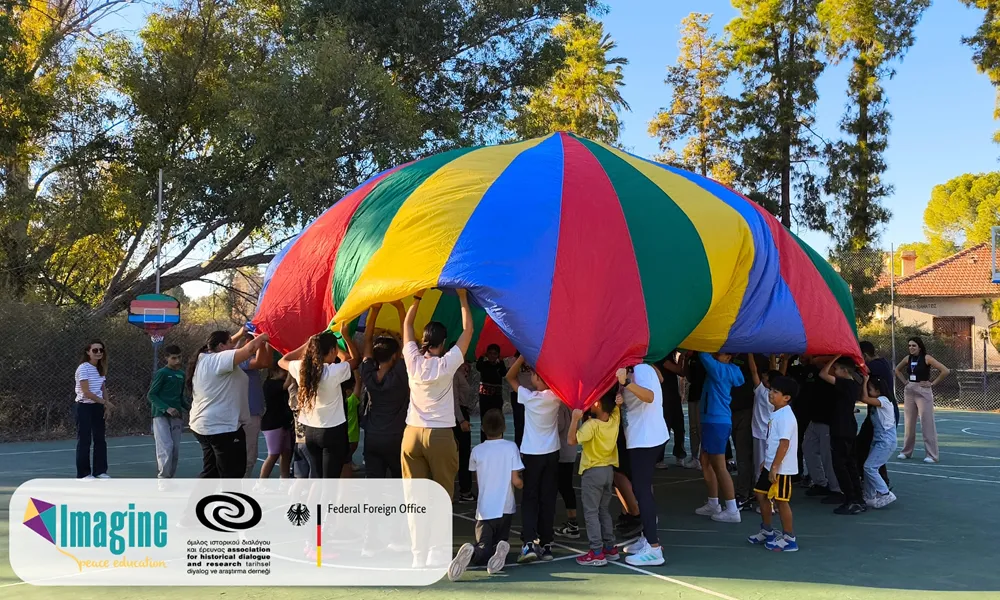
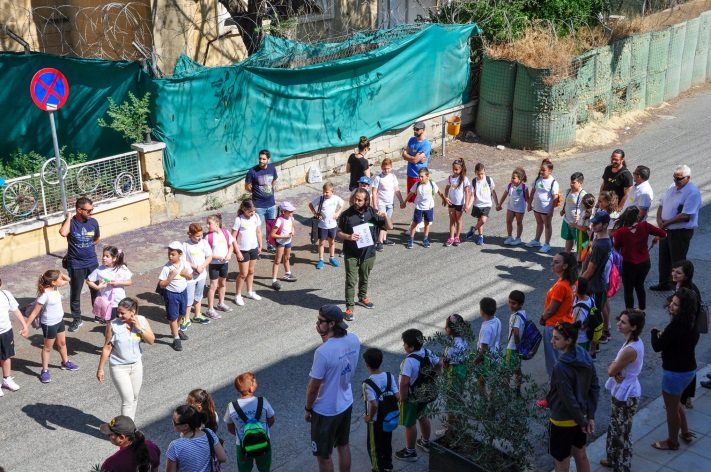
In Cyprus there is an interesting contradiction. On the one hand, significant peace education initiatives have developed, mainly through bicommunal programmes, non-governmental organisations and European collaborations. Programmes such as Imagine, as well as other initiatives that bring Greek Cypriot and Turkish Cypriot pupils together, have created spaces for encounter and dialogue that are rarely found in the everyday life of the formal school system.
On the other hand, the official education system remains to a large extent oriented towards ethnocentric narratives. This does not mean that there are no teachers who try to open dialogue. There are, and quite a few. However, they often operate on the margins of the system rather than with its support.
Despite periodic sincere efforts by various actors, the reality is that successive governments lack the political courage required for meaningful peace education, often resorting to general declarations and slogans without deeper reform. To a large extent, the same applies to the leadership of the Turkish Cypriot community, which, despite certain positive initiatives in the past, continues to place obstacles in the way of sustained support for critical and meaningful peace education.
It is important to clarify that these observations are not only findings from our research in Cyprus – they have been systematically documented in reports by the UN Secretary-General for at least a decade, as well as in recent, particularly critical letters from the UN special rapporteur on the right to education to the leaders of both sides. In both the reports and the letters, strong criticism is directed at both sides for obstructing the right of children and young people in both communities to an education that fosters peaceful coexistence, despite being bound by international conventions to safeguard precisely that right.
Fragile change
If these difficulties exist, what are the results of efforts to promote peace education?
Despite the obstacles, the results of peace education programmes – particularly Imagine – in recent years have been very encouraging, especially at the level of attitudes and emotional orientations. Research shows that students who participate in such programmes develop greater empathy, are more willing to challenge stereotypical perceptions and acquire a more complex and less one-dimensional understanding of conflict.
However, these changes often remain fragile because they are not supported by a coherent, systematic and long-term education policy. When such experiences are not organically embedded in the school environment but operate in a fragmented way, it is expected that their positive effects will weaken over time.
Who benefits from the lack of systematic policy?
This institutional fragmentation serves, consciously or unconsciously, those who ultimately do not want students to cultivate values such as empathy, critical thinking and the ability to coexist with difference.
These are, however, values that are difficult to challenge – they are explicitly referenced in all UN declarations that Cyprus has co-signed for decades – and one would expect every society to actively seek to strengthen them in its children and young people.
Unfortunately, the consequences of marginalising these values are already visible in everyday life: fan violence, vandalism of school premises, extremism and broader manifestations of aggression and social polarisation are not unrelated phenomena. On the contrary, they are directly linked to the failure to cultivate empathy, the reproduction of stereotypes and the entrenchment of prejudice.
Critical engagement and understanding
So, in your view, how should the role of education be reshaped?
Schools should not function merely as reproducers of these narratives but as spaces of critical pedagogical engagement. This means creating conditions in which students can listen to the testimonies of previous generations while at the same time placing them within a broader historical, social and political context, discussing them, questioning them and connecting them with other perspectives.
In other words, the aim is not to “weaken” memory of the past but to transform it pedagogically, so that it does not simply reproduce the past but opens possibilities for a more complex, multi-perspective and responsible understanding of both the past and the present.
Ethical and political judgement
And if a multi-perspective approach is seen as “equating responsibilities”?
This is indeed one of the most common concerns. However, it is a misunderstanding. A multi-perspective approach does not mean that all sides bear equal responsibility or that all narratives are equivalent. It means that understanding history requires recognising complexity and different experiences. The challenge is to preserve ethical and political judgement without resorting to simplifications.
“I Do Not Forget”
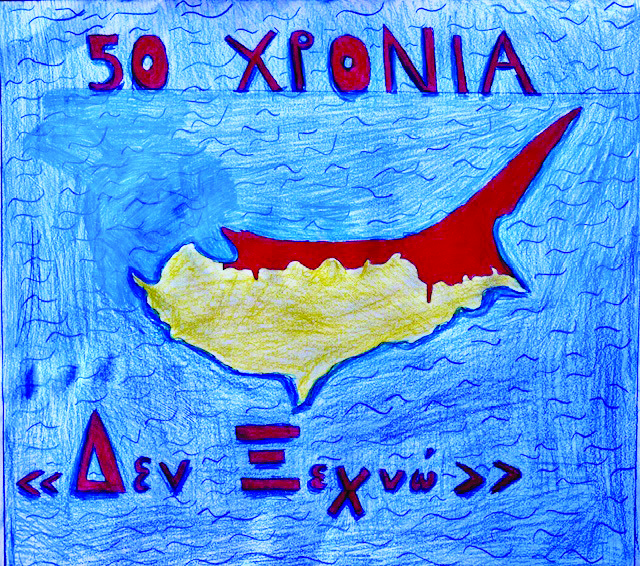
How do you respond to those who believe that peace education is incompatible with “I Do Not Forget”?
Peace education is not incompatible with “I Do Not Forget”. The essential question is what exactly we choose not to forget and how we remember. If “I Do Not Forget” means preserving historical memory, awareness of violence, displacement, loss and trauma, then peace education not only does not negate it but considers it essential.
Peace without memory risks becoming superficial reconciliation or silence in the face of injustice. The problem arises when “I Do Not Forget” becomes exclusively a mechanism for reproducing fear, hostility, resentment or a sense of national superiority.
Memory or peace?
Peace education does not ask us to forget our history – it asks us to teach it in a critical, multi-perspective and humane way. That is, to be able to recognise the pain of our own community without denying the pain of others.
This does not weaken memory; it matures it democratically and ethically. In all societies that have experienced conflict, memory remains an object of negotiation, emotional tension and political confrontation. Peace education seeks precisely to create spaces in which young people can face this difficulty without fanaticism.
Therefore, the dilemma is not “memory or peace”. The real question is whether we can cultivate forms of memory that protect dignity and justice without trapping the future in an endless cycle of hostility.
Young people are not passive recipients of narratives
Asked how Greek Cypriot pupils in primary and secondary education perceive and feel about the Cyprus problem, as well as how they discuss issues such as the Turkish invasion of 1974 and the presence of Turkish Cypriots and settlers, Dr Michalinos Zembylas said that Greek Cypriot students shape their perceptions through a dense web of narratives that focus primarily on the Turkish invasion of 1974 and the continuing occupation.
The emotions that emerge – sadness, anger and a sense of injustice – are deep and entirely understandable, given the historical weight of the events, he added. “However, our research shows that these narratives are often so emotionally charged that they end up functioning as the dominant – and in many cases exclusive – framework for understanding the conflict, overshadowing other historical, political and social complexities,” said the professor, who is the Greek Cypriot head of the bicommunal Technical Committee on Education.
More specifically? In other words, over-investment in emotion, particularly when it is not accompanied by critical and multi-perspective processing, can limit rather than broaden young people’s understanding. And here an ironic but important finding of our research emerges: for a new generation that has no lived memory of the events of 1974, these intensely charged narratives do not necessarily lead to greater identification or understanding. On the contrary, they often produce a form of emotional distancing or even silent disengagement, as young people struggle to connect meaningfully with experiences that are conveyed mainly as “ready-made” emotional templates.
As a result, the opposite of what those organising related events and activities in schools aim to achieve may occur: instead of strengthening historical understanding and engagement, a superficial or distanced relationship with the past may be reproduced.
And what does this mean? Research shows that young people are not passive recipients of these narratives. When they are given appropriate pedagogical space – space for questions, doubt and dialogue – they are able to develop more complex and multidimensional approaches. Discussions around the presence of Turkish Cypriots and settlers, for example, often reveal not only tensions but also possibilities for deeper reflection.
If schools avoid opening up these discussions with pedagogical care, students remain trapped in one-dimensional narratives. By contrast, when such discussions are encouraged with sensitivity and critical depth, they can become powerful tools for understanding not only the past but also the present.
Willingness is not enough
Do young people show a willingness to engage with Turkish Cypriots?
The willingness exists, but it is neither guaranteed nor uniform. Many young people express curiosity, interest and a sincere desire to meet Turkish Cypriots, particularly when they have no prior experience of direct contact. However, this willingness often coexists with reservations, ambivalence and stereotypical representations drawn from the wider social, political and educational environment.
Young people do not grow up in a “neutral” context – they are influenced by family narratives, public discourse, collective memories and dominant historical representations.
There are cracks
And what about settlers? Do students distinguish between Turkish Cypriots and second- and third-generation settlers, including descendants of mixed marriages between Turkish Cypriots and Turks?
With regard to settlers, attitudes do indeed tend to be more negative and less differentiated. Nevertheless, findings from recent research complicate this picture and show that there are cracks in these dominant perceptions.
Specifically, sixth-grade primary school pupils, when they participated in pedagogical activities that encouraged dialogue, argumentation and the expression of uncertainty, began to reflect on peers who are children of settlers. Many of these pupils acknowledged that their peers were born and raised in occupied Cyprus, a fact that led them to view their presence through a more complex and, in some cases, more positive lens.
This finding is particularly significant because it shows that even at young ages children are capable of transcending one-dimensional categorisations when given the appropriate pedagogical space. This does not mean that they “overturn” political or historical positions regarding the Turkish invasion or occupation, but that they begin to distinguish between collective narratives and individual experiences.
This reinforces the need for an education that does not simplify reality but instead opens space for complexity, ambiguity and reflection.
Who is Dr Zembylas
Dr Michalinos Zembylas studied at the Cyprus Pedagogical Academy and at the Universities of Texas at Austin and Illinois at Urbana–Champaign. He worked at Michigan State University and at Intercollege.
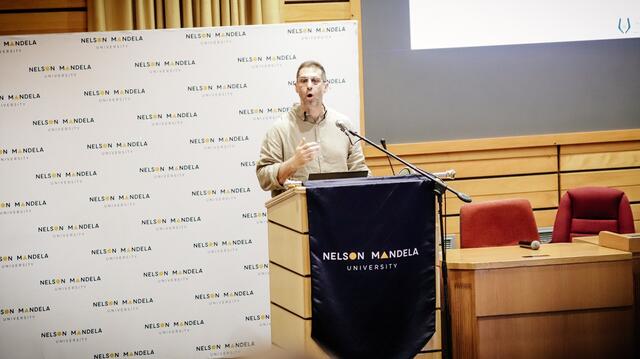
He is Professor of Educational Sciences at the Open University of Cyprus and Honorary Professor and Chair for Critical Studies in Higher Education Transformation at Nelson Mandela University in South Africa, as well as Visiting Professor at the Centre for Research in Educational and Social Inclusion at the University of South Australia.
In 2023, he was awarded the Commonwealth of Learning Chair for the period 2023–2026. His main research interests focus on the contribution of emotions to educational theory and policy, as well as curriculum development and teaching, particularly in relation to issues of social justice, intercultural education and peace education.
He has led numerous educational research and development projects funded by the state, the European Union, international organisations and private bodies, in Cyprus and abroad. He has authored ten books and edited a further fifteen. He is a member of several editorial boards of academic journals.
Since 2020, he has ranked among the top two per cent of scientists worldwide in his field, based on bibliometric data and research by academics at Stanford University. His main research areas include Emotions in Education, Curriculum Development, Intercultural Education, Peace Education, Education for Social Justice and Human Rights Education.
Dr Zembylas is the Greek Cypriot head of the bicommunal Technical Committee on Education.