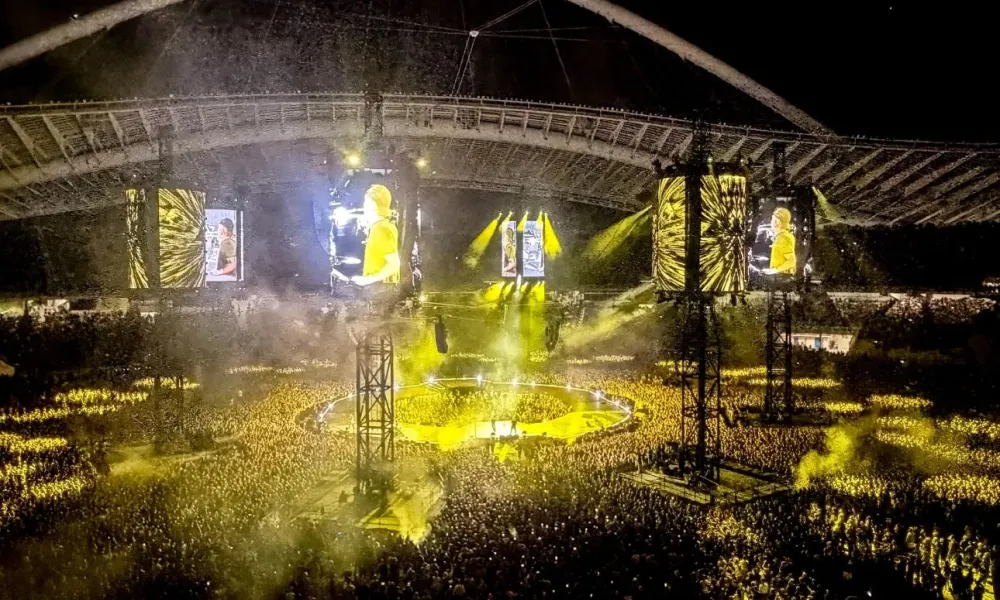

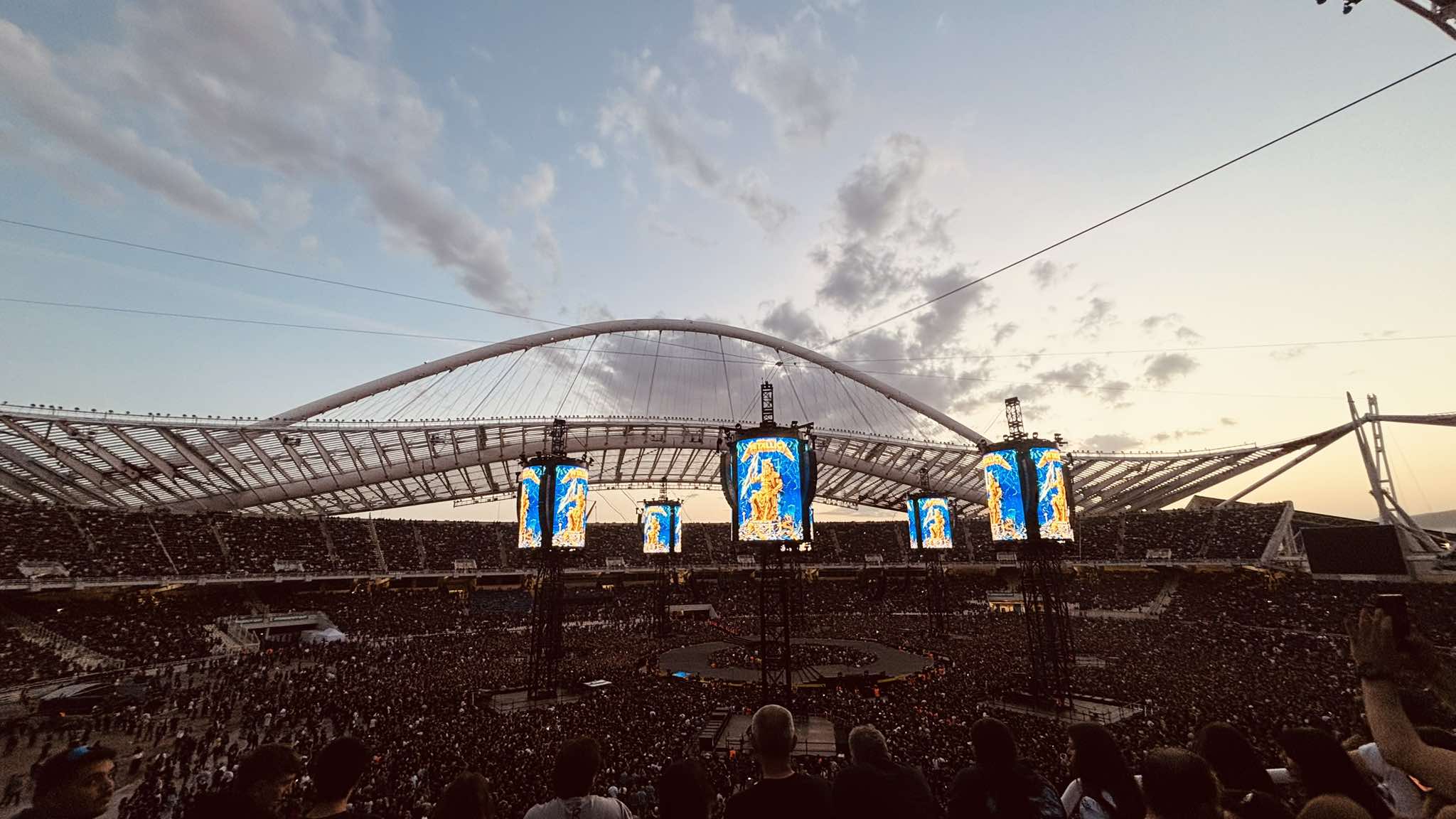
The concert by Metallica at Athens’ Olympic Stadium (OAKA) did not cause an earthquake, but it did generate measurable ground vibrations, according to Greece’s National Observatory of Athens.
The Geodynamic Institute monitored the event using a seismograph, recording small‑scale vibrations produced by the synchronized movement of tens of thousands of concert‑goers. The phenomenon is known as “concert quakes” and has been documented at major concerts around the world in recent years.
Scientists sought to examine whether the mass, rhythmic movement of a large crowd could create detectable micro‑vibrations in the ground. According to the Geodynamic Institute, similar phenomena have been recorded internationally during large‑scale live music events.

Speaking to the Athens‑Macedonian News Agency (AMNA), the Director of the Geodynamic Institute, Vassilis Karastathis, said that such micro‑vibrations were recorded during Friday’s concert, although detailed analysis of the data will take place in the coming days.
He clarified that the vibrations were not earthquakes but artificial ground motion observed when “a very large number of people gather and move in synchronisation with the music”. As a result, “these types of micro‑vibrations are created, which can sometimes be felt in surrounding homes within a certain radius”.
Metallica raises scientific interest
Karastathis stressed that the phenomenon is not a cause for concern. Similar recordings, he noted, have been made at major concerts abroad and are regarded primarily as a matter of scientific interest.
“It is a phenomenon that has been observed and documented on a global scale, meaning at many concerts, and this was an opportunity for us to study it as well,” he said.
For the Metallica concert, scientists installed a portable seismograph at the site. Karastathis described the process as straightforward, adding that the goal was purely scientific.
“It was purely scientific curiosity and scientific interest, to confirm that these artificial micro‑vibrations do indeed occur in our own case as well,” he said.
Comparable studies have been carried out at other major concerts, including a performance by Taylor Swift in Dublin, he added.
Karastathis also highlighted the broader value of such observations, noting that research into concert‑related vibrations can offer useful data beyond seismology.
“We cannot look only at earthquakes with a strictly narrow lens,” he said. “These kinds of studies add a different dimension to research and are particularly engaging for younger people. I believe something useful can certainly emerge.”
He explained that the recordings could help scientists better understand how large crowds affect the surrounding environment, particularly in major venues such as OAKA.
“These are data that could prove useful for other studies in the future,” he said, while emphasising that the micro‑vibrations recorded are not linked to the genre of music being performed.
Source: AMNA