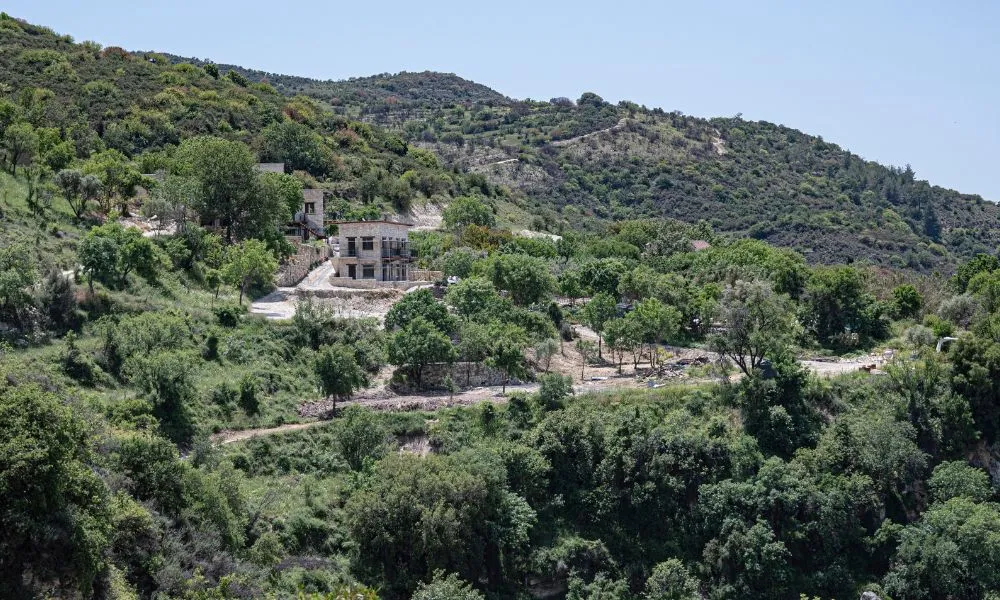
I thought long and hard about whether these lines should be written and whether it is finally necessary to keep repeating the obvious. The Trozena affair has been in the spotlight since last week and, in the end, it confirmed what happens in almost every major project in Cyprus. Leaving aside for a moment the issues concerning the sale of land to third‑country nationals, once again, another 'investment' has placed us before yet another major environmental crime, essentially confirming the rule that we cannot carry out large developments or 'create' something without laying hands on the environment.
At the same time, we admire the unmatched beauty of our country, a beauty we neither respect ourselves nor care whether others respect, especially if they have money.
Worst of all, in the face of money and development, we are left as only a few voices crying out for the environment, voices that constantly risk being labelled eccentric or problematic, odd and marginal. Simply because we care more about the rare Cypriot eels and the Bonelli’s eagles with the peregrine falcons than about the spa and glamping facilities of every multi‑millionaire.
Is it possible to consider the Bonelli’s eagle less important than the glamorous glamping tent that will sprout among the ruins of Trozena in a protected area? Is it possible that we cannot appreciate the 'beneficial' abilities of a spa and gym for mountainous Limassol and still insist on wanting to protect eels and falcons? Is it absurd to react in the face of the investor’s millions, of the investor who 'fell in love' with an abandoned village in mountainous Limassol and within two years bought up 70 percent of it for just three million euros?
How can it be that we want someone to obtain permits first and then restore a listed building? What is cultural heritage anyway, that we should care?
No. Let us all remain silent. If some works were carried out without permits, who cares? This is how it works throughout Cyprus, since permits take too long. Everyone just starts on their own. What does it matter if a path was lost, if an old tree was uprooted, if an annoying bush disappeared? What does it matter if the area’s natural water sources were appropriated and development boundaries adjusted to serve them?
He has his 'warm' millions here, so let us rush immediately to bring electricity and water, even if vultures later die on the electrified cables of the network. As for water, Trozena has it. Let us drain it and we will bring more later.
This is the tragedy of our homeland. We sell everything off. We hear the word millions, we see the wealthy, and we bow. Not a trace of reaction, not even a trace of minimal dignity. Everyone looks for a way to benefit, to sell a nearby plot of land and strike it rich.
For Trozena, the first to bear responsibility is the state itself. Almost five decades of abandonment. People were forced to forget their properties and, unintentionally, a red carpet was laid for every entrepreneur to do as they please. Along with them, the local authorities, who instead of being the first to defend the natural environment of their area, are the first to celebrate.
What else could they do? In the investor they see the opportunity for everything the state 'forgot' to do in Trozena and in every Trozena. Electricity, water, jobs, development in neighbouring villages and a revival of the vineyards. How could a private individual renovate a house in Trozena if they had not bought everything?
And yet, is it not common sense that all of this could have been done with conditions, planning and a proper proposal, rather than recklessly and with works undertaken before applications are examined?
Here, reason provides the answer. Not the millions.