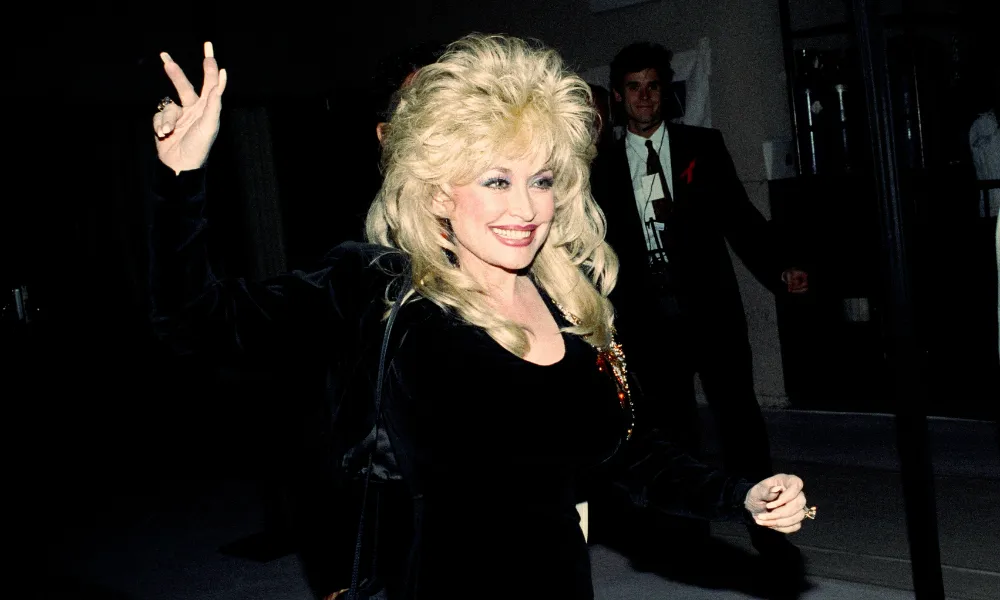

Dolly Parton understood the power of an image, but she never allowed it to become a disguise. Beneath the rhinestones, towering wigs and perfectly timed jokes was one of modern music’s most perceptive writers, a woman who transformed poverty, sexism, faith, love and ambition into songs that belonged to millions.
Her death at the age of 80 brought tributes from across music and popular culture. The response reflected something greater than fame. Parton was both an elaborately constructed star and a deeply relatable presence, someone who could make strength sound warm and hardship feel survivable.
The woman behind the rhinestones
When Guardian journalist Emine Saner interviewed Parton in a London hotel in the autumn of 2023, she encountered the machinery that usually surrounded a global star: holding rooms, strict time slots and watchful publicists.
Then the door closed, the publicist left and the two women sat together on a sofa.
Saner later described Parton as “luminous”, a quality she believed came not simply from charisma or celebrity, but from humility, gratitude and humour. Parton was warmer and funnier than expected, effortlessly turning difficult questions into moments of laughter.
Her extravagant appearance, folksy manner and rapid-fire one-liners were clearly part of the character she had spent decades creating. They also served as armour. Yet the performance never seemed dishonest. Dolly Parton may have been her greatest creation, but it remained recognisably her.
She was willing to discuss subjects many celebrities would immediately avoid. Asked whether she or her husband had ever been unfaithful, she joked that they would not know about it if they had. When pressed on whether she had ever been tempted, she laughed: “I’m married, not dead. Nor blind.”
She was similarly relaxed when asked about drugs, saying she had avoided anything hard because she did not want a substance altering her mind. Even her spirituality emerged naturally. Parton spoke about the need to believe in something greater than oneself, whether understood as God, nature or a higher wisdom.
Only one subject remained firmly protected: politics.
An anthem made with acrylic nails
The warmth could sometimes obscure the anger and determination within Parton’s work. Few songs demonstrate that more clearly than 9 to 5.
In 1980, while filming her first Hollywood movie, Parton had an idea for its theme song. Her guitar was not available on set, so she began rubbing her acrylic nails together to create a rhythm resembling the clatter of a typewriter.
She performed the unfinished song for co-stars Lily Tomlin and Jane Fonda. Fonda later recalled that they immediately understood its potential: “This is not just a movie song, this is an anthem.”
Released in November 1980, 9 to 5 became Parton’s only solo number one on the US pop chart and earned an Academy Award nomination for best original song.
Its bright melody made it instantly accessible, but its subject was serious. The song captured the exhaustion of workers trapped in a system that denied them recognition, advancement and a fair share of the wealth they created. It also gave voice to women facing harassment and discrimination in the workplace.
Parton expressed fury without allowing it to consume the song. That balance became one of her defining strengths. She could expose injustice while leaving the listener with energy, humour and hope.
Protecting her songs and independence
Parton had learned early that talent alone was not enough to survive the music business.
Her major breakthrough came in 1967, when she joined The Porter Wagoner Show as its “girl singer”. The partnership produced 21 successful duets and introduced her to millions of viewers, but her growing popularity eventually made it clear that she needed an independent career.
She wrote I Will Always Love You as a musical farewell to Porter Wagoner. Their professional separation later resulted in a breach-of-contract lawsuit in which Wagoner demanded $3 million. Parton eventually settled for approximately $1 million, ending a painful dispute without publicly diminishing the man she continued to credit with giving her an important opportunity.
Her resolve was tested again when Elvis Presley expressed interest in recording I Will Always Love You. Parton was thrilled until Presley’s manager, Colonel Tom Parker, told her the recording would only proceed if she surrendered half of the song’s publishing rights.
She refused, despite knowing what an Elvis Presley version could have meant for her career.
That decision became one of the most important of her professional life. When Whitney Houston recorded the song for The Bodyguard in 1992, Parton still controlled the publishing rights. She later said the royalties were enough to buy Presley’s Graceland mansion. Instead, she used some of the proceeds to invest in a predominantly Black neighbourhood in Nashville, an outcome she considered a fitting tribute to Houston.
The episode revealed the business judgement behind Parton’s carefully cultivated innocence. She knew the value of her work and refused to surrender control simply because powerful men expected her to.
Taylor Swift later praised Parton’s “backbone of steel” and her determination to defend her value as an artist. Parton, in turn, applauded Swift’s decision to re-record her albums as a way of reclaiming control over her music.
Songs rooted in everyday life
Parton reportedly wrote her first song at about six years old. Little Tiny Tasseltop was inspired by a doll with hair made from corn silk, establishing a pattern she would follow throughout her career: taking an ordinary detail and finding the larger human story within it.
In Coat of Many Colors, she revisited her childhood through the story of a coat sewn by her mother from scraps of fabric. What could have been remembered only as an image of poverty became a song about love, dignity and a child’s pride in what her family could provide.
My Tennessee Mountain Home offered a musical autobiography, beginning with the first letter Parton wrote to her family after moving to Nashville as a teenager. The album returned repeatedly to her childhood home, a two-room cabin without electricity or running water, but refused to treat hardship as the whole story.
That ability to write from precise personal experience produced songs such as Jolene, inspired by a red-haired romantic rival, and All I Can Do, a declaration of love to her husband, Carl Dean.
Her songs also challenged the narrow roles assigned to women. Just Because I’m a Woman confronted double standards in relationships, while Backwoods Barbie rejected the assumption that her appearance revealed anything about her intelligence or character.
She used the stereotypes surrounding her, then quietly dismantled them. The exaggerated glamour drew attention, but the writing consistently placed control in the hands of the woman telling the story.
A feminist who refused the label
Parton’s refusal to speak publicly about politics frustrated some of those who admired her.
During the 2023 interview, she explained that taking a partisan position would risk alienating half her audience. She had Democratic and Republican fans, she said, and did not want to insult either group. The same instinct shaped her reluctance to describe herself as a feminist, despite a career that had repeatedly challenged sexism and expanded possibilities for women.
Saner pressed her on whether silence could become a form of complicity, particularly at a time when Parton’s home state of Tennessee had imposed an almost total abortion ban. At the time, the journalist viewed Parton’s position as a weakness and possibly an attempt to protect her career.
Parton maintained that having strong personal opinions did not oblige her to condemn those who disagreed with her. Three years later, Saner wrote that she had softened towards that position, seeing it less as an absence of conviction and more as a refusal to contribute to division.
Parton’s actions often communicated what her public statements would not. She maintained ownership of her work, supported women entering the industry and built a career in which she controlled both her image and her decisions.
Her appeal also crossed cultural and political boundaries. During a 2002 performance at the House of Blues in Los Angeles, she playfully replaced Jolene’s name with “drag queen” as drag performers watched from the audience. It was a small moment, but characteristic of her ability to make different communities feel included without turning acceptance into a slogan.
A legacy beyond music
Parton’s influence was not confined to songs, films and stages. Her philanthropic work provided scholarships to students from low-income backgrounds and delivered more than 200 million books to young readers.
That work reflected the same values found in her music: education, dignity and the belief that a person’s beginnings should not determine the limits of their life.
The artists she inspired were rarely presented as “the next Dolly Parton” because the comparison always seemed inadequate. Her combination of songwriting, humour, business discipline, glamour and generosity could be admired, but not reproduced.
Her greatest songs will continue to survive because they speak plainly about complicated lives. Her public image will remain instantly recognisable because she built it entirely on her own terms. Behind both was a woman who understood precisely who she was, what her work was worth and how she wanted to use her success.
The rhinestones were real, but so were the resolve, intelligence and compassion beneath them.
Sources: BBC and The Guardian.