
As information increasingly fits into a mobile phone screen, some argue that access to infinite content has not strengthened democracy. The internet has made information widely available, but it has also fostered like-minded communities quick to reject opposing views and engage in online debate marked more by hostility than dialogue.
Beyond making consensus harder to achieve, this environment appears to have deepened the disconnect between citizens and political leaders. As trust erodes and people disengage, democratic standards can suffer.
Ireland sought a different approach. Since 2012, it has convened Citizens' Assemblies, bringing together ordinary people from across society to deliberate on some of the country’s most complex and divisive issues and make recommendations to the political leadership. The model has been widely regarded as a successful example of deliberative democracy, helping pave the way for major reforms, including constitutional referendums on same-sex marriage and abortion.
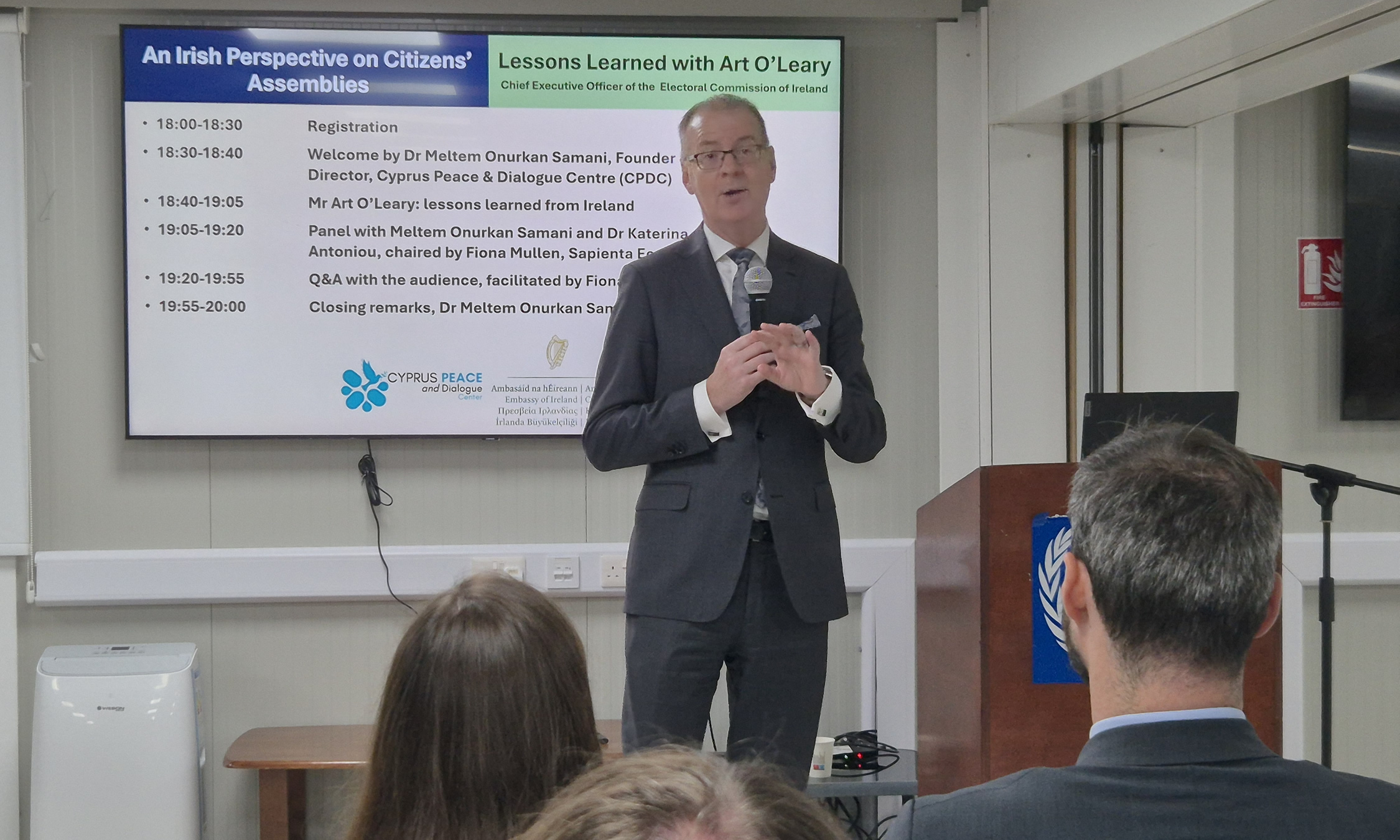
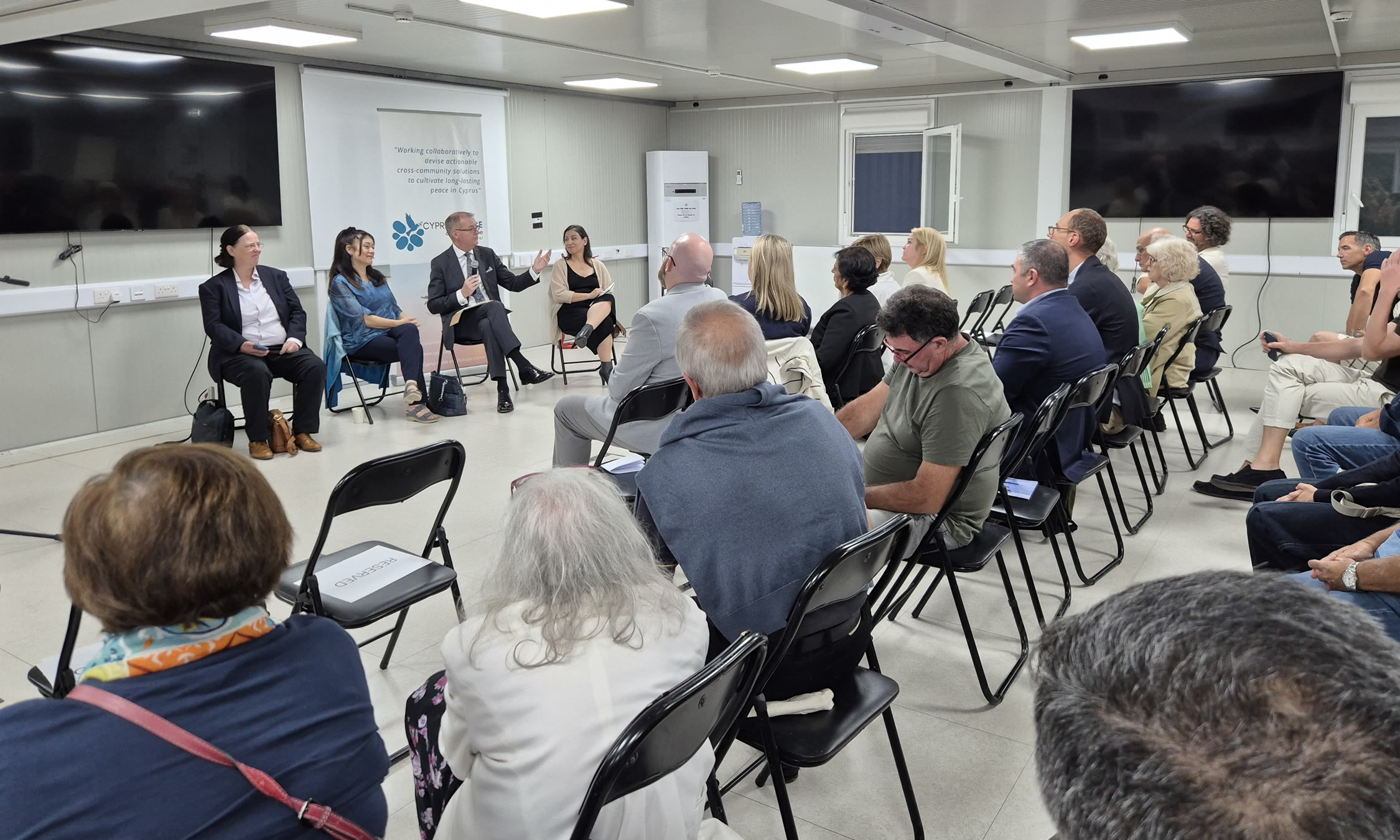
On Thursday evening, Ireland’s Electoral Commission chief executive, Art O’Leary, who played a key role in the country’s early Citizens’ Assemblies, spoke about the Irish experience of inclusive decision-making.
Late night call
O’Leary received a late night call some 13 years ago from Ireland’s then Prime Minister (Taoiseach) Enda Kenny, asking if he would take on an electoral pledge to create a Citizens’ Assembly. He would have to put randomly selected citizens in a room for many months to look at a dozen or so “very controversial” issues and come up with recommendations for the political leadership. After the financial crisis, the old way of doing things was simply no longer fit for purpose. The government wanted to see what Irish people had to say about some very important issues but also how the political system could respond accordingly.
Both men had doubts it would work but a promise is a promise and it was worth trying, so O’Leary took it on.
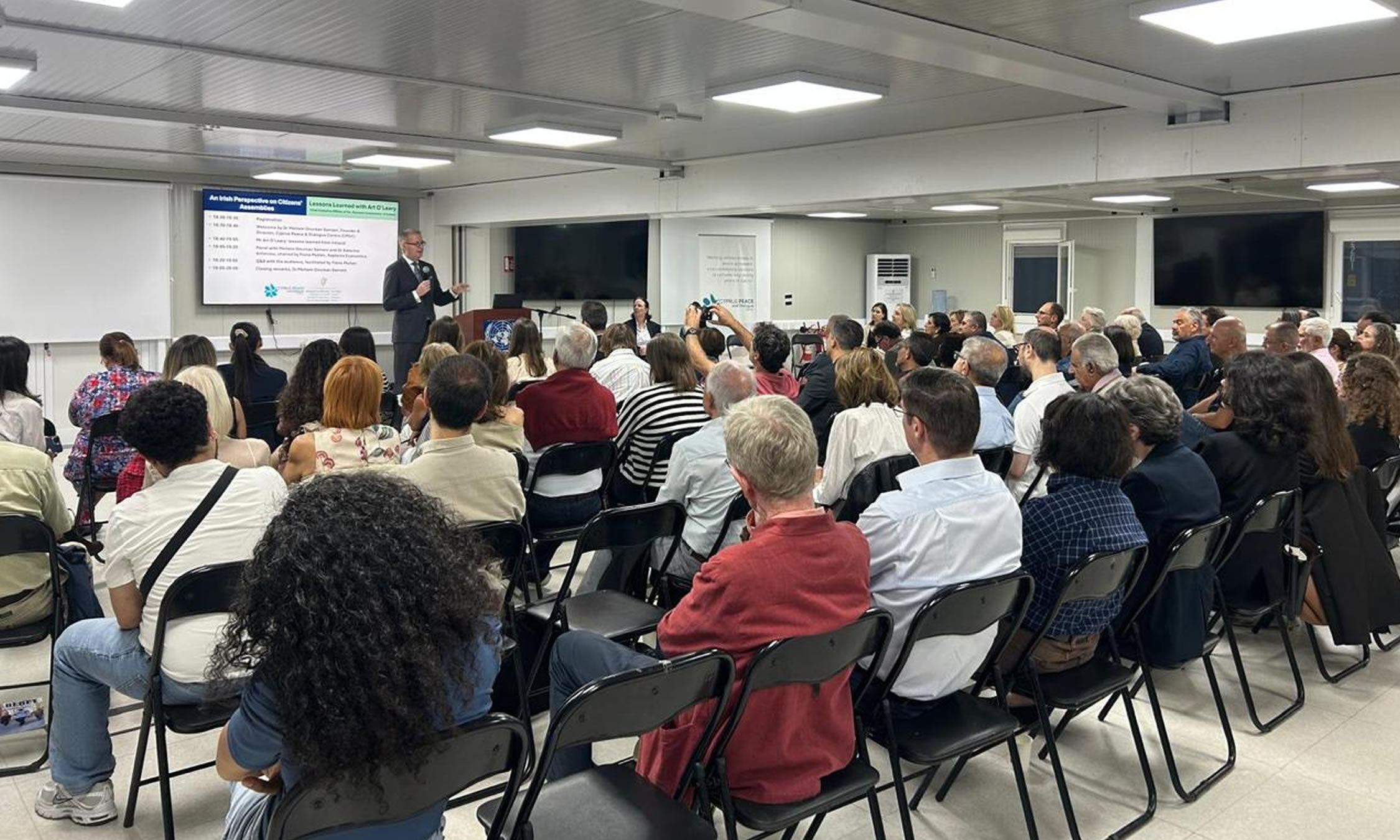
“Nothing astonishes me more than that, 13 years later, I'm still talking about this experience,” he told an audience at the Ledra Palace Hotel, noting that Cyprus is the 85th country in which he has discussed this issue.
Times are a-changing
“There's something going on in the world right now. Political systems and politicians are increasingly looking for ways to involve citizens in decision-making and policy development. And the citizens themselves are increasingly looking for ways to have their voice heard and to be involved,” said O’Leary.
“Voting every five years is no longer enough for citizens who feel completely estranged from the political system and want to be involved,” he added.
Challenges
O’Leary stressed that success largely rests on the work done in the ‘design’ stage of a Citizens’ Assembly, before a single citizen has entered the room. Those that failed mostly did so because people didn’t pay enough attention to designing a process that suits their culture and politics and that makes it easy for citizens to be involved.
Citizens helping politicians
The first problem usually faced by countries experimenting with citizens’ assemblies is to answer the question: Why do we need this group of people who are unelected to do jobs that the political system should be doing?
People elect politicians to fix problems faced by society. But, argues O’Leary, politicians don’t always have all the information needed to make decisions. They are guided by election manifestos, advisers and consultations with stakeholders with ‘skin in the game’.
Asking citizens to also give their two cents only adds value to the political system because it gives politicians information on how citizens feel about the issues, he said.
Deep dive
A second problem is to explain the difference between a focus group and a Citizens’ Assembly. The former takes a small group for a few hours and records their opinions on different issues. A Citizens’ Assembly puts a much larger, more representative group of people in a room for around six months and fills them with information.
“We make them experts in the subject matter that we're talking about. And at the end of that process, we ask them what they think the government should do about climate change, marriage equality, abortion, whatever the issue is.
“And what you get is a really informed view from people with their own ordinary life experiences.”
Investment, not cost
A third hurdle is to justify the cost. A Citizens’ Assembly will cost around one million euro. It involves putting 100 people up in hotels over a series of weekends throughout the year, with childcare provided for young mothers and payments helping those on minimum wage, all to ensure the demographic mosaic of Irish society is fully reflected.
This is not a cost, but an investment that includes citizens in decision-making on the future, O’Leary said. It empowers them, giving them a voice. If it costs €20 million to run a referendum, “Is it not wise to spend 5% of that making sure that the question to be put to the people is the right one.”
He noted that the Irish Citizens’ Assembly on climate change made recommendations which became the government's climate action plan, and then legislation, resulting in a €50 billion investment commitment.
Special ingredients
O’Leary listed some essential ingredients to ensure a Citizens’ Assembly has all the chances of success.
Representativeness of the room
Assembly members need to represent the society they come from. “What we talk about in Ireland is trying to build Ireland in one room because the aim is that every single person in Ireland can look into that room of 100 people and see their view represented there.”
It’s not just about age, gender and rural/urban representation. It’s also about professions, disabilities, people not born in Ireland, and more.
“Slowly but surely, we build a picture of Ireland in one room.”
O’Leary couldn’t stress enough the importance of having a truly representative room. All opinions should be represented and every opinion tolerated. One of the few rules, however, is zero tolerance for conflict.
When the Citizens Assembly on women's reproductive health was held – an issue that the country could not even have a conversation on for 65 years, the 100 people involved spent months listening to lawyers, doctors, theologians, building up expertise. They then came up with recommendations that went way beyond what the government was expecting. The citizens in the room voted 67 to 33 in favour of a very liberal regime of abortion.
The government was horrified, struggling to believe the Irish people would accept it. But when put to the people in a referendum, the result was 66% for, 34% against.
“How extraordinary a result was that,” said O’Leary.
It proved that the room was perfectly representative of the Irish people but also that citizens were much more sophisticated and nuanced in their thinking than the government gave them credit for.
Members of a recent Citizens’ Assembly were asked why they agreed to be involved. A third said out of interest in the subject matter, another third felt it was a civic duty, while the final third said: “This is how Ireland gets hard jobs done.”
Know the end product
Before you embark on a Citizens’ Assembly, you need to know what happens at the end. In Ireland, for example, citizens will produce a report and send it to parliament, which establishes a special committee to examine the recommendations. The government will then debate the two reports – citizens’ and committee’s – in parliament, highlighting the proposals it will accept or reject and explaining why.
Failure to set this out from the start risks leaving excellent reports to gather dust on shelves, warned O’Leary.
Political leadership
It takes political courage to acknowledge difficulty in solving problems and ask citizens to help, he said, noting many politicians feel threatened by Citizens’ Assemblies. To work, and for the results to be acted upon and not ignored, requires the backing of the political leadership, preferably cross-party support.
Breaking barriers
O’Leary noted the many examples he’s seen of dialogue between diverse groups of people leading to a reduction in prejudice. He pointed to one instance where a homophobe sat next to a gay man, ultimately becoming lifelong friends, with Hollywood now making a film about them.
“The journey they both went on to understand the other's perspective would make you cry,” he said.
What happens in the room also gets shared across the country through live streaming. Members of the public are also encouraged to raise questions on social media, and however outlandish or inspired by conspiracy theories, they will be addressed in the room, with the input of experts.
On a final note, O’Leary stressed that one of the biggest challenges is to make sure the room is fully represented by all views. If some quarters are not willing to have those difficult conversations and representation is inadequate, it won’t work.
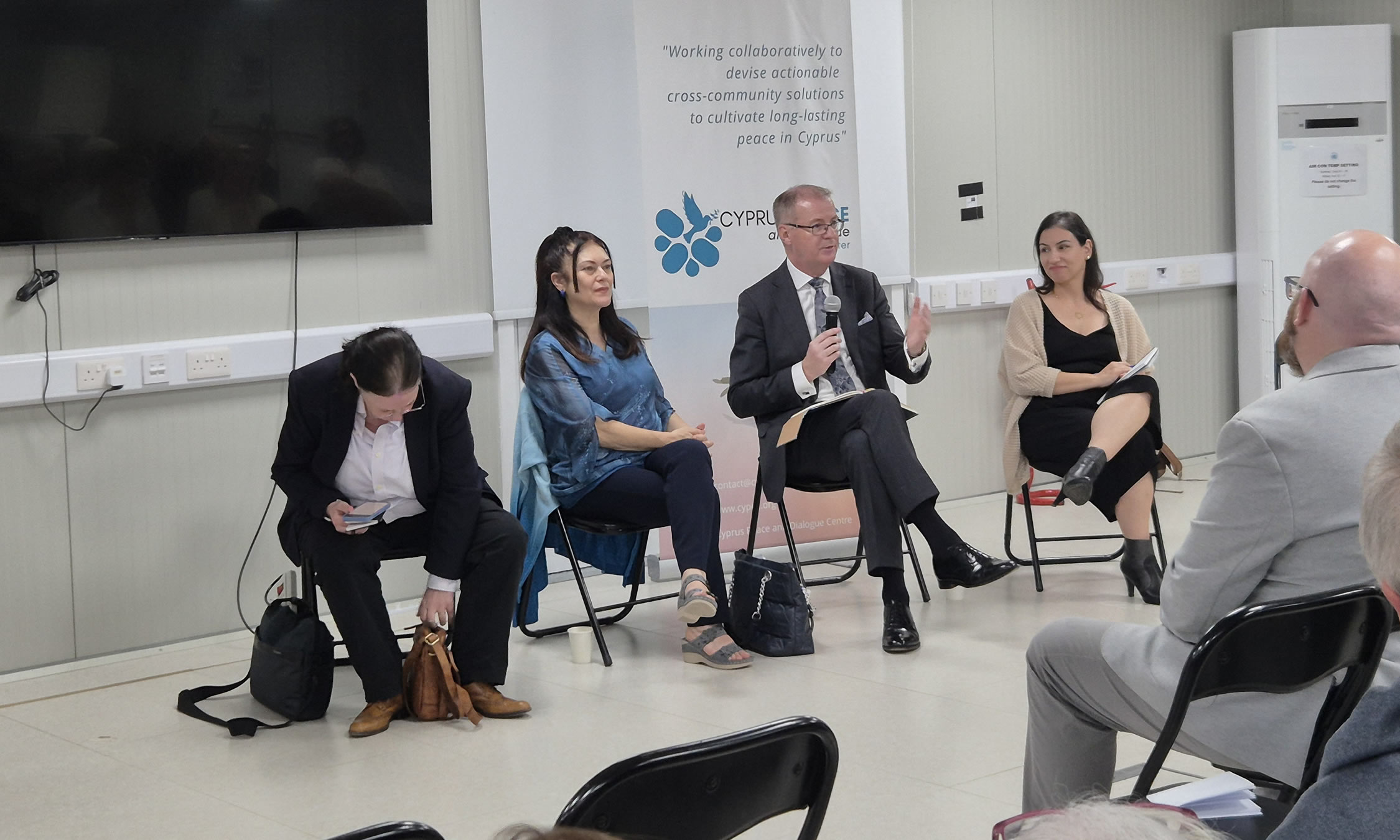
The event was organised by the Cyprus Peace and Dialogue Centre with the support of the Irish Embassy in Nicosia. The audience included some members of the bicommunal Steering Committee of the Consultative Body on Civil Society – set up by agreement of the two leaders and UN Secretary-General. The Steering Committee will meet the two leaders this Tuesday with plans afoot to establish a first civic assembly next February or March.