Cyprus has the fifth lowest share in the European Union in terms of electricity produced from renewable energy sources, according to data published on Wednesday by Eurostat.
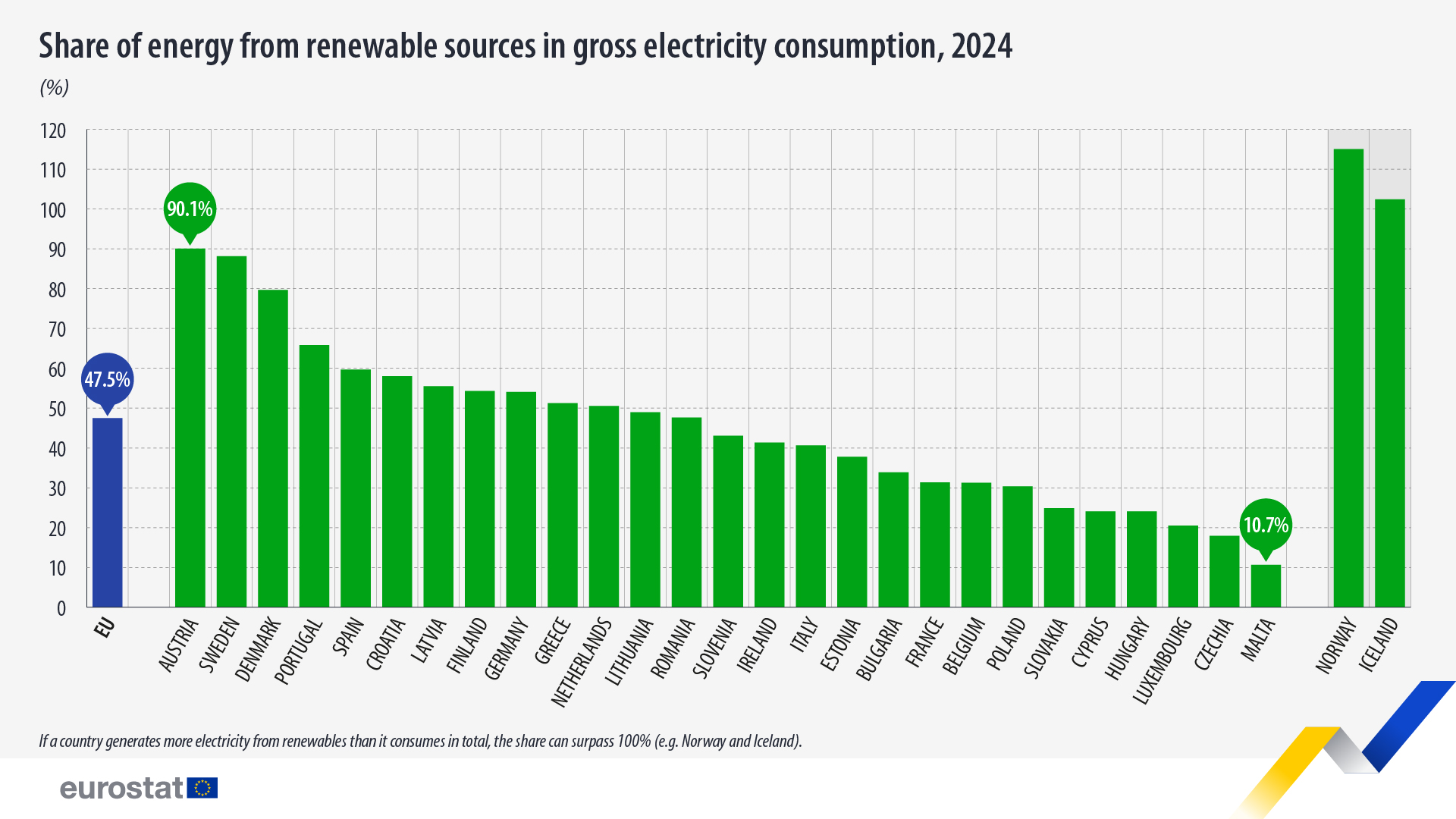
In 2024, renewable energy sources accounted for 47.5% of gross electricity consumption across the EU, marking an increase of 2.1 percentage points compared with 2023. Since data collection began in 2004, the share has almost tripled, rising by around 30 percentage points. Specifically, renewables accounted for 15.9% of electricity consumption in 2004, increased to 28.6% in 2014, and climbed to 47.5% in 2024.
Wind and hydropower dominate EU renewables
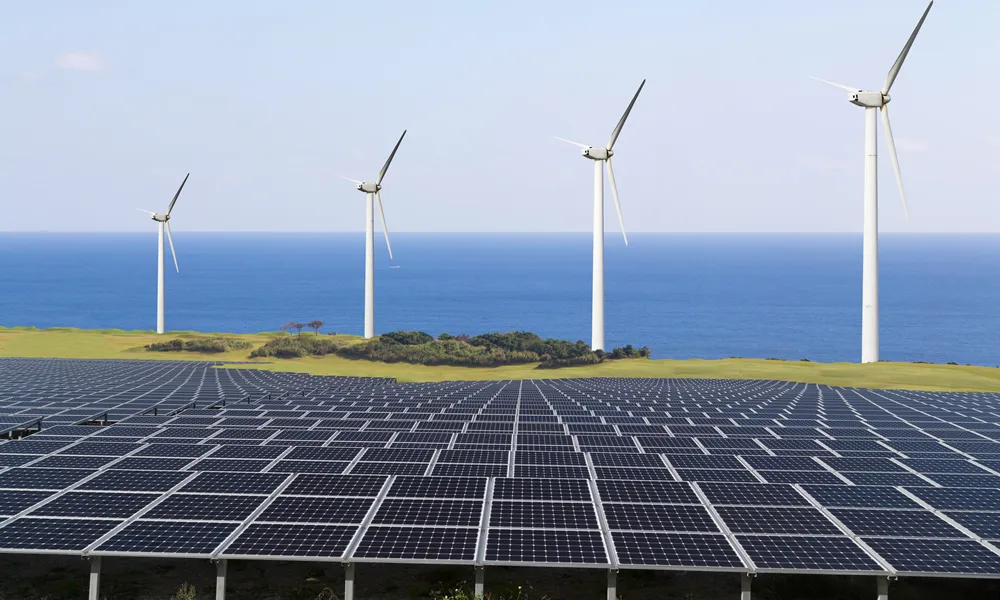
Wind energy, accounting for 38.0% of total renewable electricity generation, and hydropower, at 26.4%, together represented nearly two thirds of electricity produced from renewable sources in the EU. Solar energy followed with a contribution of 23.4%, while solid biofuels and other renewable sources accounted for 5.8% and 6.4% respectively. Solar power remains the fastest-growing renewable energy source across the bloc.
Austria and Sweden lead the way
According to the data, more than 75% of electricity consumed in 2024 was generated from renewable sources in Austria (90.1%, mainly hydropower), Sweden (88.1%, mainly hydropower and wind), and Denmark (79.7%, primarily wind energy).
Shares above 50% were also recorded in Portugal (65.8%), Spain (59.7%), Croatia (58.0%), Latvia (55.5%), Finland (54.3%), Germany (54.1%), Greece (51.2%), and the Netherlands (50.5%).
Cyprus among lowest performers
By contrast, the share of electricity generated from renewable sources was below 25% in Malta (10.7%), the Czech Republic (17.9%), Luxembourg (20.5%), Hungary and Cyprus (both 24.1%), and Slovakia (24.9%).