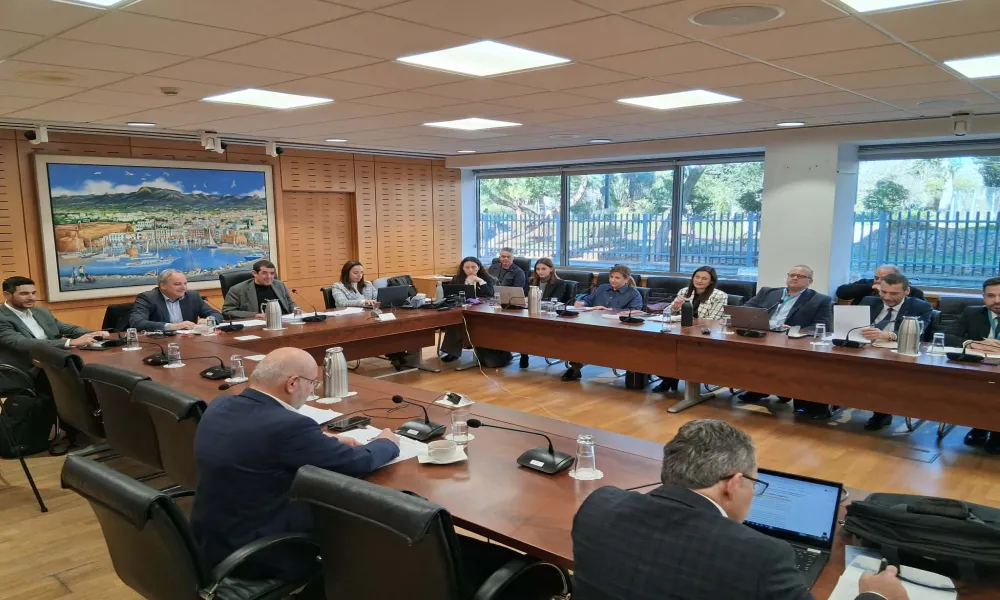
Members of parliament and representatives of agricultural organisations directed a barrage of urgent questions at the ministers of agriculture and health on Wednesday, following Cyprus’ consent to the EU–Mercosur trade agreement. Concerns centred primarily on public health and, secondly, on the sustainability of the agricultural sector in the face of what was described as unfair competition.
AKEL general secretary Stefanos Stefanou was also present at the session. He said the implications of the agreement touch in a “very serious way” on two critical dimensions for Cyprus and Europe.
“The first concerns people’s health, which must never be treated lightly,” Stefanou said. “We fear this agreement was signed after intense pressure from powerful EU countries and major industries. Why did we vote in favour? When the EU has banned a series of pesticides for years, how do we accept them entering through the back door?” he asked.
Stefanou and other MPs questioned the two ministers on the basis of which studies and reasoning Cyprus cast a positive vote. A second key question raised concerned which assessments of the long-term viability of Cyprus’ agricultural sector were taken into account before the decision was made.
Strong criticism from farmers’ groups
The president of the Pan-Cyprian Farmers’ Union (EKA), Christos Papapetrou, referred to a list of antibiotics banned for use in beef production that are still used in Mercosur countries.
“This is a biased agreement, favouring specific industries, mainly in Germany,” he said. “The result is that we end up consuming genetically modified and carcinogenic foods for Germany’s sake.”
Tasos Giapanis of the Panagrotikos Union said there had been no prior consultation with Cypriot farmers, either at national or European level. He stressed that agricultural products in Mercosur countries are not subject to strict controls.
“Health comes first. There are no strict inspections,” he said, adding that cheaper agricultural products would enter the EU market because wages in Latin America are significantly lower. He also called for Cypriot and European farmers to be compensated for income losses resulting from such imports.
Health minister: No compromise on import controls
In his intervention, marking his first appearance before parliament since his appointment, Health Minister Neophytos Charalambides assured MPs that under no circumstances would the Ministry of Health or health services risk public health.
While avoiding direct comment on the agreement itself, he underlined that EU regulations require all food imported from third countries to undergo checks to ensure consumer safety.
“This will also apply once the agreement is implemented, without any concessions,” he said.
Charalambides also referred to past imports into Cyprus from Latin American countries, noting that no problems had been identified in previous cases.