
A new report by UN Tourism has revealed the world’s fastest-growing tourism destinations, highlighting a sharp rebound in international travel and shifting global travel trends. Among the stand-out performers is Iceland, which has emerged as the fastest-growing destination in Europe.
The findings are included in the World Tourism Barometer, published by UN Tourism, with the first edition of 2026 analysing travel data through November 2025.
Cyprus Tourism Performance in 2025: What the UN Tourism Data Shows
According to the latest data published by UN Tourism, Cyprus recorded strong and broad-based growth across arrivals and revenues in 2025, consolidating its post-pandemic recovery and reinforcing tourism’s role as a key pillar of the economy.
Arrivals: Solid Growth, Strong Seasonality
-
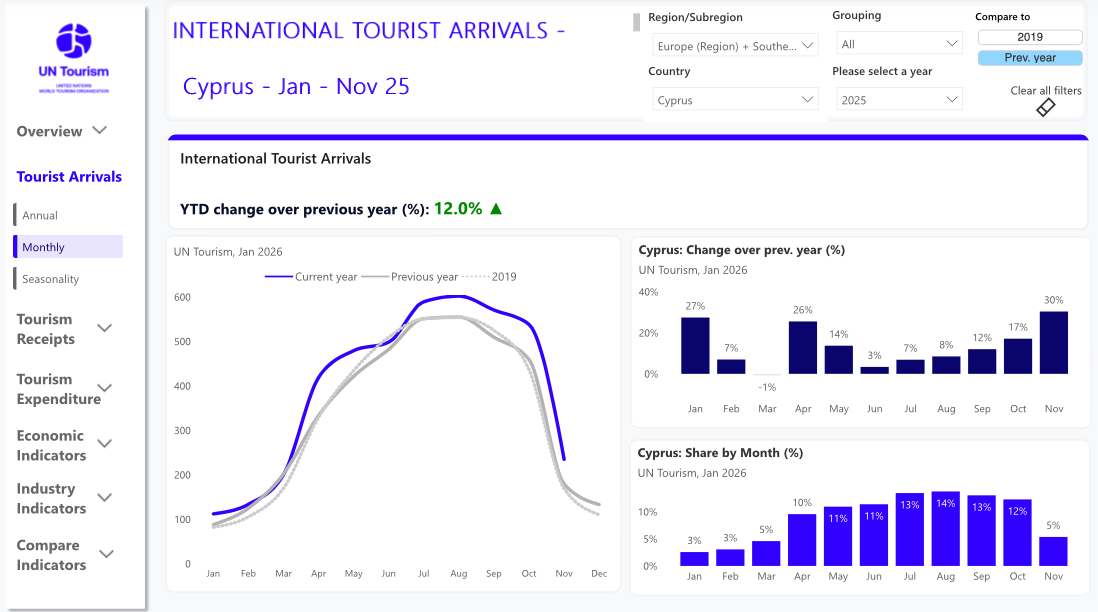
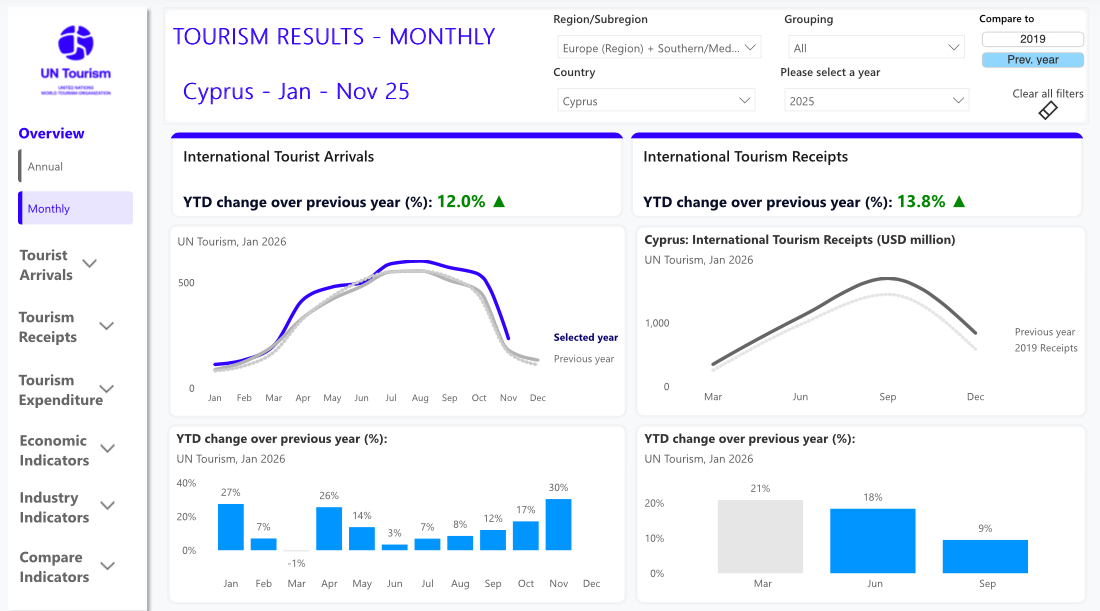
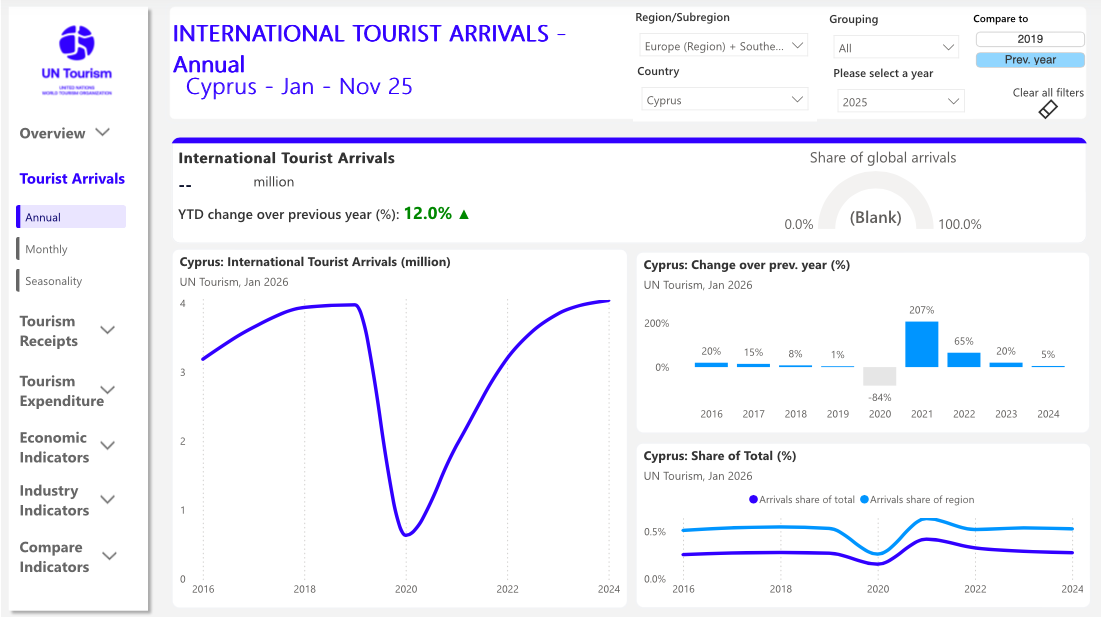
International tourist arrivals in Cyprus were up 12.0% year-to-date compared with the previous year.
-
The annual arrivals curve confirms a full recovery from the 2020 collapse, with volumes in 2024–2025 returning close to – and in some months exceeding – pre-pandemic levels.
-
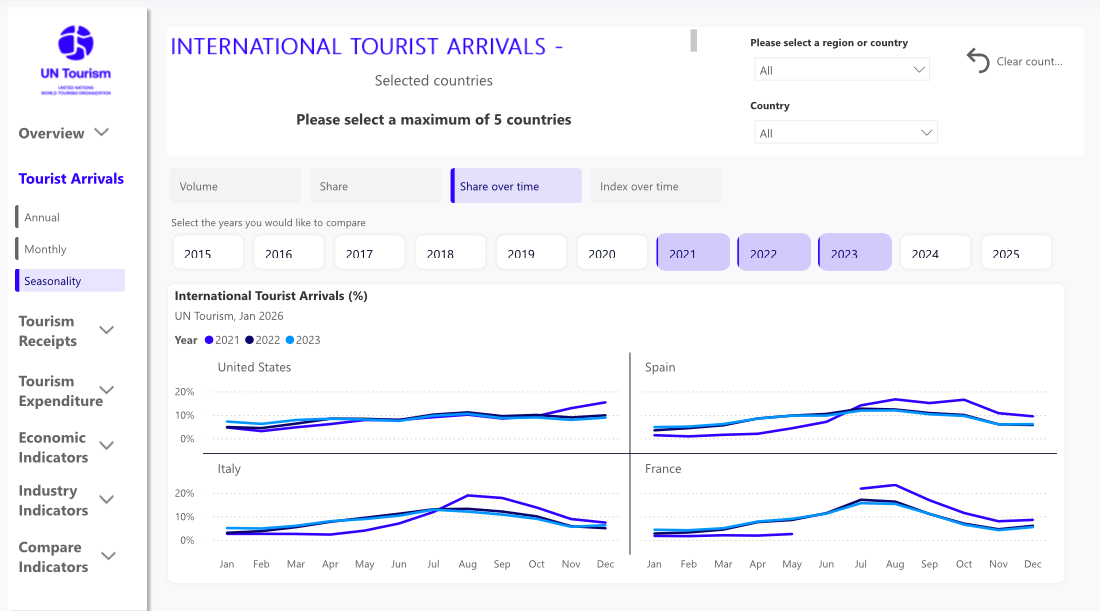
Monthly data shows the familiar Mediterranean seasonality, with arrivals peaking between June and September, while shoulder months (April–May and October) also recorded notable year-on-year gains.
Tourism Receipts: Growing Faster Than Arrivals
-
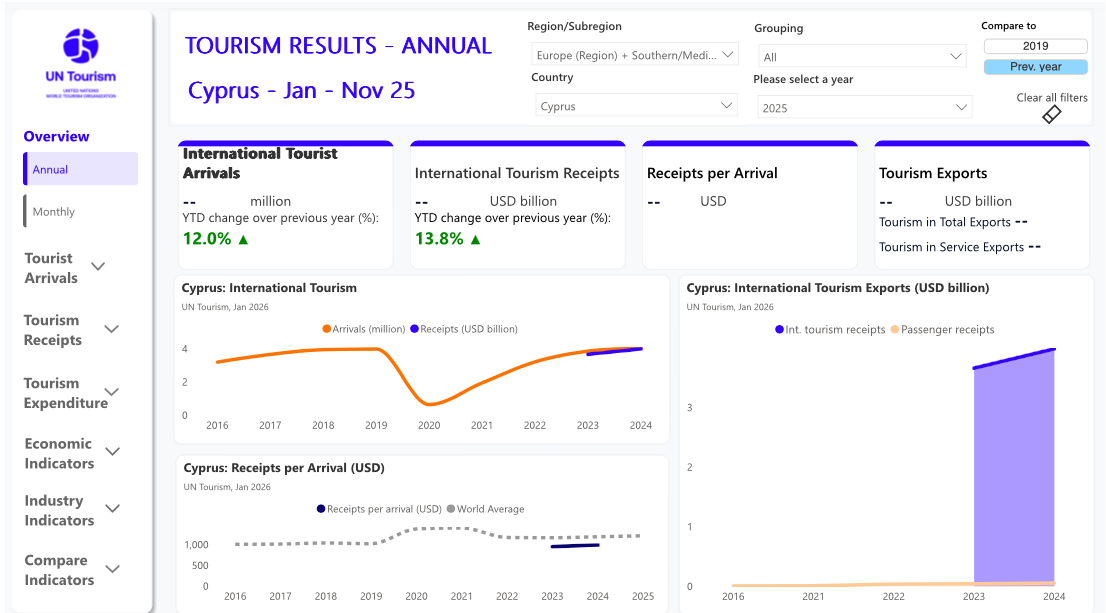
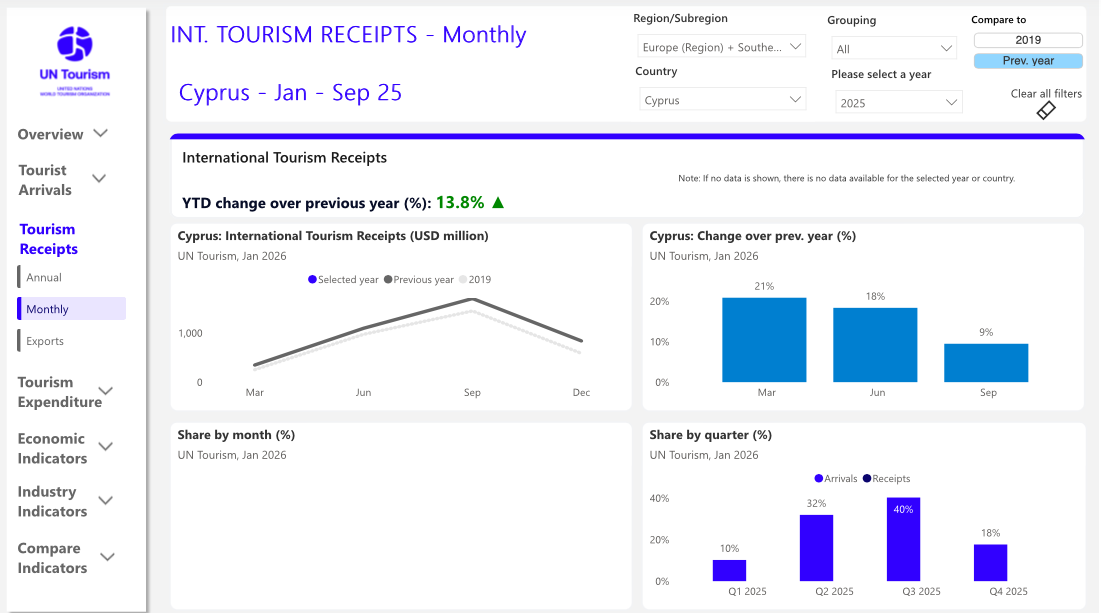
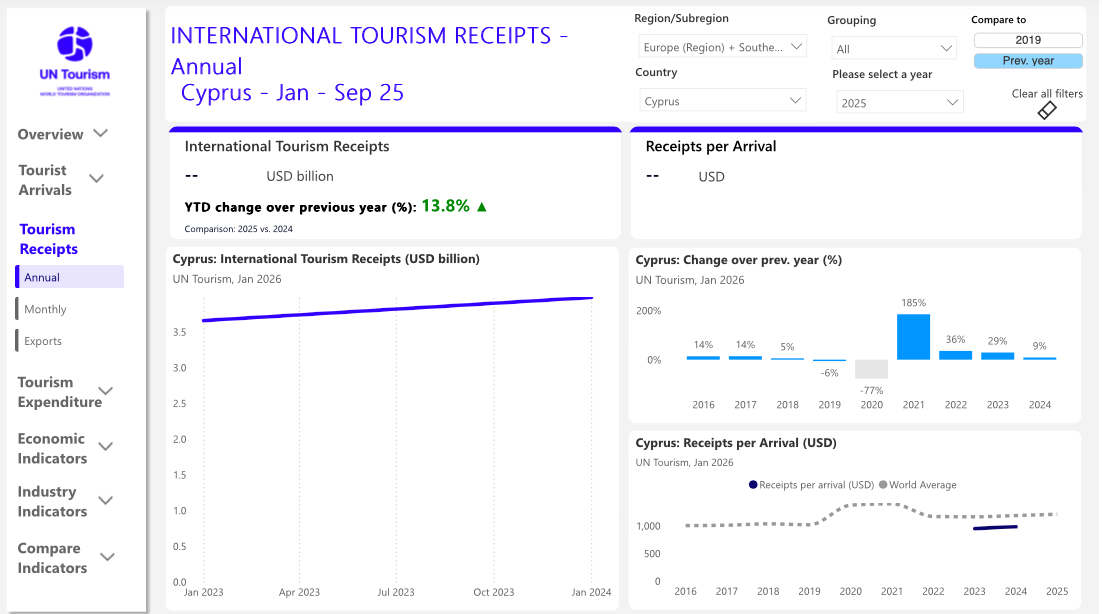
International tourism receipts increased by 13.8% year-to-date, outpacing the growth in arrivals.
-
This divergence suggests higher spending per visitor, rather than growth driven purely by volume.
-
Quarterly data indicates that Q3 2025 accounted for around 40% of annual tourism receipts, underlining the continued dominance of the summer season in revenue generation.
Receipts Per Arrival: Cyprus Above the Global Average
-
Receipts per arrival remain consistently above the world average, according to UN Tourism comparisons.
-
After a temporary spike during the pandemic years, per-visitor spending has normalised at a high level, pointing to a more resilient, value-oriented tourism model rather than a race to mass volume.
Tourism Expenditure: Outbound Travel Also Rising
-
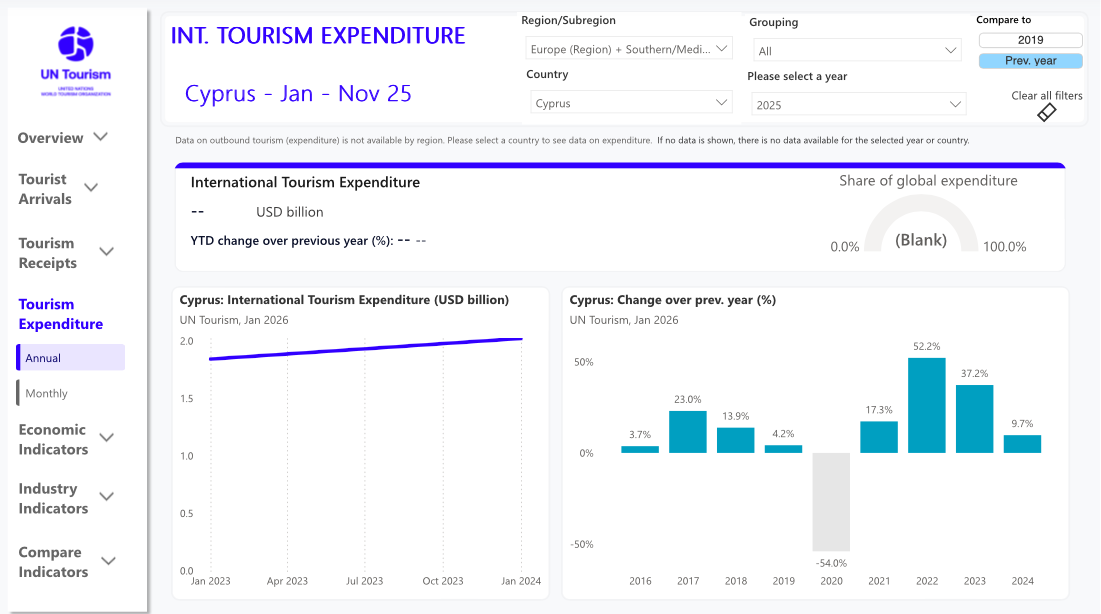
Cyprus’s international tourism expenditure (outbound travel spending by residents) shows a steady upward trend in recent years.
-
Annual data highlights particularly strong rebounds in 2022 (+52.2%) and 2023 (+37.2%), following the pandemic contraction of 2020.
-
This reflects both pent-up demand and improving household confidence, even as inbound tourism continues to strengthen.
Long-Term Perspective: A Resilient Recovery
-
Over the longer timeline (2016–2025), Cyprus tourism data illustrates:
-
A sharp contraction in 2020 (arrivals down more than 80% year-on-year),
-
Followed by an exceptionally strong rebound in 2021–2023, and
-
A phase of stabilisation and quality growth in 2024–2025.
-
-
Importantly, receipts have recovered faster and more sustainably than arrivals, indicating structural improvements in the tourism mix.
Iceland tops Europe’s tourism growth
According to the report, Iceland leads Europe in tourism growth, reflecting sustained international interest in nature-based, experiential and off-the-beaten-path travel. While traditional Mediterranean destinations remain popular, Iceland’s dramatic landscapes, geothermal attractions and reputation for sustainability continue to draw increasing numbers of visitors.
The Nordic country’s performance places Europe firmly on the global growth map, at a time when travellers are actively seeking alternatives to overcrowded destinations.
Japan’s social-media-fuelled surge continues
Globally, Japan remains one of the most striking success stories. For several years now, it has felt almost impossible to scroll through social media without encountering photos from Tokyo, Kyoto or Osaka.
The data confirms that this perception reflects reality. Japan recorded a 17% increase in international arrivals in the months through November 2025 compared with the same period in 2024, placing it firmly among the world’s fastest-growing tourism destinations.
Brazil and Egypt post double-digit growth
Outside Europe and Asia, Brazil and Egypt also feature prominently in the UN Tourism rankings.
Brazil saw a 37% increase in arrivals over the full year, marking one of the strongest performances globally. Egypt, meanwhile, recorded a 20% rise, underlining the continued appeal of its cultural heritage and expanding tourism infrastructure.
What the data shows about global travel trends
The latest World Tourism Barometer points to a clear pattern: destinations offering distinct cultural experiences, natural landscapes and strong international branding are outperforming more saturated markets.
As international travel continues to normalise, growth is increasingly driven by diversification rather than volume alone – a shift that benefits countries like Iceland, Japan, Brazil and Egypt, each offering a clear and differentiated tourism proposition.
The report suggests that this momentum is likely to continue into 2026, as travellers seek new experiences and destinations that combine authenticity, accessibility and global visibility.