
By Kriton Kapsalis
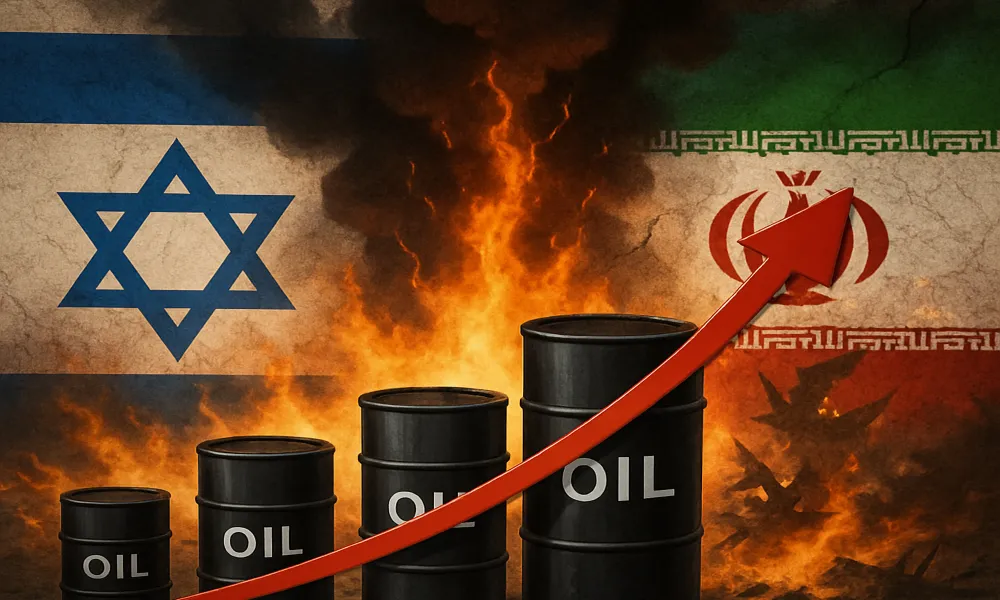
Just a few days after the start of military operations on 28 February 2026, the war between the United States, Israel and Iran has already generated an economic bill amounting to tens of billions of dollars, while its effects are spreading across the global economy.
Based on estimates by military analysts and economic organisations, the direct cost of the operations up to 6 March 2026 is estimated at approximately $10–12 billion in total, excluding long-term damage to infrastructure and national economies.
Cost per country
United States: The largest share of the cost relates to US military operations, which include air strikes, missile attacks and naval operations in the Persian Gulf. According to military estimates, the cost of high-intensity operations reaches around $1 billion per day. By 6 March, the direct cost for the United States is estimated at around $5–6 billion.
This amount mainly covers:
- Use of cruise missiles
- Air missions
- Deployment of aircraft carriers and military forces
- Surveillance and intelligence operations
Israel: Israel is also facing a significant economic burden, both from military operations and from the partial suspension of economic activity. Initial estimates from Israel’s Ministry of Finance place the cost at about $3 billion per week. During the first days of the war, the direct economic cost is estimated at $2–3 billion.
Iran: For Iran, the economic cost mainly derives from:
- Military expenditure, including missiles and drones
- Damage to military and energy infrastructure
- Losses from oil exports
Initial estimates place the direct cost at $3–4 billion. Losses from oil revenues alone may reach about $120 million per day if exports decline significantly. Analysts warn that if the operations continue for a month, the total cost could exceed $50 billion.
Impact on the global economy
The conflict in the Persian Gulf region has already caused significant turbulence in international markets. Among the main economic consequences are:
- A 10–15% rise in oil prices, above $80 per barrel
- Increased risk for roughly 20% of global oil trade passing through the Strait of Hormuz
- Pressure on transport, airlines and supply chains
Some economic analyses estimate that the overall impact on international markets may already reach tens of billions of dollars when energy price increases and stock market volatility are taken into account.
Human losses
Alongside the economic cost, the number of casualties is also rising. So far the recorded figures include:
- More than 1,200 deaths in Iran
- At least 11 deaths in Israel
- Six American soldiers killed
- More than 100 deaths in Beirut
What else is at stake in Iran
Beyond the immediate economic and human cost, the conflict surrounding Iran is linked to broader geopolitical and energy interests.
Iran holds some of the largest fossil fuel reserves in the world, accounting for around 9% of global oil reserves and nearly 17% of natural gas reserves. At the same time, its geographic position in the Persian Gulf gives it strategic control over the Strait of Hormuz, through which approximately 20% of global oil trade passes.
Any shift in the balance of power in Iran could directly affect the global energy market, international oil prices and geopolitical relations in the Middle East. At the same time, the country is an important partner for powers such as China and Russia, placing the conflict within a broader framework of competition between major powers for influence in the region.
For this reason, the crisis in Iran concerns not only regional security but also the shaping of global energy and geopolitical balances.
The cost for Cyprus
Although Cyprus is not militarily involved in the war, the conflict between the United States, Israel and Iran already has economic and strategic implications for the island, mainly due to its geographic location and the economy’s dependence on energy, shipping and tourism.
The first immediate impact is in the energy sector. At international refineries:
- Unleaded petrol has increased by 14%
- Diesel by 35%
- Heating oil by 32%
Fuel, electricity and shipping
These increases are expected to lead to petrol prices rising by about 6–7 cents per litre in the Cypriot market.
Given that electricity production in Cyprus relies mainly on imported fuels, the rise in energy prices is expected to pass through to the cost of electricity, transportation and ultimately inflation.
The Cypriot economy is also highly exposed to developments in the region because shipping is a key pillar of the economy. Uncertainty and increased risk in the region are expected to raise:
- War insurance premiums for ships
- The cost of transporting goods
- Shipping times
Cyprus is one of the world’s largest ship management centres, with dozens of shipping companies operating in Limassol, making the sector crucial for the economy.
Risks for tourism
The war in the Middle East is also raising concerns in the tourism sector, as tensions in the region could affect:
- Bookings
- Air traffic
- The overall perception of safety in the region.