The remainder of Cyprus remains free of foot‑and‑mouth disease (FMD), Veterinary Services confirmed on Monday, as they urged strict observance of biosecurity measures and stepped up inspections ahead of the Easter period.
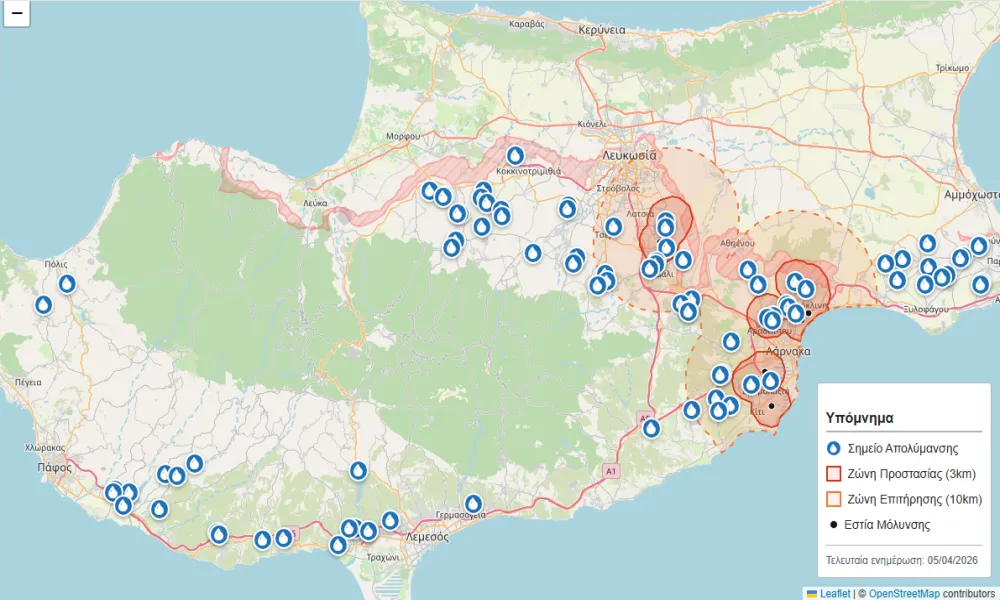
An interactive map has gone live on a dedicated website created by the Ministry of Agriculture, illustrating confirmed outbreak locations, protection and surveillance zones, and disinfection points.
“No matter how strict the biosecurity measures may sound, they must be implemented to keep the rest of the livestock sector free of the virus,” senior veterinary officer Sotiria Georgiadou said during a briefing.
Two new cases raise total to 54 infected units
Following confirmation of two new cases at very small holdings of about 25 sheep and goats, in the Dromolaxia-Meneou area within the already infected Larnaca zone, the total number of infected units rose to 54, located in Nicosia and Larnaca.
However, negative results from epidemiological investigations conducted in recent days across all districts, based on statistical sampling, currently rule out the spread of the virus beyond the already affected areas in Larnaca and Nicosia (Dali–Geri), according to Veterinary Services.
“So far, based on epidemiological investigations using statistical sampling, all samples from the remaining districts are negative,” Georgiadou told reporters. “We hope they remain negative and that our people – livestock farmers – continue to apply all biosecurity measures. No matter how strict or how difficult they may seem, they must be followed to keep the rest of livestock farming clean.”
Vaccinations progressing
At the same time, vaccinations are continuing with second doses. Among cattle, coverage has reached 60 per cent of the animal population, while among sheep and goats it stands at 27 per cent. Veterinary Services aim to complete the second‑dose programme by the end of April.
Vaccination of pigs is also under way, with coverage reaching 73 per cent of the animal population at farms located within the infected zones.
Interactive map shows outbreaks and surveillance zones
The Agriculture Ministry’s dedicated website for managing foot‑and‑mouth disease now features an interactive map showing outbreak locations, surrounding protection and surveillance zones, and designated disinfection points.
Veterinary Services developed the platform in cooperation with the University of Cyprus Centre of Excellence “KOIOS”, following instructions from the Minister of Agriculture. Officials said the site is dynamic and will gradually be enhanced with additional features.
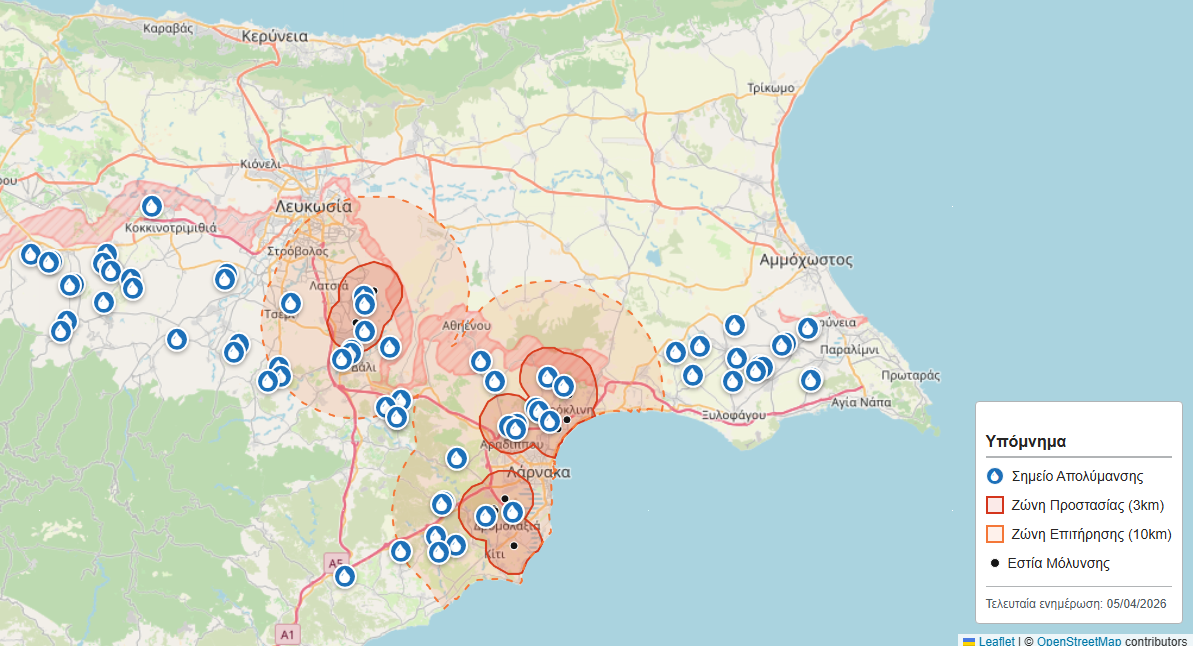
The two infected areas in Nicosia and Larnaca and
the corresponding protection and surveillance zones.
Heightened inspections ahead of Easter
With Easter approaching and slaughter activity increasing, Veterinary Services have intensified inspections at abattoirs, butcher shops and meat retail outlets since last weekend. The aim is to ensure businesses continue applying prescribed food‑safety systems so that products remain suitable for consumption during the Easter period. Inspections will continue throughout this week.
“The reason for the increased inspections – which are carried out every year, but this year there is an additional reason – is to ensure the uninterrupted operation of slaughterhouses, while also safeguarding animal health and preventing transmission of the virus,” Georgiadou said.
She reiterated that there is no risk to public health from the consumption of meat and milk.
Aim to compensate milk losses before Easter
Veterinary Services continue issuing advance payments to affected livestock farmers for income losses. So far, €215,460 has been disbursed for this purpose.
“We will proceed at a later stage with compensation for milk and feed,” Georgiadou said. “We hope the compensation for milk losses will be paid before Easter, so farmers can be supported even more effectively.”
At the same time, authorities have begun collecting all supporting documentation to compile individual case files for each affected farmer, paving the way for tailored compensation for significant income losses.