
One year after its creation, the first Tiny Forest in Cyprus is serving as a tangible example of how targeted, small‑scale urban plantings can enhance urban greenery, reduce thermal stress in cities, and improve citizens’ quality of life.
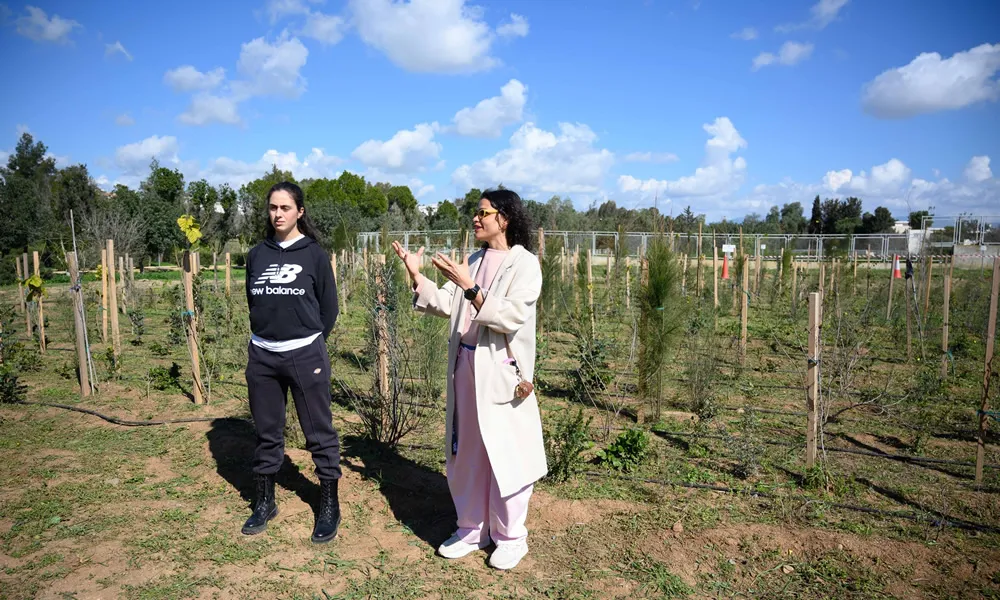
The experience and initial findings from applying the method of Japanese botanist Dr. Akira Miyawaki were presented on Tuesday at the event ‘Tiny Forest Huge ImPACT’, held in the Municipality of Lakatamia near the Pedieos River Linear Park, with emphasis on the method’s contribution to climate change adaptation.
Adopting Japanese method to mitigate urban overheating
The event focused on the role of Tiny Forests as small‑scale interventions with substantial environmental impact, particularly regarding the mitigation of urban overheating, the enhancement of biodiversity, and the strengthening of cities’ resilience against environmental risks such as floods and fires. The pilot project is implemented by the Cyprus Energy Agency, in collaboration with the Lakatamia Municipality, within the framework of the European Climate Pact.
The Ambassador of Japan to Cyprus, Mr. Satoshi Iwasaki, addressed the event, describing the application of the Miyawaki method in Cyprus as a characteristic example of international cooperation and the exchange of scientific knowledge in addressing modern environmental challenges. He noted that the creation of healthy forest ecosystems helps reduce risks from fires and floods, enhances biodiversity, and improves living conditions in cities, expressing the hope that the method will also be adopted by other municipalities in Cyprus.
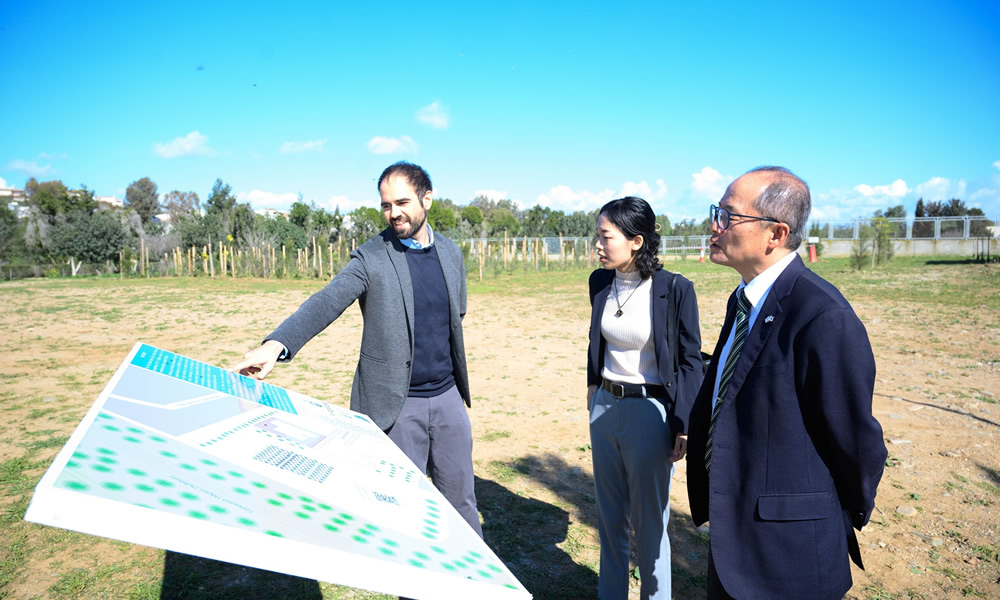
On her part, Lakatamia Mayor, Ms. Fotoula Hadjipapa, emphasized that the Municipality feels particular pride in hosting the country’s first Tiny Forest, highlighting its pioneering role in promoting innovative environmental actions. She noted that the project significantly strengthens urban greenery and confirms the local authority’s commitment to creating a more sustainable and higher‑quality environment for citizens.
During the event, the Tiny Forest methodology was presented in detail by the Cyprus Energy Agency and the Parks and Greenery Officer of the Lakatamia Municipality, with reference to the development of the micro‑forest from the first planting until today, as well as the initial conclusions from applying the Miyawaki method under local conditions. As part of the European project Real Urban Green, there was a demonstration of ‘citizen science’ tools and practices, with active participation from attendees. The event concluded with a site tour and small‑group discussions on the potential for replicating the Tiny Forest model in other areas of Cyprus.
EU Climate Pact Ambassadors
Speaking at the event, EU Climate Pact Ambassadors Ms. Penelope Vasquez Hadjilyra and Ms. Sophia Kousioumi stressed the importance of such initiatives to help cities adapt to the impacts of climate change. Ms. Kousioumi noted that actions like Tiny Forest represent a meaningful example of local mobilization and collaboration among stakeholders and citizens, contributing to the creation of more resilient cities. Ms. Vasquez Hadjilyra added that at a time when Cyprus is experiencing increasingly intense impacts – such as prolonged heatwaves, flooding, and heightened fire risk – the collaboration between local authorities, organizations, and citizens is of critical importance.
First application of Miyawaki method in Cyprus
The Tiny Forest in the Pedieos River Linear Park, created in April 2025, is the first application of the Miyawaki method in Cyprus. This Japanese technique enables the creation of dense micro‑forests with native species in urban environments, helping reduce temperatures, enhance biodiversity, and build more resilient urban ecosystems.
One year after its creation, the Lakatamia Tiny Forest has evolved into a reference point for applying the method in Cyprus, laying the groundwork for similar initiatives in other municipalities.
For more information on the European Climate Pact, visit the website of the European Climate Pact.
About the European Climate Pact
Climate change is a critical threat requiring immediate and coordinated action. The European Climate Pact encourages everyone to take action to help combat this threat and to build a better, greener future. The Pact, launched by the European Commission, is part of the European Green Deal and supports the EU’s goal of becoming the world’s first climate‑neutral continent by 2050. It is a movement of people united around a common purpose, each taking steps in their daily lives to build a more sustainable Europe for all. The European Climate Pact brings together individuals, communities, and organizations to fight climate change and adapt to its consequences. As part of the Pact, each of us can help build a more sustainable future.
About the Cyprus Energy Agency
The Cyprus Energy Agency is an independent, non‑governmental, nonprofit organization established in 2009. Its vision is a fair, inclusive, and climate‑resilient Cyprus governed by the principles of sustainable development.