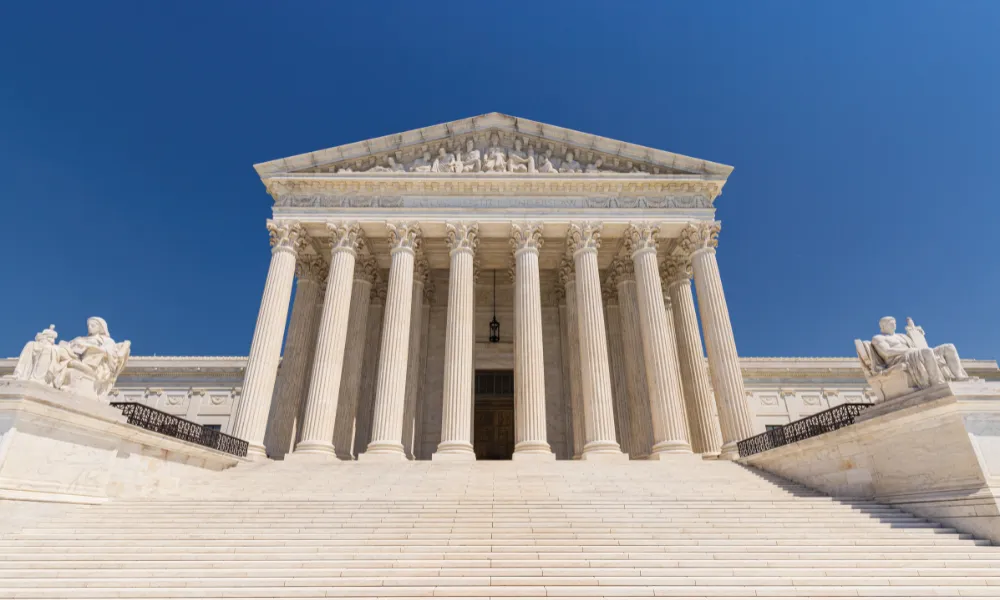

The Supreme Court of the United States decided that the Trump Tariffs are unconstitutional.
The Court moved a mountain.
Alaska’s Mount McKinley is the highest peak in the United States. It was for centuries called Denali by native Americans “the Tall One” until it was “discovered” in 1897 by a gold prospector who named it in honour of President McKinley. In 2015, President Obama restored the name of the mountain to Denali in honour of the people who did not need their mountain home to be discovered.
On 20 January 2025, within hours of his inauguration for a second term, Trump issued an executive order restoring the name, McKinley.
Was it Trump’s visceral hatred for Obama? But then, why not name it, “Mount Trump” or even “Mount of America” like the “Gulf of America”, which he also attempted to rename that day? What was so special to Trump about McKinley?
Trump has said many times, “I have the best words!” but he also said his favourite word is “Tariff”. McKinley, as Senator, was the author of the Tariff Act 1890 which increased tariffs on imports from Canada to 50%. One of its unstated aims was to cause Canada to become the 45th state of the United States. Last year, before Trump claimed Greenland a second time, he claimed Canada should be the 51st state and referred to Prime Minister Trudeau as the “Governor” of Canada.
In the end, not only did Canada not join the US but Trump’s insults to Canada caused his friend, Pierre Poilievre, and his Conservatives to lose the election of 2025 to Mark Carney. When Mark Carney became Prime Minister, he refused to attend the Whitehouse before obtaining undertakings from Trump that he would pay due respect to Canadian sovereignty and to the office of its Prime Minister. This was not the last of the tariff war retreats. Trump made so many that the phenomenon acquired a name, “TACO”, short for Trump Always Chickens Out. The Hispanic reference must have been difficult to digest.
The professed stable genius also forgot that the McKinley tariffs were a failure and lost McKinley his seat in the Senate. Although they boosted manufacturing, the tariffs drove up inflation and caused retaliatory tariffs.
Eventually Trump’s protectionism caused Canada to look to China and Europe to look to South America.
For those of us over 50 who saw it, Ferris Bueller’s Day Off, a classic movie starring Matthew Broderick that had some unforgettable scenes. One such scene can be found when searching “Hawley-Smoot Tariff -Ferris Bueller’s Day Off”. The teacher stands in front of class of glazed faced teenagers and says in a monotone voice, “The Republican controlled House of Representatives, in an effort to alleviate the effects of…Anyone? Anyone?….the effects of the great depression passed the…..Anyone?, Anyone?….the tariff bill, the Hawley-Smoot Tariff Act which….Anyone?... Raised or lowered?….raised tariffs in an effort to collect more revenue. Did it work? Anyone? Anyone know the effects?.... It did not work and the United States sank deeper into depression.”
In truth, no one will remember the content of the lesson, but the content is true and the lesson is that protectionism has had a bad track record.
Tariffs on this occasion appear to have driven up US inflation. The only positive thing that tariffs appear to have done to the US economy this time is increase revenue for the Treasury. That is, until the Supreme Court judgment in Learning Resources v Trump issued on 20 February 2026 which means that the US may have to disgorge US$175 billion it collected.
I am going to draw some highlights from the170 page judgment. Let’s start with the judges. Three justices; Gorsuch, Kavanagh, and Barrat JJ were appointed by Trump. Thomas J was appointed by Bush senior. Alito and Roberts JJ were appointed by Bush Jr. Kagan and Sotomayor JJ were appointed by Obama and Jackson was appointed by Biden.
Chief Justice Roberts stepped away from the economic consequences of the judgment saying, “We claim no special competence in matters of economics or foreign affairs. We claim only, as we must, the limited role assigned to us by Article III of the Constitution”.
By a majority (6:3) the Court, the Article III branch of government, found that the power to raise tariffs belonged to the Article I branch, the Congress and not the Article II branch, the President. That is the conclusion, but even the justices that agreed did not agree on the same reasoning and perhaps the strongest voice against Trump’s position was expressed by one of Trump’s appointed judges, Gorsuch J.
According to the conservatives on the bench, any Act that appears to transfer power from Congress to the President must overcome the Major Questions doctrine. The Major Questions doctrine has it that if it is claimed an Act alters the constitutional balance, transferring significant power from Congress to the President, the Act purporting to do so must make that intention obvious. The Court affirmed the validity of the doctrine even by those who disagreed with the ultimate conclusion. The liberal justices preferred another route, simple statutory interpretation.
There is another doctrine called, non-delegation. That would have it that Congress cannot transfer certain powers at all. In addition to the Major Questions doctrine, Justice Gorsuch, also relied on the non-delegation doctrine saying that the power to raise tariffs was incapable of being transferred to the President. Justice Thomas, of the minority, on the other hand considered that virtually all the powers of Congress could be transferred to the President.
Remember, the American Revolution was urged by the cry “no taxation without representation”. It is the representatives of the people that the constitution affords the power to raise tax “to have access to the pockets of the people” in the words of John Madison. In the early days of the Republic nearly all federal revenue was from tariffs. Alexander Hamilton (and definitely see the musical) called the power to tax “the most important of the authorities proposed or conferred upon the Union.”
The International Emergency Economic Powers Act 1977 (“IEEPA”) authorises the president “to deal with any unusual and extraordinary threat….to the national security, foreign policy, or economy of the United States” and “investigate, bock during the pendency of an investigation, regulate, direct and compel, nullify, void, prevent or prohibit…..importation or exportation.” Note, the absence of Trump’s favourite word. Yet Trump considered that this gave what the Court described as, “the extraordinary power to unilaterally impose tariffs of unlimited amount, duration, and scope”.
Trump used the IEEPA to impose tariffs against Canada, China and Mexico. What was the emergency? Supposedly the Fentanyl epidemic. Less than 1% of Fentanyl imported to the US came from Canada and it was not clear what tariffs were supposed to do about it. Kavanaugh J dissenting said there should a carve out of the Major Questions doctrine for emergency powers. Gorsuch J, also a Trump appointee, said emergencies beget emergencies.
On 2 April 2025, he raised the “Liberation Day Tariffs” on the whole world on the highly dubious assertion of trade barriers against US goods and with numbers on a chart that made no sense.
In Court, the Trump administration pointed out that Nixon once used the IEEPA to raise tariffs. Yes, once…. and Nixon.
Reminding us that Trump is not forever, the Gorsuch J said to those disappointed, “But if history is any guide, the tables will turn and the day will come when those disappointed by today’s result will appreciate the legislative process for the bulwark it is”.
This is not a liberal or conservative judgment. For example, the approaches of the liberal justices to the mode of interpretation of Kagan J, a liberal, and Barratt, a conservative were remarkably similar.
Trump did not see it that way, calling the majority justices “fools and lapdogs” and thanking Kavanagh and Thomas JJ publicly.
So, what is Trump to do? Kavanaugh J said that ruling against the president would create a mess. What happened to fiat justicia ruat caelum, let justice be done though the heavens may fall? Kavanaugh J himself tried to help by suggesting in his own dissenting judgment ways around the majority’s decision.
Trump has already made use of other legislation, imposing 10 and then 15% tariffs across the board for 150 days, but then he needs the approval of congress.
The Supreme Court said that the war powers cases it was referred to by Trump’s solicitor general were inapposite. Let us hope Trump does not attempt to make them apposite.
The mess was predictable and I was not alone in mentioning in an article a couple of days ago that the tariff case was not going well for Trump. The lower court judgments pointed in that direction. I will dare say now that the Supreme Court is pointing to where it will go in relation to the pending cases on the independence of the Federal Reserve.
The Federal Reserve itself will have to deal with the fallout from this case. The refunds process will be costly. Speculators have purchased vast numbers of Refund rights from payers of the tariffs. In fairness I doubt they will be as costly as is first imagined. As those against tariffs have said rightly (and obviously), the cost of tariffs is borne by the consumer and not states as Trump claimed. I doubt whether the Courts will simply require tariff refunds without taking account of the fact that ultimately the consumers have paid. The claimants would potentially end up getting paid twice.
And what of the “deals”? Well as it happens, their effect in international law is doubtful. I say this with some confidence in relation to the US UK “deal” because on page 1 it says, “Both the United States and the United Kingdom recognize that this document does not constitute a legally binding agreement”. As for the EU-US deal of 21 August 2025, it is a Framework Agreement that was to lead to a presumably binding agreement. The EU parliament suspended approval of “deal” when Trump asserted rights to Greenland.
President Trump striving to achieve more than his hero, McKinley, failed. McKinley was an imperial president. He acquired, among other territories, Hawaii, the birthplace of one Barack Hussein Obama. Who wants to remind Trump?
Michael J Harakis
Advocate and Arbitrator
24 February 2026