



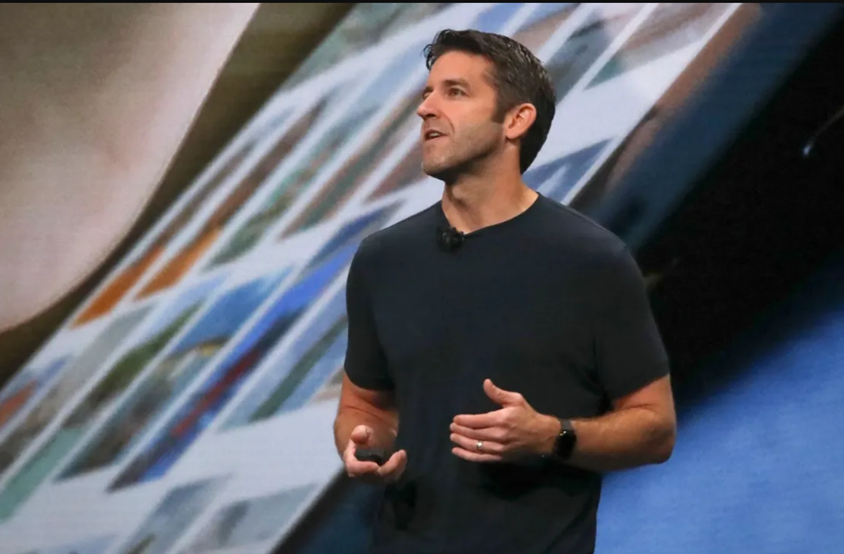
Apple has named John Ternus as its next chief executive, turning once again to a company insider to lead it through what may be the most consequential technological transition in its history. Ternus, 50, currently Apple's head of hardware engineering, will take over on 1 September. Tim Cook, who has led the company for 15 years and overseen a period of extraordinary commercial growth, will remain as executive chairman.
The announcement, made on Monday, came as Apple faces sharpening questions about its standing in the artificial intelligence era. After years trading places with other giants atop the list of the world's most valuable companies, Apple has lost that position to AI chipmaker Nvidia, whose accelerating dominance of AI infrastructure has shifted investor attention away from the iPhone maker's more cautious, hardware-grounded approach.
The man Apple chose
Ternus joined Apple in 2001 and has spent the past two decades deep in the engineering of its most important products. He played a central role in revitalising the Mac line, which has steadily gained market share against rival PC manufacturers, and was closely involved in the development of the iPad, AirPods and, most recently, the iPhone Air, unveiled last September as the most significant redesign of Apple's flagship device in nearly a decade. Despite that record, Ternus has maintained an unusually low public profile for someone in his position. Apple has sought in recent years to change that, giving him more access to the press as a signal of its long-term succession thinking.
The appointment drew immediate analysis from market watchers. Gil Luria of D.A. Davidson said the choice indicated Apple intended to push into new hardware categories, pointing to folding phones, augmented-reality glasses, VR devices and AI-enabled wearables. Bob O'Donnell of TECHnalysis Research framed Ternus's central challenge more bluntly, saying his biggest task would be assembling a more credible AI offering built on Apple's own capabilities rather than on deals with third parties.
The AI gap he must close
That challenge is substantial. Apple introduced Siri to the world in 2011, giving it a head start in voice-driven AI that it has largely failed to capitalise on. Siri has not evolved into the kind of autonomous agent that AI firms now consider the benchmark for the technology, and Apple has not produced a hardware or software hit centred on generative AI in the way that rivals have. In January, the company struck a deal with Alphabet's Google to integrate the Gemini model into its products in an effort to sharpen Siri's capabilities, a partnership that drew attention precisely because it involved a longtime smartphone rival.
The competitive landscape Ternus inherits is demanding. Meta Platforms' augmented-reality glasses have found a broader audience than anticipated, at a fraction of the price of Apple's Vision Pro headset, which retails at $3,499 and above. Nvidia, meanwhile, has announced its own personal computer and is developing chips designed to power consumer laptops, moving the AI infrastructure battle closer to the devices Apple has long dominated.
Tim Cook's legacy
Cook's tenure, which began in August 2011 when he succeeded Apple co-founder Steve Jobs, is defined above all by scale. Under his stewardship, Apple's market value grew by $3.6 trillion. Its stock rose roughly 20-fold. He transformed the company from a device maker into a services and ecosystem powerhouse, expanding into payments, streaming, fitness, and health in ways that deepened customer dependency on the Apple platform far beyond the original iPhone promise.
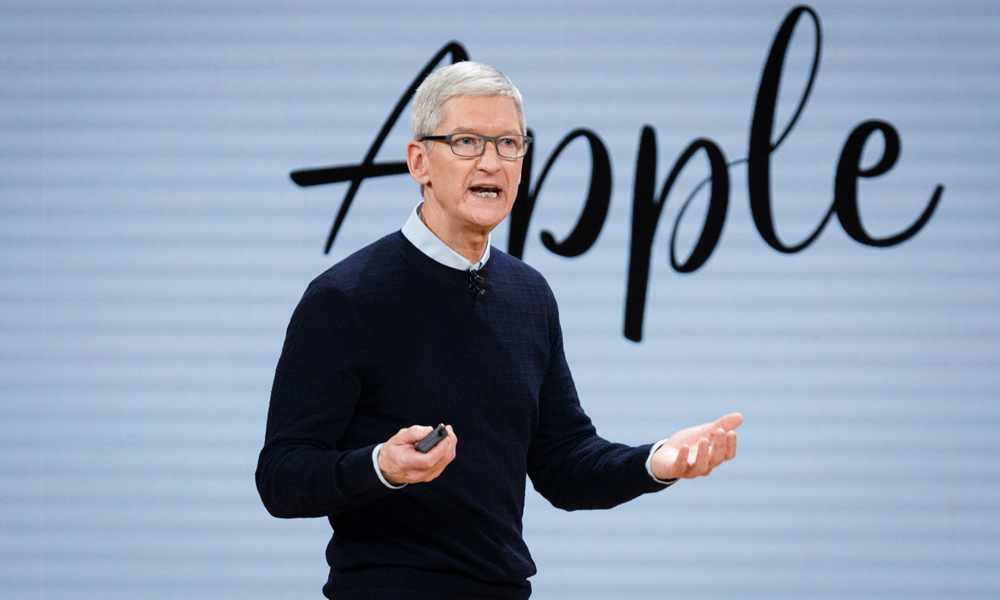
Cook came to Apple from Compaq, recruited by Jobs to address the company's supply chain weaknesses at a moment when it was teetering near insolvency. He resolved that problem decisively, building a global manufacturing network centred on contract partners in China that became one of the most studied and imitated models in corporate history. That China dependency has, in later years, become a source of geopolitical risk as well as commercial exposure, and Cook spent much of his final years navigating pressure from Washington to diversify. Assembly operations have expanded to India and Vietnam, but key components remain tied to Chinese supply chains, and a fully American-made iPhone has not materialised despite the political pressure to deliver one.
Beyond the commercial record, Cook made Apple a more publicly engaged institution. He was the first chief executive of a Fortune 500 company to come out as gay, in 2014, and used the platform his position afforded him to take consistent public stances on diversity, sustainability and civil rights. He will continue to engage with policymakers in his new role as executive chairman, Apple said, a mandate likely shaped in part by ongoing trade and tariff negotiations with Washington.
In a separate announcement, Apple confirmed that Johny Srouji, who has overseen the company's custom chip and sensor design, has been appointed chief hardware officer, a new role that will see him absorb both his existing division and the hardware engineering group that Ternus previously led, which will now be headed by Tom Merieb.
Apple shares fell around 0.5% in after-hours trading on Monday following the announcement, having closed the regular session up about 1%.
Source: Reuters


