Iranian Foreign Minister Abbas Araghchi arrived in Islamabad on Saturday to lay out Tehran's positions in a new push to end a war now entering its ninth week, as the United States sent envoys Steve Witkoff and Jared Kushner to the Pakistani capital for a second round of indirect talks. Iran has so far ruled out direct negotiations, with an Iranian diplomatic source in Islamabad telling Reuters that "the Iranian side will not accept maximalist demands." An Iranian foreign ministry spokesperson confirmed that Iranian officials did not plan to meet US representatives directly and that Tehran's concerns would be conveyed through Pakistani mediators.
Araghchi met Pakistani Prime Minister Shehbaz Sharif and other senior officials during the visit. In a statement on his official Telegram account, he said he had "explained our country's principled positions regarding the latest developments related to the ceasefire and the complete end of the imposed war against Iran."
Trump told Reuters on Friday that Iran planned to make an offer aimed at satisfying US demands, though he said he did not know what it would entail. White House press secretary Karoline Leavitt said the US had seen some progress from the Iranian side in recent days and hoped for more over the weekend, with Vice President JD Vance ready to travel to Pakistan if sufficient progress materialised. US Defence Secretary Pete Hegseth, for his part, said Iran still had "an open window to choose wisely," adding: "All they have to do is abandon a nuclear weapon in meaningful and verifiable ways."
Hormuz paralysed, Brent surges
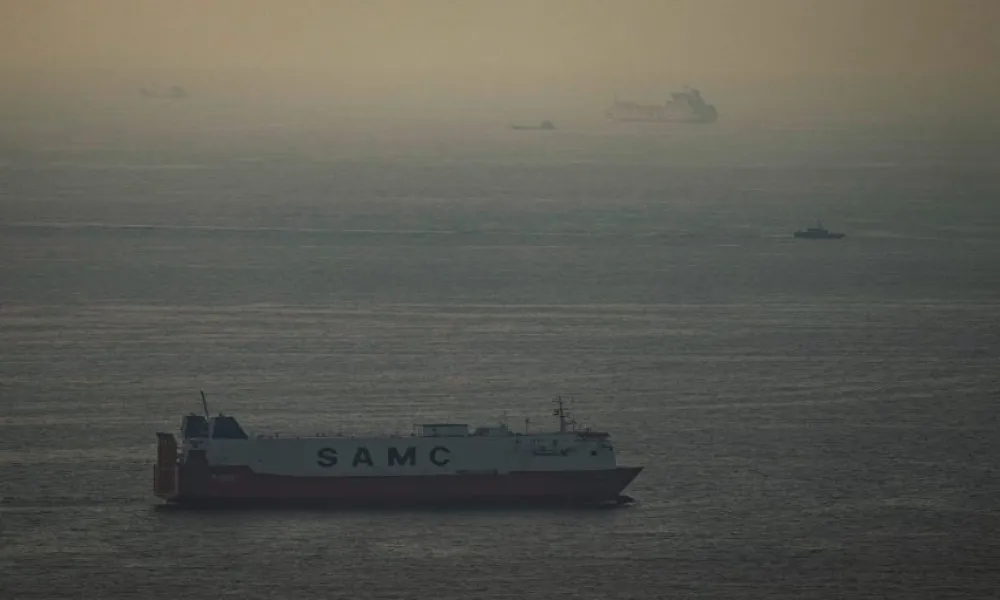
Washington and Tehran remain at an impasse over the Strait of Hormuz, which normally carries one-fifth of global oil shipments. Tehran effectively closed the waterway after the start of the war on 28 February, while the US maintains a blockade of Iranian ports. Shipping data from Friday showed only five ships had crossed the strait in the previous 24 hours, compared to around 130 per day before the war. The vessels included an Iranian oil-products tanker but none of the large crude supertankers that normally supply global energy markets. Data analytics firm Vortexa recorded just 35 total transits through the US blockade between 13 and 22 April, involving Iran-linked or sanctioned vessels. Brent crude futures surged 16% this week on uncertainty over the fate of the talks and renewed regional violence.
Trump extended the two-week ceasefire unilaterally on Tuesday to allow more time for negotiations. In a sign of cautious normalisation, international flights resumed from Tehran's Imam Khomeini International Airport on Saturday, with the first passengers departing for Medina, Muscat and Istanbul. Iranian airspace had been largely closed since the start of the war, causing tens of thousands of flights worldwide to be cancelled, rerouted or rescheduled.
Lebanon ceasefire under strain
On Thursday, Israel and Lebanon extended their ceasefire for three weeks at a White House meeting brokered by Trump, but fighting in southern Lebanon has continued. Four people were killed in Israeli strikes on Saturday, Lebanon's state news agency reported, a day after Israel said it had killed six armed Hezbollah members in the south. The Israeli military reiterated a warning for Lebanese residents to stay away from the Litani River area and said it had struck Hezbollah rocket launchers in three locations overnight. Iran has said a ceasefire in Lebanon is a precondition for broader talks. Israel invaded Lebanon last month to root out Hezbollah after the group fired across the border in support of Iran following the start of the war on 28 February.
Source: Reuters