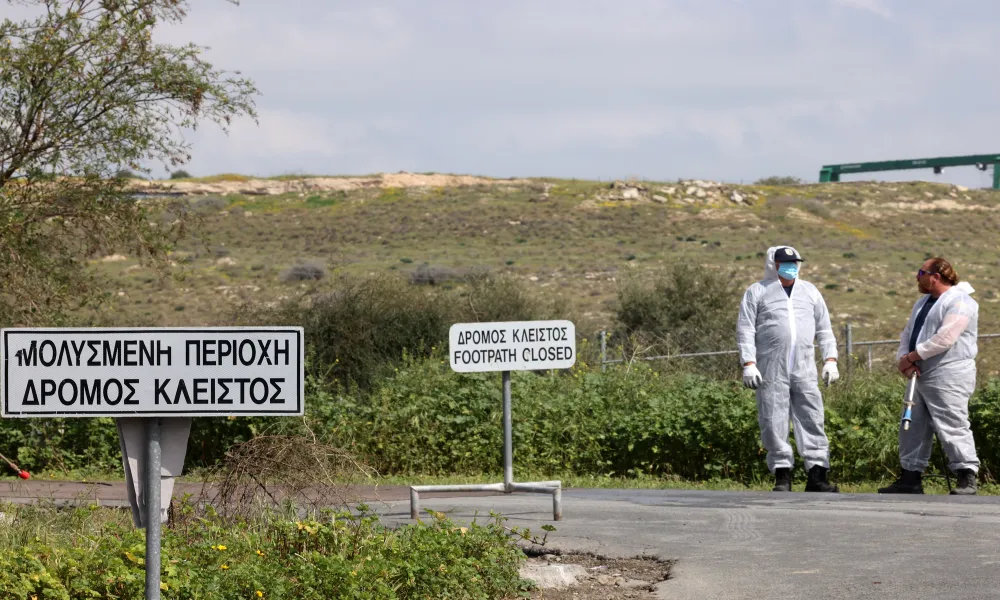

Eight administrative fines totalling €45,000 have been issued under a special decree regulating movements during the foot-and-mouth disease crisis, with a further six serious violations referred to police for criminal investigation. The Veterinary Services confirmed the figures on Friday, while also acknowledging earlier reports of illegal animal transfers to Paliometocho.
The issue was raised at the parliamentary Agriculture Committee on Thursday, where MP Linos Papayiannis alleged that a truck authorised to transport animals to a slaughterhouse had instead ended up in Paliometocho two weeks ago. Veterinary Services director Christodoulos Pipis told the committee that no permit had been issued for any such movement, that administrative fines had been imposed and that the matter had been referred to police. He added that beyond this specific incident, inspectors had uncovered additional illegal activities by livestock farmers during the culling process.
Cross-species spread raises concern
One of the two most recent new cases is located in Paliometocho, bringing the total number of affected units to 104 as of Friday afternoon. It involves a goat and sheep farm, making it the first small-ruminant unit to be infected in the area, coming immediately after the virus was detected in three neighbouring pig farms. Veterinary Services said this confirms cross-species transmission of the virus within the same geographical zone.
The development has caused particular concern, according to Dr Stavros Malas, head of the special scientific committee for the restructuring and upgrading of the livestock sector, who spoke to Politis 107.6 on Friday. Veterinary Services reiterated that epidemiological data consistently points to human activity as a decisive factor in the spread of the disease, through the movement of people and vehicles and the transfer of contaminated materials, products and equipment. "Inspections are continuing at an intensive pace and all those involved are called upon to strictly observe the provisions of the decree and the instructions of the competent authority," the services said.
'Cyprus cannot be exempt'
Addressing the demands of protesting farmers, who staged demonstrations last Thursday, Malas was direct: the culling of animals cannot be avoided in Cyprus. The practice has been applied across the EU for decades, he explained, because the virus mutates easily and spreads rapidly within livestock units. He also noted that a considerable number of people have been misled by misinformation surrounding the measure.
On the origins and spread of the outbreak, Malas said five distinct transmission clusters have been identified across the 104 affected units, and that the picture of how the virus spread is now clear. The spread from Oroklini is linked to the illegal movement of infected animals before 19 February and is unrelated to areas such as Dromolaxia or Dali. The west Nicosia cluster remains under investigation, though Malas ruled out airborne transmission. He was explicit about the virus's entry into Cyprus: it came from the occupied north "on two legs," meaning someone transported it illegally and knows they did so.
Cautious optimism
Malas nonetheless expressed cautious optimism about the trajectory of the outbreak, noting that vaccination appears to be beginning to show results, particularly in areas such as Athienou where it was applied early. He stressed, however, that managing the virus will be a long-term process and that society will need to learn to live with it, while adding that the measures taken have already produced a measurably improved picture.